
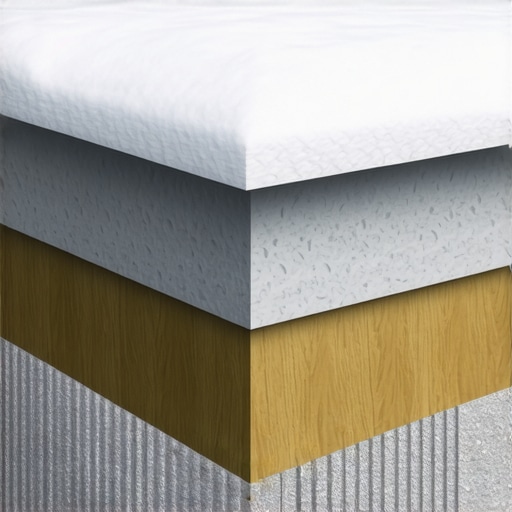
The Secondary Barrier Dilemma: Why Most Roofs Fail From the Inside Out
I’ve spent the better part of three decades staring at the aftermath of cheap decisions. I’ve walked on thousands of roofs where the shingles looked fine from the curb, but the decking beneath was soft as a sponge. You see, most homeowners—and even some greenhorn local roofers—treat underlayment as an afterthought, a thin piece of paper required by code just to get a permit. But as we head into the erratic, high-shear wind cycles and deep-freeze patterns of 2026, that thin layer is the only thing standing between your living room and a $40,000 disaster. My old foreman, Sal, used to growl at me whenever I’d rush a valley: ‘Water is patient, kid. It will wait for years just to find the one nail you didn’t drive flush.’ He was right. Water doesn’t just fall; it migrates, it wicks, and it hunts for weakness through capillary action. When you’re choosing the best underlayments for extreme 2026 weather, you aren’t buying a product; you’re buying a insurance policy against the physics of failure. If you skip the good stuff, you’ll be hunting for sagging rafters before the decade is out.
“Underlayment shall be applied in accordance with the manufacturer’s installation instructions. It shall be attached to the roof deck to provide a continuous water-shedding surface.” – International Residential Code (IRC) R905.1.1
1. High-Temp Self-Adhering Ice and Water Shields
In the North, ice dams are the undisputed heavyweight champions of roof destruction. When snow melts and refreezes at the eaves, it creates a dam that forces liquid water back up under the shingles. Standard felt paper is useless here; it’s like trying to stop a flood with a screen door. You need a high-temperature, rubberized asphalt membrane. This stuff isn’t just sticky; it’s self-healing. When a roofer drives a nail through it, the bitumen flows around the nail shank like a gasket. In the ‘Extreme 2026’ climate, where we see 50-degree temperature swings in 24 hours, this elasticity is vital. Without it, you’ll find water entry at attic joint seals that can rot your structure from the inside. Many roofing companies will only run two rows at the eave, but for a 2026-spec roof, I recommend running it 3 feet past the interior wall line to ensure total protection.
2. Cross-Woven Synthetic Underlayment (The New Standard)
Gone are the days of the 15-lb organic felt that tears if you look at it sideways. Modern synthetic shingle felt is engineered from polypropylene or polyethylene. It has a tensile strength that allows it to stay intact even if the shingles are blown off in a microburst. For the 2026 weather cycles, you want a product with a high-grip surface to prevent crew slips and a high UV rating. This material doesn’t absorb moisture, which means it won’t wrinkle or ‘telegraph’ through your shingles. I’ve seen cheap crews use low-grade synthetics that degrade in the sun before the shingles even arrive on site. That leads to hidden shingle lifting because the substrate has lost its structural integrity. If you want a roof that lasts, don’t let them skimp on the scrim density.
3. Breathable Membranes: Solving the Attic Rain Problem
If you’ve ever stood in an attic during a cold snap and felt it ‘raining’ on you, you’ve witnessed the failure of vapor management. When we seal houses too tight, moisture from showers and cooking gets trapped in the attic. If your underlayment is a total vapor barrier, that moisture condenses on the underside of the plywood. Breathable membranes allow water vapor to escape while still keeping liquid water out. This is a game-changer for local roofers working on older homes with poor ventilation. It’s part of a holistic system. If your contractor doesn’t talk about ‘perm ratings,’ they aren’t thinking about the long-term health of your home. They’re just looking to get the ‘square’ count up and get paid.
“A roof is only as good as its flashing.” – Old Roofer’s Adage
4. Reinforced Poly-Glass Hybrids
This is for the homeowner who wants the absolute top-tier protection. Poly-glass hybrids combine the strength of fiberglass with the flexibility of polymers. They are incredibly thick and provide a flat, stable base for any shingle type. In the extreme winds predicted for 2026, the ‘blow-through’ resistance of these materials is unmatched. It prevents the wind from getting a ‘toe-hold’ under the shingles. When roofing companies cut corners, they use the thinnest felt possible, which allows the shingles to flex too much. That’s how you end up with missing tabs after a light summer storm. Always ask to see the ‘mil’ thickness of the underlayment before it goes down.
5. Integrated Zip-System or Taped-Seam Decking
We are seeing a massive shift toward integrated systems where the underlayment is essentially built into the sheathing. For new builds or full tear-offs, using a liquid-applied or factory-bonded barrier with high-performance seam tape is the gold standard. It eliminates the ‘shiner’ problem—those missed nails that create thermal bridges and lead to rot. If you’re going this route, you need an ironclad 2026 contract that specifies exactly how those seams are rolled and sealed. If the tape isn’t applied with a weighted roller, it will lift, and your ‘waterproof’ deck becomes a sieve.
The Marketing Trap: Why ‘Lifetime Warranties’ Are Often Smoke
I’ve seen it a thousand times. A salesperson from one of the big roofing companies sits at your kitchen table and promises a ‘Lifetime Material Warranty.’ What they don’t tell you is that those warranties are almost always void if the underlayment wasn’t installed to a specific, often impossible, standard. They’ll look for any excuse—poor ventilation, a missed cricket in the valley, or the wrong nail spacing—to deny a claim. The warranty is a sales tool; the underlayment is the actual protection. You need to find reliable roofing companies that prioritize the build quality over the brochure promises. If the crew is cutting corners on the drip edge or the starter strip, you can bet they’re using the cheapest underlayment they could find in the back of the warehouse.
The Cost of Waiting: Why 2026 is the Year of the Forensic Audit
Waiting until you see a brown spot on your ceiling is the most expensive way to manage a home. By the time the water reaches the drywall, it has already saturated the insulation, rusted the fasteners, and started a colony of mold on your rafters. A forensic look at your roof today can save you $20,000 tomorrow. Look for the ‘shiners’—those bright silver nail tips in your attic. Each one is a leak waiting to happen. In 2026, the weather isn’t going to get any kinder. The physics of water don’t care about your budget. Choose the right underlayment, vet your local roofers with extreme prejudice, and for the love of all things holy, make sure they flash the chimney properly. A roof isn’t just shingles; it’s a system, and that system is only as strong as its hidden layers.