
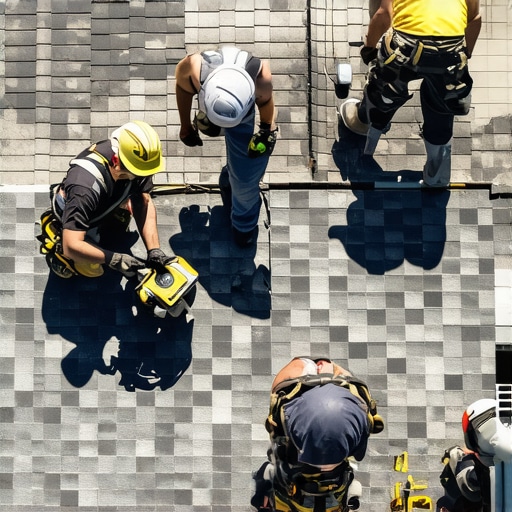
The Old Foreman’s Ghost and the 2026 Reality
My old foreman used to say, ‘Water is patient. It will wait for you to make a mistake.’ He said it while we were humping bundles of three-tab shingles up a ladder in the freezing rain of November. Back then, a 20-year warranty meant you’d probably get ten good years before the granules started filling the gutters like coffee grounds. But as we move toward 2026, the game is changing. Local roofers are seeing a massive shift in how manufacturers like GAF, Owens Corning, and CertainTeed handle their paper promises. If you think that ‘Lifetime Warranty’ on your contract covers the labor when your plywood turns to oatmeal, you’re in for a cold, damp awakening.
The Physics of Failure: Why the 2026 Shift is Happening
The industry is moving toward ‘System-Plus’ requirements. Why? Because manufacturers are tired of paying for failures caused by attic bypasses and thermal bridging. When I walk onto a roof in a cold climate, the first thing I do isn’t look at the shingles; I look at the snow pattern. If I see ‘tiger stripes’ on the roof where the snow has melted over the rafters, I know the attic is leaking heat. This thermal bridging is the silent killer. It creates a micro-climate under the roof deck that roasts the shingles from the inside out. By 2026, many roofing companies will find that warranties are voided unless a specific R-value of insulation and a balanced ventilation ratio are documented during the install. It’s no longer just about nailing down a square of material; it’s about managing the thermodynamics of the entire structure.
“A roof system’s performance is inextricably linked to the ventilation and insulation levels of the attic space beneath it.” – Adapted from NRCA Guidelines
The ‘Shiner’ and the Capillary Action
Let’s talk trade for a second. Have you ever seen a ‘shiner’? That’s a nail that missed the rafter and is sticking through the plywood into the attic. In a cold climate, that nail becomes a tiny frozen spear. Every time you boil water for pasta or take a shower, that warm air hits the cold nail, condenses, and drips. Over five years, that drip rots the deck. This is why local roofers are becoming more forensic. We aren’t just looking at the surface. We’re looking for capillary action—where water gets sucked uphill between the shingle laps because of hydrostatic pressure differences during a wind-driven rain. If your roofing company doesn’t understand the ‘drip edge’ physics, they’re just putting a Band-Aid on a bullet wound.
The Material Truth: Asphalt vs. Metal in the New Era
In the North, we fight ice dams. An ice dam isn’t a roofing problem; it’s a heat problem. When snow melts on the upper part of the roof and freezes at the eave, it creates a pool of standing water. Standard shingles aren’t waterproof; they are water-shedding. There’s a massive difference. If you have standing water behind an ice dam, it will find its way under the shingle via capillary action. This is where the 2026 warranty changes hit hardest. Manufacturers are starting to mandate double-layer Ice & Water Shield protection extending three feet past the interior wall line, not just the eaves. If your local roofer skips this to save $200 on a 30-square job, your warranty is worth less than the paper it’s printed on.
“The roof is the most vulnerable part of the building envelope, subject to the most extreme temperature fluctuations and mechanical stress.” – International Residential Code (IRC) Commentary
The Warranty Trap: Ventilation or Bust
Most homeowners believe a ‘Lifetime Warranty’ is an insurance policy. It’s not. It’s a manufacturing defect policy. If your shingles blister because your attic is 140°F in July due to poor ridge vents or clogged soffits, the manufacturer will blame the installer. The installer will have disappeared into the night. You’re left with a roof that’s ‘balding’—losing its ceramic granules—and a massive repair bill. In 2026, expect to see smart-sensors and mandatory photo-documentation of intake-to-exhaust ratios. If the math doesn’t work, the warranty won’t either. Local roofers who know their craft are already building these ‘system’ costs into their quotes. The ‘trunk slammers’ will keep undercutting them, but they won’t be there when the plywood starts to sag.
How to Spot a Real Professional in 2026
When you’re interviewing roofing companies, stop asking about the price per square. Start asking about the ‘cricket.’ A cricket is a small peaked structure built behind a chimney to divert water. If they don’t mention the cricket, or if they plan to use old flashing, kick them off the property. A forensic roofer looks at the valleys—the high-traffic areas where water concentrates. Are they using open valleys with metal or closed valleys with shingles? In a North climate, an open metal valley is almost always superior because it sheds ice faster, yet many local roofers avoid it because it takes more skill to install. Don’t settle for the easy way out. Demand a roof that respects the physics of your climate.