
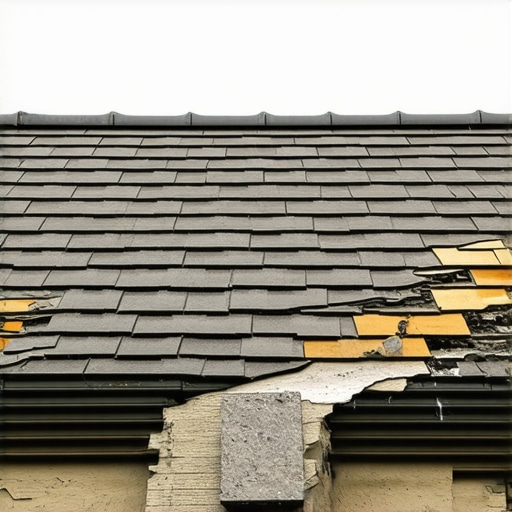
I have spent twenty-five years crawling through dusty attics and balanced on 12/12 pitches, and if there is one thing I have learned, it is that water is more patient than any homeowner. It does not just fall; it creeps, it sucks, and it migrates through capillary action. Walking on a roof in the Northeast during mid-winter, I once felt the deck give way under my boots like a wet sponge. I did not even need to pull a shingle to know what was happening. I knew the ridge vent—the very thing meant to save the roof—was actually the portal for its destruction. Local roofers often slap these vents on at the end of a long day, rushing to finish the last square, and that is where the disaster begins. Most roofing companies focus on the shingles you can see from the curb, but the forensic truth is always hidden at the peak.
“The roof shall be provided with a roof covering that is designed and constructed in accordance with this code and is installed in accordance with the manufacturer’s instructions.” – International Residential Code (IRC) R903.1
1. The Tell-Tale ‘Shiner’ and the Rust Halo
When we talk about ridge vent failure, we start with the fasteners. A ‘shiner’ is a nail that missed the structural rafter or truss. In the context of a ridge vent, these are the long, three-inch galvanized nails meant to bite through the vent, the shingle cap, and the decking into the wood below. If the sealing is poor, moisture-laden air from the house or wind-driven rain from the outside hits these cold metal shafts. In a climate like Boston or New York, these nails become magnets for condensation. You will see a ring of rust around the nail head inside the attic. This is not just a cosmetic issue; it is a signal that your decking plywood is decaying from the inside out. The water travels down the shank, saturating the wood fibers, turning your structural support into something resembling soggy cardboard. Professional roofing needs to ensure every nail is seated and sealed, but many trunk-slammers skip the sealant on the end plugs, allowing the vent to act as a funnel rather than an exhaust.
2. The End-Plug Contraction and the ‘Gasket Gap’
Ridge vents are not one continuous piece of indestructible material; they are usually four-foot sections of molded plastic or fiber. The most common point of failure I see in forensic investigations is the end plug. This is the piece of foam or plastic that is supposed to seal the very end of the vent run. Over time, thermal expansion and contraction—the roof heating up to 150°F in the sun and dropping to 10°F at night—causes these plugs to shrink or pop out. Once that ‘gasket’ fails, the wind-driven rain has a straight shot into your attic. If you see water stains on the rafters directly under the peak, your ridge vent has lost its seal. This is why sealing attic gable ridge vents properly with high-grade butyl or specialized sealants is the only way to prevent the Venturi effect from pulling rain inward. Without a tight seal, the low pressure created by wind blowing over the ridge actually sucks water under the vent and into your home.
“A roof is only as good as its flashing and its connections.” – Old Roofer’s Adage
3. Interior Attic Frosting and Thermal Bridging
In cold climates, a poorly sealed ridge vent manifests as ‘attic frost.’ This happens when the seal between the vent and the shingles is uneven. Warm, moist air from the living space—leaking through attic bypasses—gets trapped because the vent isn’t creating the proper draw. Instead of exhausting, the air swirls and hits the underside of the cold ridge, freezing instantly. When the sun hits the roof the next morning, that frost melts, and you have a ‘phantom leak’ that local roofers often misdiagnose as a shingle problem. It is actually a ventilation physics failure. If your ridge seal is compromised, the R-value of your insulation drops as it becomes damp, leading to a vicious cycle of more heat loss and more ice. You aren’t just looking for water; you’re looking for the evidence of air that isn’t moving where it should. The cost of a cheap ridge vent installation is paid every month in your heating bill and eventually in a full tear-off when the ridge board rots out. If you suspect your peak is leaking, do not wait for the ceiling to brown; get a forensic look at those seals before the wood turns to oatmeal.