
The 2026 Commercial Roofing Horizon: Why Your Building is One Storm Away from Disaster
Walk onto any commercial roof today and you’ll see the same thing: a sea of white TPO or gray EPDM, most of it installed by guys who think a ‘warranty’ is a substitute for a properly driven screw. I’ve spent twenty-five years peeling back these layers, looking at the rot underneath that shouldn’t be there. By 2026, the game is changing. If you’re a facility manager or an owner looking for local roofers, you’re about to be bombarded with ‘smart’ tech and ‘green’ promises. But physics doesn’t care about marketing. My old foreman used to say, ‘Water is patient. It will wait for you to make a mistake.’ In the high-heat environments of the Southwest, that mistake usually happens because someone ignored thermal expansion. Water finds the path of least resistance, often moving sideways through capillary action under a loose lap seam before it ever drops into a bucket in your warehouse.
1. The Rise of Embedded IoT Moisture Sensors
In early 2026, the biggest trend isn’t what’s on top of the roof, but what’s inside the assembly. We’re seeing a massive shift toward embedded sensors. These aren’t just gadgets; they are forensic tools. When a roofing company installs a new system, they’re now burying sensors every ten squares to monitor the R-value and moisture levels in the polyiso board.
“The presence of moisture within a roof system can reduce the thermal resistance of insulation by as much as 80%.” – National Roofing Contractors Association (NRCA)
This tech allows us to see the ‘interstitial condensation’—that’s the hidden moisture that happens when warm, moist interior air hits a cold roof deck. If your roofing contractor doesn’t understand vapor drives, they’re just burying a ticking time bomb. The sensor tells you the bomb is ticking before the drywall turns brown.
2. Bifacial Solar Integration and the Albedo Trap
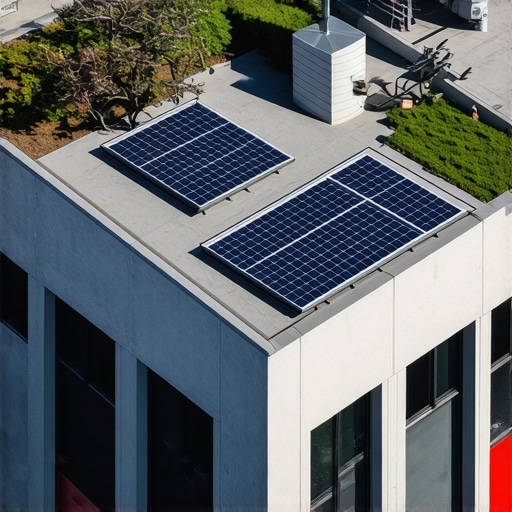
We’ve moved past simple solar panels bolted to sleepers. By 2026, bifacial panels—which catch light on both sides—are the standard. They rely on the ‘albedo effect,’ reflecting light off a high-reflectivity white membrane. Here’s the catch: that extra UV radiation accelerates the breakdown of the polymer chains in the membrane. I’ve seen cheap TPO turn to chalk in five years because of this. You need a membrane formulated for ‘extreme’ UV, not the base-grade stuff a ‘trunk slammer’ will bid to win the job. When you’re vetting local roofers, ask them about the chemical compatibility of the solar stand-offs and the membrane. If they look at you like you’re speaking Greek, kick them off the ladder.
3. The Death of the Field-Applied Seam
Labor is the biggest problem in roofing right now. The industry is moving toward factory-applied tape and modular assemblies. Why? Because a guy on a 140°F roof in Phoenix isn’t going to get every seam perfect with a hand-welder. A ‘shiner’—that’s a fastener that missed the purlin—is bad enough, but a cold weld is a death sentence. In 2026, we’re seeing more ‘peel-and-stick’ technology that removes the human element. The physics of it is simple: factory-controlled environments produce better adhesion than a dusty, windy job site. If your roofing companies are still relying solely on hand-welding for miles of seams, they’re living in 1995.
4. Thermal Shock Resistance and Expansion Crickets
In the Southwest, we deal with massive temperature swings. A roof can be 160°F at 3 PM and 60°F at 3 AM. That’s ‘thermal shock.’ The roof grows and shrinks like a living lung. If the roofing system doesn’t have properly designed ‘crickets’—those small peaked structures that divert water toward drains—and expansion joints, the metal flashing will literally tear itself apart. I’ve seen stainless steel fasteners sheared clean off by the force of a roof moving. In 2026, trends are moving toward more robust, elastomeric flashings that can stretch without snapping.
“Roof systems shall be designed to accommodate the movements of the roof deck and the roof-covering-material.” – International Building Code (IBC) Section 1501.1
5. Circular Economy: Fully Recyclable Assemblies
The days of tearing off a roof and throwing 20,000 pounds of petroleum-based trash into a landfill are ending. By 2026, many local roofers will be required to provide a ‘cradle-to-grave’ plan. This means roofs designed to be disassembled. It changes the way we use adhesives. We’re seeing a return to ballasted systems or vacuum-secured systems that don’t use glue, making the insulation boards reusable. It’s better for the planet, sure, but it’s also better for the forensic investigator because we can actually see the deck without scraping off layers of dried-out felt and tar. Don’t let a contractor sell you a ‘lifetime warranty’ without asking who is responsible for the disposal in twenty years. Those warranties are often just marketing fluff designed to disappear when the company changes its LLC name.