
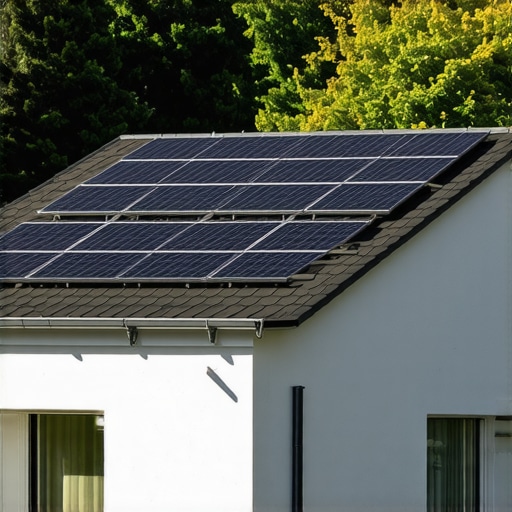
The Forensic Reality of the Solar Hype
I’ve spent twenty-five years crawling over hot asphalt and cracked concrete tiles, and if there is one thing I’ve learned, it is that the sun is a slow-motion wrecking ball. Everyone in 2026 is talking about ‘energy independence’ and ‘green ROI,’ but as a forensic investigator who has seen more failed ‘innovations’ than I care to count, I look at a roof differently. I don’t see a power plant; I see thousands of pounds of hardware bolted through a waterproofing membrane. Walking on a client’s roof last month in the high desert, it felt like walking on a wet sponge. I knew exactly what I’d find underneath before the first shingle was pulled. The solar company had ignored the basic physics of water shed, thinking their ‘high-tech’ brackets could defy gravity and the relentless UV decay that turns standard sealants into brittle biscuits within three seasons. Local roofers are often called in to clean up the mess left by these tech-first, roofing-last installers.
The Physics of Failure: Why Geography Dictates Your Profit
Before we talk about dollars, we have to talk about the ‘Thermal Dance.’ In the Southwest, we deal with thermal shock that would make a New Englander’s head spin. You have a roof deck that hits 160°F by noon and then drops to 50°F after a desert rain. When you bolt a massive aluminum solar rack to a wooden rafter, those two materials expand and contract at completely different rates. This creates a ‘sawing’ action on your fasteners. If your roofing companies didn’t use a proper cricket or high-grade [flashing](https://modernroofingguide.com/local-roofers-3-fixes-for-2026-flashing-rust), that movement eventually opens up a ‘shiner’—a missed or loosened nail that acts as a straw for rainwater.
“A roof is only as good as its flashing; if the transition points are compromised by aftermarket penetrations, the system’s design life is irrelevant.” – Old Roofer’s Adage
In 2026, profitability isn’t just about the tax credit; it’s about avoiding the ‘double-cost’ trap. This happens when you install a 25-year solar array over a 10-year-old asphalt roof. Five years later, the shingles fail. Now you’re paying a premium to have the solar panels decommissioned, stored, and reinstalled just so you can do the roofing work you should have done initially. I’ve seen homeowners lose their entire energy savings in a single week because of this lack of foresight. You need to identify [shingle stress](https://modernroofingguide.com/local-roofers-3-ways-to-identify-2026-shingle-stress) before the first bracket is ever tightened.
The Material Truth: Integrated Tiles vs. Rack-Mounted Panels
In the current market, you have two primary choices, and both have their own forensic ‘footprint.’ Traditional rack-mounted panels are the workhorses, but they create a ‘heat chimney’ effect. The gap between the panel and the roof becomes a breeding ground for debris, and in the Southwest, it traps heat that can actually degrade your underlayment faster. I’ve seen [decking rot](https://modernroofingguide.com/local-roofers-5-signs-of-2026-decking-rot-2) occur under solar arrays because the lack of airflow caused localized condensation that never dried out. On the other hand, integrated solar tiles—where the shingle is the solar panel—look great, but they increase the number of electrical connections and potential leak points by a factor of ten. Every tile is a penetration. If you don’t have a contractor who understands how to manage [attic energy loss](https://modernroofingguide.com/eco-friendly-roofing-3-ways-to-lower-attic-energy-loss), you’re just trading an electric bill for a mold remediation bill.
The Warranty Trap: Why ‘Lifetime’ is a Marketing Term
If a solar rep tells you their system has a 25-year warranty, ask them who is covering the labor to fix a leak in year seven. Most solar warranties cover the output of the cells, not the watertight integrity of your home. This is where the ‘trunk slammers’ disappear. They get their commission, and when the [valley leaks](https://modernroofingguide.com/how-2026-roofing-companies-fix-2026-valley-leaks-2) start appearing, their phone number is disconnected. True profitability in 2026 comes from ‘System Stacking’—ensuring your [underlayment](https://modernroofingguide.com/local-roofers-3-signs-of-2026-underlayment-fail-2) and your solar mounts are designed to age at the same rate.
“The building envelope shall be maintained in a weather-tight condition… penetrations shall be flashed in accordance with the manufacturer’s instructions.” – International Residential Code (IRC)
The Forensic Audit: Is it Profitable for You?
To determine if you’ll actually see a dime of profit, you need to look at three things: the age of your current deck, your local ‘Peak Sun Hours,’ and your utility’s buy-back rate. If your roofing is already showing signs of [shingle lifting](https://modernroofingguide.com/local-roofers-5-ways-to-spot-shingle-lifting-early-storm-fast-early-fast-early-fast-early-fast), do not put solar on it. You are literally building a house of cards. Furthermore, in high-heat zones, the efficiency of solar cells actually drops as they get hotter. It’s a cruel irony: the more sun you have, the harder the equipment has to work to convert it, and the faster the roof underneath it cooks. To maximize ROI, savvy owners are now using [white roofs](https://modernroofingguide.com/eco-friendly-roofing-why-white-roofs-save-money-in-2026) or bifacial panels that catch reflected light, but even these require expert maintenance to keep debris from clogging the [gutters](https://modernroofingguide.com/local-roofers-4-tips-for-2026-gutter-maintenance-2). If you’re not willing to do a forensic walk-through every two years, the maintenance costs will eat your energy savings alive. 2026 has made the tech cheaper, but it hasn’t made the physics of roofing any easier. Don’t let a salesman tell you otherwise.