
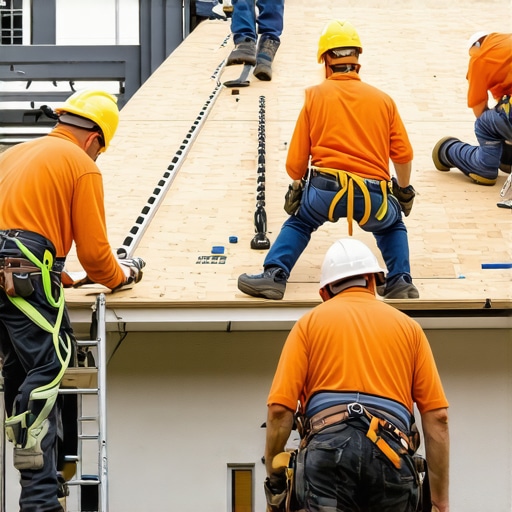
The Anatomy of a High-Stakes Roof
I’ve spent the better part of three decades standing on the steep pitch of residential and commercial structures, and if there is one thing I have learned, it is that the roof does not care about your schedule. My old foreman used to say, ‘Water is patient. It will wait for you to make a mistake.’ He was right. Every time I see a crew rushing to finish a square before a Gulf Coast squall hits, I don’t see efficiency; I see the potential for a catastrophic ‘shiner’—those missed nails that provide a direct conduit for moisture to rot out the decking over the next five years. To truly understand why local roofers fail or succeed, you have to look past the shiny new shingles and examine the forensic reality of the build site. Safety isn’t just about harnesses; it’s about the integrity of the system and the people installing it.
“A roof is only as good as its flashing.” – Old Roofer’s Adage
1. Mastering the Physics of the Tropical Climate
In the humid Southeast, we aren’t just fighting gravity; we are fighting a relentless chemical assault. Salt air and 90% humidity turn standard galvanized nails into rusted stubs in a decade. Reliable roofing companies must prioritize ‘Secondary Water Resistance.’ This isn’t a marketing buzzword; it is the physical barrier between a dry attic and a mold-infested disaster. When water hits a roof during a hurricane, it doesn’t just flow down; it is driven upward by wind pressure. This is where capillary action takes over. If your underlayment isn’t sealed correctly at the laps, the water will find its way underneath the shingle and sit against the plywood. This is why you often see underlayment failure in homes less than ten years old. A professional safety record starts with knowing the physics of how water moves under pressure.
2. The Material Truth: Why Cheap is Expensive
Homeowners are often blinded by the ‘Lifetime Warranty’ stickers. Let me be cynical for a moment: those warranties rarely cover the labor to fix a failure caused by poor ventilation or improper fastening. In our climate, thermal shock is a daily occurrence. The roof surface can hit 160°F by noon and drop to 75°F during a sudden afternoon downpour. This rapid contraction puts immense stress on the fasteners. If a contractor uses cheap, thin-gauge drip edges or low-quality felt, you will eventually see fascia wear that threatens the very bones of the house. You have to understand the truth about cheap roofing materials—they are designed to look good for the first three years and fail right after the contractor’s tail-light warranty expires.
“The building envelope must be viewed as a holistic system, where the roof serves as the primary defense against hydrothermal loading.” – IRC Building Principles
3. Proactive Site Safety and Debris Management
Building a local project safety record means more than just avoiding falls. It means protecting the homeowner’s property and your crew’s longevity. One of the biggest red flags of a ‘trunk slammer’ is a messy job site. If I see nails scattered in the lawn or old shingles clogging the gutters, I know they are cutting corners on the roof, too. Modern site safety management involves using magnetic sweeps and debris nets from the moment the first shingle is torn off. This is part of a larger strategy for roofing excellence that involves building local safety records through disciplined execution. A safe site is an organized site, and an organized site is where the best work happens.
4. The Mechanism of the ‘Cricket’ and Proper Flashing
Most leaks don’t happen in the field of the roof; they happen at the transitions. This is where forensic roofing gets interesting. Consider a chimney wider than 30 inches. Without a ‘cricket’—a small peaked structure behind the chimney to divert water—you essentially have a dam on your roof. Water pools, hydrostatic pressure builds, and eventually, the flashing gives way. I’ve seen chimneys where the plywood had turned to mush because a roofer didn’t want to spend the extra hour building a proper diverter. This is the difference between a roof that lasts 30 years and one that needs a ‘surgery’ repair in five. When roofing companies prioritize these small architectural details, they are inherently improving their safety and reliability records.
5. The Warranty Trap vs. Installation Quality
Is a 30-year warranty actually worth it? Only if the person installing the roof is still in business next year. Most failures are installation-related, not material-related. High-wind zones require specific nailing patterns—six nails instead of four, placed precisely in the common bond area. If a nail is driven too deep, it slices the shingle (a ‘blow-through’). If it’s too shallow, it creates a ‘high nail’ that will eventually wear a hole through the shingle above it. These are the details that forensic roofers like me look for. A local roofer who can show a documented safety record is someone who trains their crew on these exact mechanical nuances. They understand that a roof isn’t just a product; it’s a high-performance assembly that must withstand nature’s worst moods.