
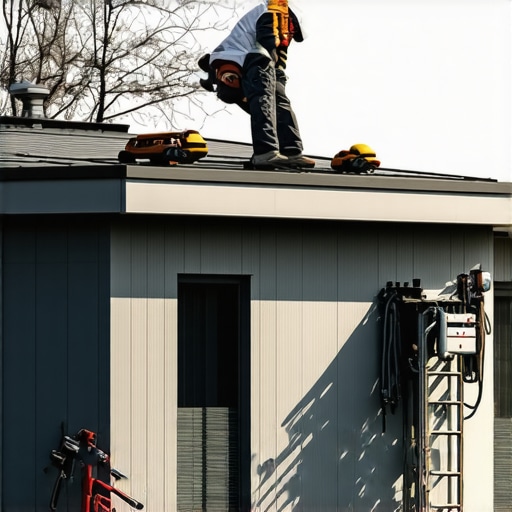
The Spongy Truth: A Forensic Look at Low-Slope Failures
Walking onto a flat roof in the Northeast during the late autumn thaw is a sensory experience I wouldn’t wish on my worst enemy. I remember stepping onto a commercial deck in Philadelphia last year; the surface looked fine from the ladder, but the moment my boot hit the membrane, it felt like I was walking on a soaked kitchen sponge. I knew exactly what I’d find underneath before I even pulled my knife for a core sample. When I finally cut into it, three inches of polyisocyanurate insulation were so saturated they were literally bleeding water. This wasn’t a material failure; it was a human failure. The local roofers who installed it five years prior ignored the basic physics of hydrostatic pressure. They didn’t understand that on a flat roof, water doesn’t just sit; it hunts for any microscopic breach in a seam to begin its slow, destructive feast on your decking.
“A roof is only as good as its flashing.” – Old Roofer’s Adage
If you are looking at roofing companies to handle a flat or low-slope project in 2026, you need to look past the shiny trucks and the “Lifetime Warranty” stickers. In the trade, we call a flat roof a ‘leak waiting to happen’ if it’s handled by someone who usually only bangs shingles on 4:12 pitch suburban homes. Flat roofing is a different beast entirely. It’s not about shedding water; it’s about containment and managed drainage. When you’re vetting roofing, you aren’t just buying a product; you’re buying a chemical and mechanical bond that has to survive 140°F summer days and -10°F winter nights without cracking, shrinking, or delaminating. Here is how you separate the forensic experts from the trunk-slammers.
1. The Drainage Audit: Why ‘Flat’ is a Lie
First off, no roof should ever be truly flat. If a contractor tells you a dead-level roof is fine, fire them on the spot. You need a minimum of 1/4-inch slope per foot to move water toward the scuppers or drains. When I inspect a failing system, I often see ‘ponding’—standing water that stays for more than 48 hours. This water adds thousands of pounds of dead load to your structure and acts as a magnifying glass for UV rays, cooking the membrane from the top down. 2026 roofing companies should be talking to you about tapered insulation. This is the process of using angled foam boards to create a synthetic slope where the structural deck lacks one. If they aren’t mentioning crickets—small diverted ridges built to steer water around chimneys or HVAC curbs—they are setting you up for a swamp on your ceiling. Capillary action will pull that ponding water right up under the counter-flashing and into your building envelope.
2. The Seam Strategy: Heat vs. Glue
In the world of local roofers, you’ll hear a lot of debate about EPDM versus TPO. EPDM (Ethylene Propylene Diene Terpolymer) is that black rubber stuff. It’s tough, but it relies on adhesives and tapes. Over time, the heat-thaw cycle in cold climates causes those glues to dry out and fail. TPO (Thermoplastic Polyolefin), on the other hand, allows for heat-welded seams. When done right, the two sheets of plastic literally become one. I’ve seen TPO roofs where the membrane tore before the seam gave way. But here is the catch: if the roofer’s robotic welder isn’t calibrated for the ambient temperature and humidity of that specific morning, you get a ‘cold weld.’ It looks sealed, but a stiff wind or some ice expansion will pop it right open. Ask any company what their protocol is for test-welds at the start of every shift. If they look at you like you have three heads, move on.
“Water is the most versatile of all substances… it will eventually find the path of least resistance.” – NRCA Manual
3. The Termination Bar and Flashing Forensic
The field of the roof rarely fails first; it’s always the edges. I’ve seen countless ‘shiners’—nails that missed the wood and are just sticking up like needles—puncture membranes from the bottom. But the real crime is usually at the parapet wall. A hack will just run the membrane a few inches up the wall and slather it with ‘black jack’ mastic. That mastic will dry out and crack in two seasons. A professional roofing company will use a termination bar—a heavy-duty metal strip that mechanically fastens the membrane to the wall—and then cover that with a reglet or counter-flashing. This creates a redundant seal. You want to see ‘boots’ around every pipe and ‘pitch pockets’ filled with pourable sealer around any irregular penetrations. If they are just using caulk, they are giving you a two-year roof disguised as a twenty-year roof.
4. The R-Value and Thermal Bridging Trap
In cold climates, your flat roof is your primary thermal shield. Most local roofers will just throw down some half-inch cover board and call it a day. But in 2026, energy codes are stricter than ever. You need to understand thermal bridging. This happens when the metal fasteners used to hold down your insulation act as tiny heat-sinks, sucking the warmth out of your building and into the cold air. This can actually cause condensation to form on the underside of the deck, rotting your plywood from the inside out even if the roof doesn’t leak! Top-tier roofing companies now use induction-welded plates or high-grade adhesives to avoid piercing the vapor barrier. This keeps your R-value where it belongs and prevents that ‘shadowing’ effect you see on old flat roofs.
5. The Warranty Myth vs. Workmanship Bonds
Don’t get blinded by the ‘Manufacturer’s Lifetime Warranty.’ Those often only cover the material itself, not the labor to fix it, and they are riddled with exclusions like ‘ponding water’ or ‘acts of God.’ If the local roofers don’t offer a 5-to-10-year workmanship warranty backed by a solid reputation, that manufacturer’s paper is worthless. You want a company that performs an infrared moisture survey before they even give you an estimate. This tech allows us to see exactly where the insulation is wet so we don’t just ‘bridge’ over a problem. If you bury wet insulation under a new membrane, you’re just creating a localized steam room that will destroy your structural joists within a decade.
The Bottom Line
Choosing between roofing companies for a flat roof isn’t like picking a painter. It’s more like picking a vascular surgeon. One mistake in the ‘plumbing’ of your roof’s drainage or the ‘sutures’ of its seams, and the whole system will bleed out. Don’t let a ‘square’ price be your only metric. A cheap roof that leaks in three years is the most expensive mistake a property owner can make. Look for the forensic details, demand to see their flashing mock-ups, and remember: gravity never takes a day off.
This article highlights some crucial aspects of flat roof maintenance and selection that often get overlooked. As someone who’s dealt with flat roofing issues firsthand, I completely agree that drainage is one of the most critical factors. I once encountered ponding on a commercial roof that was initially deemed ‘flat enough,’ but it led to extensive water damage over time. The use of tapered insulation and crickets is often the difference between a long-lasting roof and costly repairs. Also, I’ve noticed many contractors shy away from infrared moisture surveys, but in my experience, they’re invaluable for identifying hidden issues before they become disasters. Has anyone here had success with thermal imaging technology in their roofing projects? I’d be interested to hear how it has helped you catch problems early or improve the lifespan of your flat roofs.