
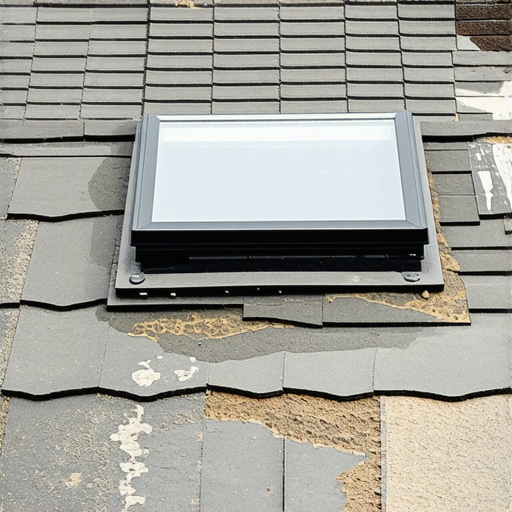
The Forensic Scene: Walking the Sponge
I spent forty minutes on a 6/12 pitch in Minneapolis last November, and my boots told me everything the homeowner didn’t want to hear. Walking near that triple-paned skylight felt like walking on a damp kitchen sponge. I didn’t even need to pull a shingle to know that the framing underneath was no longer wood; it was a biological experiment. This is what twenty-five years of forensic roofing teaches you. When roofing companies tell you a skylight is ‘fine’ because they don’t see water dripping on the carpet, they are usually lying or lazy. By the time that water hits the floor, the structural integrity of your roof deck is already a memory.
The Physics of Failure: Why Skylights Rot from the Inside Out
In cold climates, a skylight isn’t just a window; it’s a massive thermal bridge. You have a hole in your insulation where warm, moist air from your kitchen or bathroom rises. If the local roofers who installed it didn’t understand vapor pressure, that warm air hits the cold underside of the skylight flashing and condenses. This isn’t a ‘leak’ in the traditional sense. It’s a slow, silent drowning of the wood fibers through capillary action. Water is patient; it moves sideways under the shingles, soaking into the plywood until it reaches a state of permanent saturation. When this happens, the wood loses its ‘shear strength,’ and you start seeing the first signs of 2026 skylight frame rot.
“A roof is only as good as its flashing, and a skylight is only as good as the technician who wrapped it.” – Old Roofer’s Adage
1. The ‘Spongy’ Decking Perimeter
If you can feel a ‘give’ when you step within eighteen inches of the skylight curb, the battle is already lost. That soft spot indicates that the plywood has transitioned from a structural component to a pulp-like mush. This often happens because the original installers skipped the ice and water shield or failed to use a proper cricket to divert water around the high side of the frame. This structural failure is often a precursor to local roofers identifying decking rot across the wider field of the roof. If the framing can’t hold a nail, the shingles are just sitting there by gravity and prayer.
2. Internal Ghosting and Drywall Discoloration
Look at the drywall wrap inside the light well. Do you see faint, brownish rings or a graying of the paint in the corners? That isn’t just ‘old house smell.’ That is active moisture migration. In 2026, roofing companies are seeing more of this because modern homes are built so tight that moisture has nowhere to go but up. When that moisture gets trapped behind the flashing, it creates a micro-climate that eats the headers. Often, this is linked to unresolved attic air leaks that are pumping humidity directly into the roof assembly.
3. The Appearance of ‘Shiners’ and Rusted Fasteners
If you go into your attic and look at the underside of the skylight framing, look for ‘shiners’—nails that missed the joist and are now sticking out through the plywood. If those nails are rusted or have black rings around them, you have a condensation crisis. The metal nail acts as a heat sink, pulling cold from the exterior and causing water to bead up and drip onto the framing. Over time, this rust spreads to the structural fasteners. Many companies now prefer PVC flashing because it doesn’t conduct heat the same way as aluminum, reducing this specific type of thermal rot.
4. Persistent Algae and Moss at the Curb
A healthy roof should dry out within hours of a rainstorm. If you see a green ‘mustache’ of moss or dark algae streaks specifically concentrated at the base of your skylight, the frame is holding water. The moisture is literally feeding the vegetation. This usually means the step flashing was installed incorrectly, or the apron flashing has a ‘back-bend’ that is trapping needles and debris. This trapped organic matter acts as a wet rag against the wood. If left unchecked, this moisture will travel down the rafters, leading to visible fascia board decay at the eaves.
5. Gapped or Brittle Gaskets
The seal between the glass and the frame is the first line of defense. By 2026, many older skylights have gaskets that have been baked brittle by UV radiation and then shattered by ice expansion. Once that seal breaks, water enters the ‘glazing channel.’ If the weep holes are clogged—and they usually are—that water overflows directly into the wooden frame of the skylight itself. This is the ‘silent killer’ because it rots the unit from the inside where you can’t see it until the glass literally starts to sag. Local roofers who know their trade will check these seals with a probe during every inspection.
“The International Residential Code (IRC) requires that all roof openings be flashed in a manner that prevents moisture entry into the wall or roof assembly, yet 70% of skylight failures are due to improper flashing integration.” – Forensic Roofing Institute
The Surgery: Why Caulk Won’t Save You
I see it every week: a homeowner hires a ‘trunk slammer’ who goops five tubes of silicone around a leaking skylight. That is like putting a Band-Aid on a gunshot wound. Caulk is a temporary sealant; it is not a flashing system. If you have frame rot, the only ‘fix’ is surgery. You have to strip the shingles back two feet, remove the unit, replace the rotten headers, and reinstall a modern unit with a proper underlayment wrap. If you don’t fix the underlying physics—the way air and water move around that hole in your roof—you’ll be paying another roofer to do the same job in three years. High-quality roofing requires an understanding of how water behaves under hydrostatic pressure, not just a hammer and a ladder.