
The 3 AM Drip: A Forensic Post-Mortem of the Humble Nail Pop
You’re lying in bed, it’s raining outside in a cold Northern October, and then you hear it. Drip. Drip. It’s not the faucet. It’s coming from the ceiling fan. Most homeowners assume a tree branch poked a hole in the roof or a valley has failed, but after 25 years of crawling through fiberglass insulation and sweating on 8:12 pitches, I can tell you the culprit is often smaller than a dime. It’s a nail pop. In my years as a forensic investigator for roofing companies, I’ve seen these tiny betrayals destroy entire squares of decking. Walking on one particular roof in a damp suburb last spring felt like walking on a sponge; I knew exactly what I’d find underneath before I even pulled my pry bar. The plywood had the consistency of wet oatmeal because three dozen ‘shiners’—nails that missed the rafters—had been backing out for a decade, inviting the weather inside one molecule at a time.
“The roof shall be covered with approved roof coverings secured to the roof deck in accordance with the manufacturer’s installation instructions.” – International Residential Code (IRC) Section R905.1
The Physics of the Pop: Why Metal Revolts Against Wood
In cold climates, we deal with a phenomenon called thermal bridging. Think of every nail as a tiny highway for cold. When the temperature hits 10°F outside, that steel nail head is a frozen probe sticking into your 120°F attic. If you have poor airflow, moisture from your shower or kitchen hitches a ride on warm air, finds that frozen nail, and condenses. This is the start of the ‘Attic Rain’ cycle. Over time, that moisture rots the wood fibers surrounding the nail shank. As the roof deck expands and contracts with the seasons, the grip loosens. The nail begins to back out, pushed by the sheer force of the wood’s movement. This is where nail pop disruption begins. Once the nail head lifts just an eighth of an inch, it starts ‘tenting’ the shingle above it. Now, instead of a flat surface shedding water, you have a pivot point. When wind gusts hit, that shingle flaps. Every flap breaks the sealant strip, and suddenly, you have a mechanical failure masquerading as a simple leak.
1. The Low-Angle Shadow Test
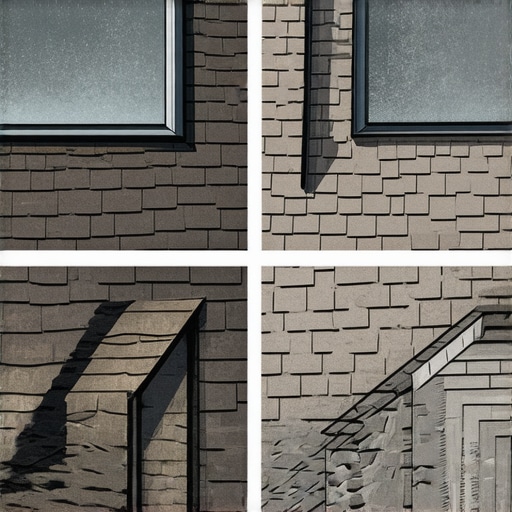
The first way to spot these is to get on a ladder—or use a pair of high-powered binoculars—during the ‘golden hour’ of sunset. You aren’t looking for holes; you’re looking for silhouettes. A nail pop creates a distinct ‘tent’ or a small, sharp hump in the asphalt. In the harsh, side-angled light, these humps cast long, tell-tale shadows. Local roofers who know their trade don’t just walk a roof; they read the topography. If you see a grid of tiny bumps, you aren’t just looking at one leak; you’re looking at a systematic installation failure where the shingles were likely ‘high-nailed’ or the compressor was set too low, leaving the heads proud of the surface. This often leads to significant decking rot if the ‘tents’ have allowed wind-driven rain to move sideways via capillary action.
2. The Attic ‘Shiner’ Hunt
If you want to be a real forensic detective, put on a respirator and crawl into the crawlspace. Turn off your flashlight for a second to see if there’s any daylight peeking through, but more importantly, look for ‘shiners.’ These are nails that the original roofing crew fired through the decking but missed the rafter entirely. In a cold climate, these shiners will be covered in white frost or rust streaks. When that frost melts, it drips directly onto your ceiling. If you see dark rings on your plywood around a nail tip, that’s your smoking gun. This is often the result of attic heat loss, where warm air bypasses your insulation and turns your roof deck into a laboratory for mold. This isn’t a shingle problem; it’s a physics problem.
“A roof is only as good as its flashing, but it lives and dies by its fasteners.” – Old Roofer’s Adage
3. The Granule Avalanche in the Gutter
Check your gutters. When a nail backs out and starts lifting a shingle, it creates a high-pressure point. Every time someone walks on that roof, or every time a heavy snow load sits on it, the granules on the underside of the overlapping shingle are ground away by that nail head. If you find localized piles of granules in your gutter downspouts, it’s a sign that the ‘armor’ of your shingles is being eaten from the inside out. This mechanical abrasion eventually wears a hole right through the fiberglass mat. You’ll see a circular bald spot on the shingle directly above the nail. This is the ‘Band-Aid’ stage; most local roofers will just slop some mastic on it, but a pro knows you have to pull the fastener, replace the shingle, and reset a new nail in a fresh piece of wood.
4. The ‘Crunch’ Test: Feeling the Structural Failure
When I’m performing a forensic roof audit, I use my feet as much as my eyes. A healthy roof feels solid, like walking on a gym floor. A roof suffering from widespread nail pops and subsequent moisture intrusion has a ‘crunch’ or a ‘give’ to it. As the nail backs out, it creates a gap between the plywood and the rafter. When you step near it, you can actually hear the wood rubbing against the metal shank. It’s a rhythmic, metallic squeak. If you feel that ‘sponge’ sensation I mentioned earlier, the nail has already done its damage, and the roofing companies you call will likely be talking about a full tear-off rather than a simple patch. This is why ignoring a small ceiling stain is the most expensive mistake a homeowner can make.
The Surgery: Why Caulk Never Works
I’ve seen plenty of ‘trunk slammers’ try to fix a nail pop by squirted a bit of caulk over the head and tamping it down. That’s like putting a Band-Aid on a bullet wound. The wood fibers are already ‘cleated’—they’ve been pushed upward. The only real fix is the surgical approach: you have to carefully break the sealant bond of the shingles in a three-shingle radius, remove the offending fastener, and check the decking for structural integrity. If the wood is soft, you’re looking at a cricket installation or a partial deck replacement. We use ‘Smart Fasteners’ in 2026 that have a higher pull-out resistance, but even the best nail won’t hold in rotten plywood. If you’re seeing these signs, don’t wait for the next blizzard to turn your attic into a swimming pool. The cost of a few shingles today is nothing compared to the cost of a mold remediation crew tomorrow.