
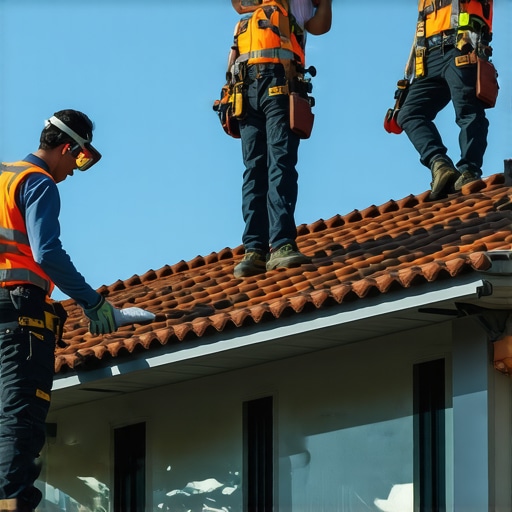
The Era of the ‘Trunk Slammer’ is Dying
For twenty-five years, I’ve spent my mornings climbing ladders and my afternoons explaining to homeowners why their ‘new’ roof is currently leaking into their breakfast nook. I’ve seen it all: shingles nailed with nothing but a prayer, valleys lined with cheap felt that disintegrated after two seasons, and enough ‘shiners’—those missed nails that act as heat sinks—to fill a hardware store. But the industry is shifting. The smartest roofing companies in 2026 aren’t just bringing a hammer and a shingle gauge; they’re bringing Augmented Reality (AR) headsets. My old foreman, Sully, used to say, ‘Water is patient. It will wait for you to make a mistake.’ He was right. Water doesn’t care about your marketing or your shiny trucks. It only cares about gravity and capillary action. In the Northeast, where the winter is a relentless cycle of freeze and thaw, that patience from the water is what turns a small oversight into a $20,000 structural failure.
“A roof is only as good as its flashing.” – Old Roofer’s Adage
The Physics of the AR Lens
When you look at a roof with the naked eye, you see aesthetics. When a forensic roofer looks at it, we see potential points of failure. AR tools allow us to overlay thermal imaging and structural data directly onto the shingle surface. In cold climates like Boston or Buffalo, the biggest enemy isn’t the snow; it’s the heat escaping from your attic. This thermal bridging creates the dreaded ice dam. By using AR, local roofers can now see exactly where local roofers 3 signs of 2026 attic heat loss are occurring before the first snowflake ever touches the deck. We can visualize the ‘attic bypasses’ where warm air is sneaking past the insulation, warming the plywood, and melting the bottom layer of snow. That meltwater runs down to the cold eave, freezes, and builds a dam. Once that dam is there, hydrostatic pressure forces the water under the shingles and through the nail holes. AR allows us to show the homeowner the invisible thermal leaks in real-time, moving the conversation from ‘I think you need more insulation’ to ‘Here is the heat literally bleeding out of your ridge.’
Why Material ‘Warranties’ are Often Fiction
I’ve walked on roofs that felt like walking on a wet sponge, only to have the owner tell me they have a ‘Lifetime Warranty.’ Let me be blunt: a warranty is only as good as the installation. If a crew installs a hundred squares of asphalt without proper ventilation, those shingles will cook from the inside out. In 2026, roofing companies are using AR to ensure the math actually works. We can overlay the vent ratings (NFA – Net Free Area) onto the actual roof pitch to see if the intake and exhaust are balanced. If they aren’t, you’ll see local roofers 4 ways to spot 2026 buckling shingles within five years. The AR tool maps the airflow, showing stagnant pockets of air where moisture will accumulate and rot the deck. I’ve torn off roofs where the plywood had turned to a black, pulpy mess because the ‘local roofer’ forgot that a roof needs to breathe just as much as it needs to shed water. If you don’t catch it, you end up with local roofers 5 signs of 2026 decking rot, which turns a simple shingle swap into a full structural rebuild.
Seeing Through the Shingles
One of the most powerful uses of AR in 2026 is the ability to ‘see’ the substrate. Using LiDAR scans integrated into the AR headset, a contractor can walk a roof and see exactly where the previous installer missed the rafters. Every ‘shiner’—that nail that missed the wood and is now hanging in the attic—is a potential leak point. In the winter, that nail gets cold. Warm attic air hits it, condenses into a drop of water, and drips onto your ceiling. Multiply that by 500 missed nails, and you have a ‘leak’ that doesn’t even require rain. Advanced why 2026 roofing companies now use 2026 smart audits 2 allow us to flag these issues before we even start the tear-off. We can show the homeowner exactly where the chimney flashing is failing—a notorious spot for shortcuts. If a roofer just goops some caulk around the base, they aren’t fixing it. They’re just hiding it. Proper local roofers 5 tips for 2026 chimney flashing requires a two-part counter-flashing system that allows for the natural expansion and contraction of the house. AR overlays can demonstrate the gap that will form when the temperature drops to 10°F, proving why the ‘caulk-and-walk’ method always fails.
“Standard practice is the baseline for mediocrity; forensic detail is the baseline for longevity.” – Architectural Axiom
The Forensic Future: Choosing a Pro
The cost of a roof isn’t just the materials and the labor; it’s the cost of the failure you don’t see coming. When you’re interviewing roofing companies, ask if they’re using these diagnostic tools. If they’re still just eyeballing it from the ground and giving you a ‘square price’ over the phone, they’re guessing. And in this trade, guessing is expensive. You want a team that understands the specific physics of your climate zone. You want the guy who can tell you exactly why your north-facing slope is growing moss and how their AR-mapped ventilation plan will stop it. Don’t be fooled by the lowest bid. The lowest bid is usually the one that forgets the Ice & Water Shield in the valleys or skips the ‘cricket’—the small peaked structure behind a chimney that diverts water. Without a cricket, water ponds, the seal fails, and the forensic investigator (like me) has to come out and tell you that your $15,000 savings just cost you a $30,000 interior restoration. In 2026, we have the tools to be perfect. There’s no longer an excuse for ‘good enough.’