
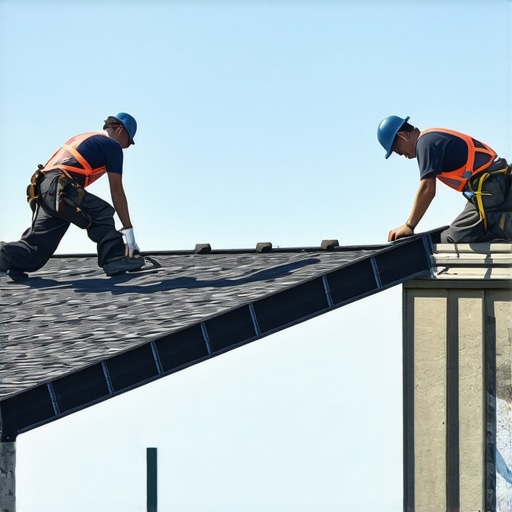
The Anatomy of a Failed Roof
Walking on that roof in Palm Beach felt like walking on a sponge. I knew exactly what I’d find underneath. As I peeled back the edge of a shingle that had supposedly been installed only three years prior, the wood underneath was blackened and crumbling. The culprit wasn’t a fallen branch or a lightning strike; it was the failure of a standard petroleum-based adhesive strip. In the humid, salt-heavy air of the Southeast, traditional asphalt strips can become brittle or, worse, never fully bond due to the constant moisture in the air. When you are dealing with wind-driven rain that hits the deck at 80 miles per hour, your seams are the only thing standing between a dry attic and a $50,000 mold remediation bill. Local roofers are tired of seeing this, which is why the industry has shifted toward the physics of Bio-Glu.
“A roof is only as good as its flashing and the integrity of its horizontal laps.” – Old Roofer’s Adage
The Physics of Capillary Action and Why Laps Fail
To understand why 2026 roofing companies are abandoning old methods, you have to understand the physics of a leak. Water doesn’t just fall down; it moves sideways through capillary action. When two surfaces are pressed together—like two shingles or a piece of flashing against a chimney—water can be pulled into the tiny gap between them, defying gravity. In the tropical heat of the Southeast, standard mastics often ‘cook’ out, losing their oils and shrinking. This creates a microscopic canyon that sucks in moisture. Bio-Glu is a bio-based polymer designed to maintain its elasticity even after years of UV exposure. It creates a covalent bond at the molecular level, ensuring that the lap becomes a monolithic barrier rather than just two pieces of material touching each other.
1. Moisture-Neutral Bonding (The Humidity Factor)
In regions like Florida or Houston, the air is thick enough to drink. Traditional adhesives require a bone-dry surface to bond correctly. If a crew installs a roof at 7:00 AM while the dew is still heavy, those shingles might never properly seal. Bio-Glu is hydrophobic; it actually displaces moisture on the surface, allowing local roofers to achieve a perfect bond in conditions that would ruin a standard install. This prevents the dreaded shiner—a nail that misses the structural member—from becoming a conduit for water because the glue seals the puncture site immediately, even if it’s damp.
2. Resistance to Thermal Expansion
Every day, your roof goes through a violent cycle of expansion and contraction. In the Southeast, the surface temp can hit 160°F by noon, only to be hit by a 70°F rain shower in seconds. This thermal shock tears at the seams. Standard adhesives turn into hard plastic over time and crack under this stress. Bio-Glu remains rubberized. It allows the roof to breathe and move without breaking the seal. If you ignore this flexibility, you’ll eventually see local roofers identifying decking rot caused by micro-fissures in the lap joints. Using high-performance bio-sealants ensures that these transitions remain watertight regardless of the thermometer.
3. High-Velocity Hurricane Zone (HVHZ) Performance
Wind doesn’t just blow over a roof; it creates lift. When wind hits the eave, it creates a vacuum effect on the leeward side. If the seams aren’t locked down, the shingles will chatter. This vibration eventually breaks the mechanical fasteners. Bio-Glu provides a higher uplift rating than traditional asphalt strips. By gluing the entire square (100 square feet) with reinforced bio-polymers, how 2026 roofing companies handle high wind risk has fundamentally changed. It’s no longer just about the nails; it’s about the continuous chemical bond along the entire edge of the roof.
4. Elimination of Volatile Organic Compounds (VOCs)
Old-school ‘bull’ or roofing cement is packed with solvents that gunk up the air and eventually off-gas, causing the material to shrink and crack. The 2026 move toward Bio-Glu is partly driven by new environmental codes. These adhesives are derived from soy and linseed oils, which don’t evaporate. What you apply on day one is the same volume of material that will be there in year twenty. This stability is why many contractors are also switching to advanced PVC flashing systems that integrate perfectly with bio-based adhesives.
“The application of sealants must be continuous and provide a permanent bond to prevent moisture migration beneath the primary roof covering.” – NRCA Technical Manual
5. Superior Adhesion to Modern Underlayments
We aren’t using felt paper anymore. Modern synthetic underlayments are essentially plastic sheets. Traditional asphalt glue doesn’t like to stick to plastic very well—it’s like trying to tape a wet trash bag. Bio-Glu was engineered specifically to bond to the non-woven poly-fabrics used in 2026. This creates a secondary water resistance (SWR) layer. Even if the primary shingles are blown off in a storm, the Bio-Glu seams on the underlayment keep the house dry. Without this, you’ll see early signs of eave damage where water has crept under the starter course.
6. Protection Against Salt-Air Corrosion
If you live within five miles of the coast, the salt in the air is a slow-motion wrecking ball. It eats galvanized nails and degrades cheap mastics. Bio-Glu acts as a sacrificial barrier, encasing the fasteners and seams in a chemically inert shell. This is particularly important in the valley of the roof, where water volume is highest. By using Bio-Glu to reinforce the valley lining, roofers prevent the galvanic corrosion that usually leads to premature failure of metal components.
7. Labor Efficiency and Self-Healing Properties
The labor market is tight. Crews need products that are foolproof. Bio-Glu is often pre-applied or comes in easy-to-dispense canisters that ensure a consistent bead every time. Moreover, it has ‘self-healing’ properties. If a contractor steps on a shingle and slightly displaces a fastener, the gel-like consistency of the Bio-Glu flows back into the void. This prevents the tiny leaks that usually go unnoticed until they’ve caused massive structural damage. When a homeowner asks why their quote is higher than the guy with the truck and a ladder, the answer is usually in the bucket of glue. Cheaper contractors use the same old mastic that has been failing since the 90s. The forensic reality is simple: pay for the Bio-Glu now, or pay for the structural repairs later.
The Verdict for Homeowners
Don’t be fooled by ‘lifetime’ warranties that only cover the material. Most warranties are void if the installation doesn’t account for local climate physics. If you are in a high-humidity or high-wind area, demand a Bio-Glu seam system. It’s the difference between a roof that lasts thirty years and one that becomes an insurance claim in seven. Watch out for the small details like how they handle the cricket behind your chimney or the laps in your valleys. If they aren’t using a high-grade bio-polymer, they are just counting down the days until the next leak. A roof is a system, not a collection of parts, and the glue is what holds that system together when the sky opens up.