
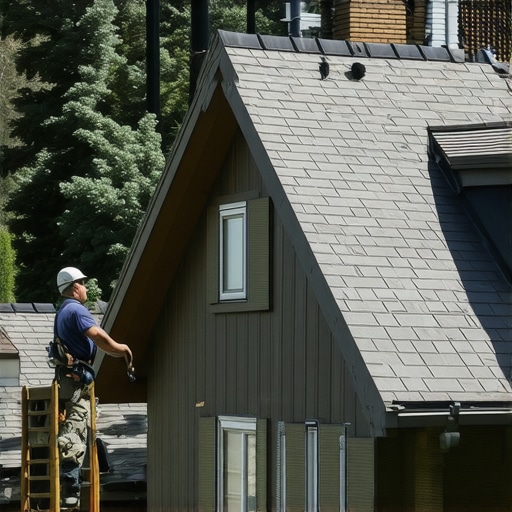
The Forensic Reality of the 2026 Roof Deck
Look, I’ve spent more hours on a pitch than most people spend in their living rooms. I’ve smelled the rot of a thousand failed bargain roofs, and I’ve seen what happens when a local roofer thinks he can cheat physics with a bucket of caulk and a prayer. Walking on that roof felt like walking on a sponge. I knew exactly what I’d find underneath: a disaster of saturated OSB and rusted fasteners that had given up the ghost years ago. The industry is changing, though. By 2026, the old guard of roofing companies is finally waking up to the fact that asphalt shingles are becoming a liability in a world of extreme thermal cycling and 100-mph straight-line winds. That’s why we’re seeing a massive pivot toward Poly-Slate.
The Material Truth: Why Traditional Shingles are Failing
In my 25 years of forensic investigations, the story is always the same. Asphalt is a petroleum product. When the sun beats down on a 140°F attic, those oils bake out. The shingles become brittle, the granules shed into the gutters like dead skin, and the first time a stray branch or a piece of hail hits it, the mat cracks. Once that mat is compromised, hydrostatic pressure takes over. Water doesn’t just fall; it climbs. It moves sideways through capillary action, pulled into the tiny gaps between the shingle layers until it finds a shiner—a missed nail—and then it’s a straight shot into your rafters.
“A roof is only as good as its flashing.” – Old Roofer’s Adage
Poly-Slate, or synthetic polymer slate, isn’t just a cosmetic upgrade. It’s a chemical solution to a physics problem. These tiles are engineered with long-chain polymers that don’t off-gas like petroleum-based products. When we talk about roofing today, we aren’t just talking about keeping the rain out; we’re talking about UV resistance and thermal expansion coefficients. A standard asphalt roof expands and contracts so violently in the Midwest heat that the nails eventually ‘back out,’ creating a leak path. Poly-Slate has a much lower expansion rate, meaning it stays put even when the temperature swings 50 degrees in six hours.
Mechanism Zooming: The Physics of the Poly-Slate Edge
Why are the best roofing companies pushing this stuff? Let’s zoom into the drip edge. In a traditional setup, wind-driven rain hits the fascia and gets driven upward under the first course of shingles. If your local roofer didn’t install a proper starter strip or used cheap felt instead of a high-temp ice and water shield, that water is rotting your eave in three years. Poly-Slate tiles are designed with a structural ribbing on the underside. This creates a built-in capillary break. Even if the wind pushes water upward, the ribbing breaks the surface tension, forcing the water to drop back down and exit the system. It’s a mechanical defense, not a chemical one.
The Warranty Trap vs. Actual Longevity
Let’s talk about that ‘Lifetime Warranty’ printed on the side of the shingle bundle. In the trade, we call that a marketing fiction. Those warranties usually only cover manufacturing defects—not ‘wear and tear’—and they’re prorated so fast that by year ten, your payout wouldn’t cover the cost of the dumpster. Poly-Slate is different because it’s a homogenous material. It’s not a sandwich of fiberglass and tar; it’s a solid injection-molded block. This means no granule loss and a Class 4 impact rating that actually makes insurance adjusters smile for once.
“The primary purpose of a roof is to shed water, yet we often design them to hold it.” – Architectural Axiom
The Cold Climate Defense: Ice Dams and Attic Bypasses
If you’re in the North, the enemy isn’t the rain; it’s the ice. When warm air leaks from your living room into the attic—what we call an attic bypass—it melts the bottom layer of snow on your roof. That water runs down to the cold eave and freezes, forming an ice dam. The water then backs up under the shingles. This is where I see the most failure. I’ve torn off roofs where the ice had pushed clear through the underlayment. Poly-Slate’s interlocking design creates a much tighter seal against this ‘damming’ effect. When combined with a properly cut valley and a functional cricket behind the chimney, you’re looking at a system that can actually handle a Canadian winter without turning your drywall into oatmeal.
How to Pick Local Roofers Who Don’t Cut Corners
When you’re looking at roofing companies in 2026, you have to look past the shiny truck. You need to ask about their flashing details. If they tell you they ‘reuse the old flashing’ to save you money, kick them off the property. You want a crew that understands that a roof is a ventilated system. They should be talking about NFA (Net Free Area) for your ridge vents and ensuring that your soffits aren’t choked with insulation. A Poly-Slate roof on a house with zero ventilation is just a high-tech oven. You need the airflow to move from the eave to the ridge to keep the roof deck cool and dry.
The Bottom Line on the Poly-Slate Shift
The cost of labor is too high to keep replacing roofs every 12 to 15 years. Smart homeowners and elite roofing companies are moving toward materials that outlast the mortgage. Poly-Slate gives you the aesthetic of heavy stone without the need for structural reinforcement of your rafters, and more importantly, it gives you a roof that doesn’t rely on the hope that the tar will stay sticky. It’s about engineering out the failure points. Don’t wait until you see a brown spot on your ceiling to care about your roof. By then, the forensic investigation is already over, and the checkbook is already open.“,