
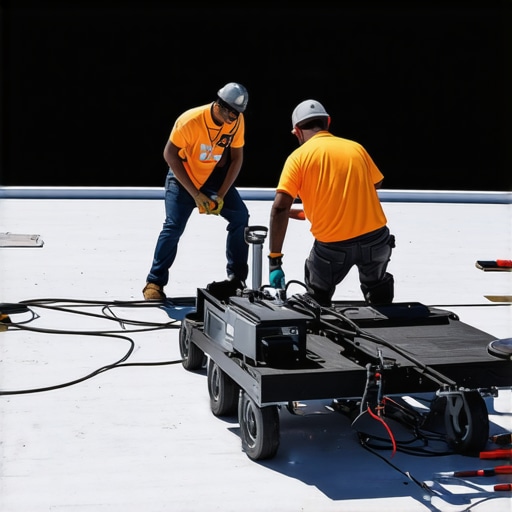
The Forensic Inspection: Why Your Roof Measurements Are Probably Wrong
Walking on that roof felt like walking on a giant, waterlogged sponge. I knew exactly what I would find underneath before I even pulled my pry bar. The homeowner was complaining about a mystery leak in the guest bathroom, but the shingles looked fine from the ground. As a veteran of twenty-five years on the deck, I have seen it a thousand times: the ‘eyeball’ estimate. A local roofer hops up, walks a few squares, guesses the pitch, and writes a quote on a cocktail napkin. By 2026, those days are dead. Elite roofing companies have shifted to LiDAR (Light Detection and Ranging) because the physics of a roof do not care about a contractor’s intuition. That sponge-like feeling under my boots was the result of a structural dip—a half-inch sag that had been collecting water for three seasons. A human eye misses that. A laser point cloud doesn’t.
The Physics of Failure: Beyond the Shingle
When we talk about roofing, most people think of the asphalt. They think of the color or the ‘Lifetime’ marketing. In reality, a roof is a hydraulic management system. Water is patient; it is the ultimate opportunist. In the cold Northeast, where ice dams are the primary predator, water uses capillary action to move sideways and upward. If your valley isn’t framed with a perfect geometric break, or if there is a microscopic deviation in the plywood deck, water will find its way under the head-lap. This is where LiDAR gear becomes the investigator’s best tool. It maps the roof deck to within a millimeter, identifying where the rafters have bowed over thirty years. If you install new shingles over a saggy deck without a 2026-grade scan, you are just putting a tuxedo on a pig.
“The roof system shall be designed to shed water. Each component of the roof must be integrated to prevent moisture intrusion into the building envelope.” – International Residential Code (IRC) R903.1
Why ‘Local Roofers’ Are Dumping the Tape Measure
Measurement error is the number one cause of failed roofing projects. If a contractor miscalculates the square footage or the linear feet of flashing required, they start cutting corners to save their profit margin. They might reuse old drip edges or skimp on the starter strip. 2026 LiDAR gear allows roofing companies to generate a 3D twin of the structure. This isn’t just about getting the right amount of material; it’s about the ‘Cricket.’ A chimney without a proper cricket is a bucket waiting to fill up. In the old days, we built crickets by feel. Now, we use LiDAR data to ensure the water diverter has the exact pitch required to move 100 gallons per minute during a Nor’easter. Without that precision, you end up with a ‘Shiner’—a nail driven into the wrong spot because the framing below wasn’t where the roofer thought it was.
The Thermal Trap and the LiDAR Solution
In our climate, the attic is a battlefield. Warm air leakage from the house hits the cold underside of the roof deck, creating condensation. This is the ‘Attic Bypass’ problem. When a roofer uses 2026 LiDAR combined with thermal imaging, they aren’t just looking at the surface; they are looking at the thermal bridging occurring through the rafters. If the scan shows a heat signature bleeding through the ridge vent, it means the ventilation calculation was botched. Standard roofing companies just slap on a plastic ridge vent and call it a day. A forensic-minded company uses the scan to adjust the R-value of the insulation and ensure the intake at the soffit matches the exhaust at the peak. If the air doesn’t move, the plywood rots. It is that simple.
“Proper attic ventilation is not an option; it is a structural requirement to prevent the premature degradation of the roof deck and shingles.” – National Roofing Contractors Association (NRCA) Guidelines
The Material Truth: Warranty Myths and LiDAR Precision
Let’s talk about the ‘Lifetime Warranty.’ It’s the biggest lie in the trade. Most of those warranties are voided the moment the crew misses a single nail or uses the wrong gauge of flashing. The 2026 shift toward high-tech scanning is about accountability. When a company uses LiDAR, they have a digital record of the roof’s pre-existing conditions. They can see the ‘Thermal Expansion’ points where the house moves during the season. If they don’t account for that movement in the valley flashing, the metal will buckle and the seal will break. You want a roofer who understands that a roof is a living thing, expanding and contracting with every sunrise. Using LiDAR allows us to specify ‘Secondary Water Resistance’ layers that are custom-fit to the oddities of your specific deck.
The Cost of the ‘Trunk Slammer’ Estimate
You will always find a guy with a ladder and a white van who can do it cheaper. He doesn’t use LiDAR, he doesn’t check for thermal bridging, and he thinks ‘Ice & Water Shield’ is a luxury. But when the first big storm hits and your fascia boards start to swell because the drip edge wasn’t measured to the correct overhang, that ‘cheap’ roof becomes the most expensive mistake of your life. The physics of water tension means that if the drip edge is off by even a fraction of an inch, water will ‘wick’ back up under the shingles instead of falling into the gutter. LiDAR catchers these pitch errors during the initial phase, allowing for a surgical fix rather than a catastrophic failure.
How to Vet Your Next Contractor
When you interview local roofers, ask them how they measure. If they pull out a 25-foot tape and a pitch gauge, they are living in 1995. Ask if they provide a 3D point cloud or a digital twin of the roof deck. Ask how they handle the ‘Cricket’ geometry and what their plan is for ‘Thermal Bridging.’ If they look at you like you’re speaking Greek, show them the door. You want a team that uses 2026 tech to respect the physics of your home. The roof is the most important component of your house’s envelope; don’t let someone guess its dimensions. The final inspection begins before the first shingle is even delivered.
The Final Inspection
The transition to 2026 LiDAR gear isn’t about being fancy; it’s about surviving the environment. Whether it’s the weight of a snow load or the driving force of wind-driven rain, your roof is under constant assault. Precision is the only defense. As we move forward, the gap between ‘roofers’ and ‘roofing engineers’ will only widen. Make sure you’re on the right side of that gap when the clouds roll in.