
The Ghost of the Forest on Your Roof
My old foreman, a man who smelled like tobacco and saw-dust, used to tell me every morning on the job site: ‘Water is patient, kid. It will wait for years just to find that one nail you didn’t drive home flush.’ He was right. After twenty-five years of inspecting roofing failures, I’ve seen that patience manifest in the slow, agonizing rot of thousand-dollar cedar roofs. When you look at a cedar shake roof, you shouldn’t just see rustic charm. You should see a living, breathing organic system that is constantly under attack by UV radiation, fungi, and the laws of physics.
If you are looking at cedar care in 2026, the landscape has shifted. We aren’t just dealing with rain anymore; we’re dealing with more aggressive thermal cycles and evolving fire codes that change how roofing companies must approach maintenance. Most local roofers will tell you to just ‘spray some oil on it’ and call it a day. That is a lie that will cost you fifty grand in ten years. Cedar requires a forensic understanding of wood science, not just a ladder and a bucket of sealant.
“Cedar shakes must be installed to allow for adequate air circulation beneath the shakes to prevent moisture entrapment and premature decay.” – National Roofing Contractors Association (NRCA) Manual
1. The Chemistry of Decay: Why Your Shakes Are Dying From the Inside Out
To understand how to save a cedar roof, you have to perform a ‘Mechanism Zooming’ on the wood itself. Cedar is packed with natural oils called tannins. These are the tree’s immune system. Over time, UV rays from the sun act like a bleach, breaking down the lignin that holds the wood fibers together. Once the lignin is gone, the wood becomes porous, like a sponge. This is where the physics of failure begins.
When rain hits a degraded shake, it doesn’t just run off. It is pulled into the wood through capillary action. Water travels up the grain, deep into the heart of the roofing system. If your local roofers didn’t use a proper cedar breather or a heavy-duty felt interlayment, that water stays trapped against the plywood deck. I’ve seen ‘shiners’—those missed nails—act like straws, drawing that moisture through the underlayment and into your rafters. By the time you see a brown spot on your ceiling, the wood has likely been ‘black soup’ for three seasons.
2. The Biological Siege: The Truth About Moss and Algae
In the damp, shaded valleys of your roof, a biological war is being waged. Moss isn’t just an aesthetic problem; it is a literal water-holding device. It keeps the shakes saturated for weeks after the rain stops. In 2026, we are seeing more aggressive lichen growth due to changing humidity patterns. Many roofing companies will suggest power washing. If a contractor brings a high-pressure power washer near your cedar, fire them on the spot. You are literally ‘scouring’ away years of the wood’s life, opening up the grain to even deeper rot.
The real fix is chemical and mechanical. You need a pH-balanced surfactant that kills the spores without destroying the wood fibers. Furthermore, we need to talk about the ‘butt-end’ of the shake. If the bottom edge of the shake is sitting in a pile of debris or pine needles, it can’t dry out. This leads to ‘end-grain rot,’ where the shake looks fine from the top but is a crumbly mess where it overlaps the course below. A real pro will ensure the valleys are clear and the crickets are diverting water away from chimneys, preventing the ‘pooling’ effect that turns cedar into mulch.
“All wood roof systems shall be designed and installed to provide a secondary drainage plane to protect the building interior.” – International Residential Code (IRC) Section R905.7
3. The 2026 Fire-Retardant Reality and Structural Integrity
We are entering an era where ‘Class A’ fire ratings for wood roofs are no longer optional in many jurisdictions. If you are hiring local roofers for a repair or a partial replacement, you must verify the pressure-treated fire retardancy of the new material. Mixing ‘old-school’ shakes with new fire-treated units can create different drying rates, leading to warping and ‘cupping.’ When a shake cups, the edges lift, exposing the shiners and the felt underneath to direct sunlight. The UV then eats the felt, and suddenly, you have a square of roofing that is essentially a sieve.
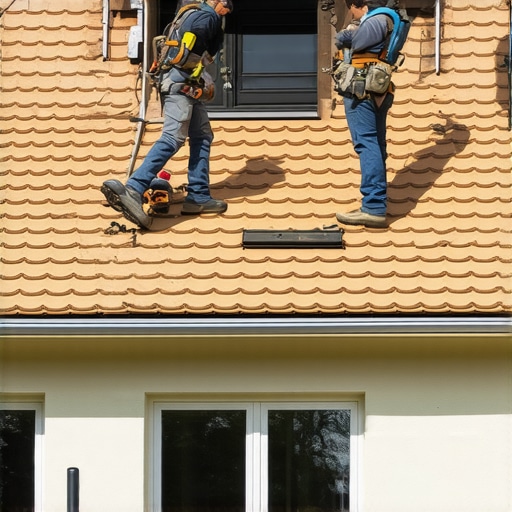
Don’t let a ‘trunk slammer’ tell you that a few shingles are an easy fix. Every time someone walks on an old cedar roof, they risk cracking the fragile, sun-bleached fibers. Professional roofing companies use roof ladders and specialized footwear to distribute weight. If you see a guy walking straight up your 10/12 pitch cedar roof in sneakers, he is doing more damage with his feet than the hail ever did. You need a forensic approach—checking the flashing, ensuring the stainless nails haven’t suffered from galvanic corrosion, and verifying that the ventilation in the attic is keeping the roof deck cool. A hot attic cooks cedar from the bottom up, making it brittle and prone to splitting.
The Cost of Ignorance
Cedar is a luxury material that demands expert care. If you treat it like asphalt, it will fail you in record time. You don’t need a salesman; you need a technician who understands the cellular structure of Western Red Cedar and the fluid dynamics of wind-driven rain. Before you sign a contract for ‘maintenance,’ ask them about capillary rise and tannin loss. If they look at you like you’re speaking another language, keep looking. Your roof—and your wallet—depend on it.