
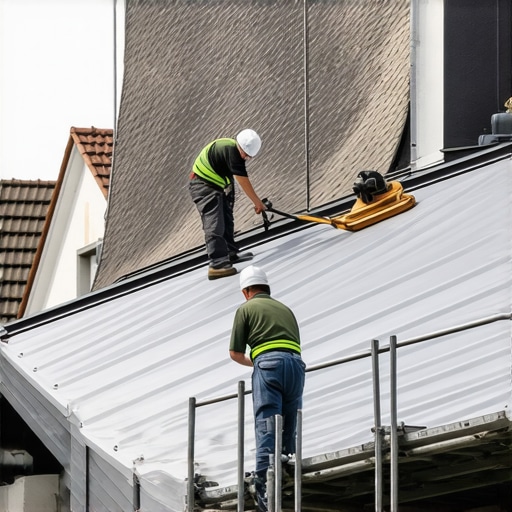
The Sound of a 140-Degree Attic
I have spent three decades crawling through crawlspaces and balancing on ridges, and if there is one thing I have learned, it is that the sun is a slow-motion wrecking ball. Down here in the humid belt, where the salt air eats galvanized nails for breakfast, your roof is not just a lid on a box; it is a pressurized thermal shield. I have seen countless homeowners get sweet-talked by roofing companies into a ‘lifetime’ asphalt shingle job, only to see those shingles curling like dried bacon five years later because the attic ventilation was a joke and the UV radiation was relentless. Metal is the talk of 2026, but before you cut a check to the first crew with a shiny truck, you need to understand that a metal roof is a mechanical system, not a decoration. If the guy you hire does not understand the physics of thermal expansion, you are not buying a roof; you are buying an expensive drum that will leak the moment the temperature swings twenty degrees.
“A roof is only as good as its flashing.” – Old Roofer’s Adage
My old foreman used to say, ‘Water is patient. It will wait for you to make a mistake.’ He was right. Water does not just fall; it climbs. It uses capillary action to suck itself up between layers of metal if you do not have the right hem at the eave. It waits for a ‘shiner’—one of those missed nails that hits the air instead of the rafter—to create a cold bridge where condensation can drip, drip, drip into your insulation until the drywall on your ceiling looks like a topographical map of a swamp. When we look at 2026 standards, we are looking at tighter building envelopes and higher expectations for wind resistance. You need to be asking local roofers the hard questions about how they handle the interface between the metal and the structure, because that is where the disaster starts.
Question 1: How Do You Manage Thermal Movement?
A twenty-foot run of standing seam metal can grow or shrink by a fraction of an inch between a midnight frost and a high-noon sun. If a contractor ‘pins’ that panel—screwing it down tight at both ends without allowing for movement—the metal will buckle and groan. We call it oil canning. It looks like a funhouse mirror and sounds like a thunderstorm inside your house every time a cloud passes over. You need to ask your roofing company if they are using sliding clips or if they are just drilling holes through the face of the panel. Exposed fastener systems are cheaper, sure, but every screw is a potential leak point as the metal expands and yanks on the rubber washer until it cracks. For a 2026-grade install, you want a system that breathes. If they do not talk to you about the coefficient of thermal expansion, they are just ‘trunk slammers’ with a ladder.
Question 2: What Is the Underlayment Chemistry?
The old-school guys still swear by 30-pound felt paper. They are wrong. In a high-heat environment, felt gets brittle and turns to dust. Under a metal roof, which can reach temperatures that would fry an egg in seconds, you need a high-temp synthetic underlayment or, better yet, a peel-and-stick secondary water resistance (SWR) barrier. This is the last line of defense. I have seen roofs where the metal was fine, but the underlayment had disintegrated, leaving the plywood deck exposed to the ‘sweat’ that forms on the underside of the panels. In our coastal regions, the 2026 codes are getting stricter about this. If your local roofers aren’t talking about ‘self-healing’ membranes that seal around the fasteners, they are cutting corners that will cost you a new deck in ten years. You want to see a product that can handle 250 degrees Fahrenheit without melting into a gooey mess.
“The roof shall be covered with approved roof coverings secured to the building or structure in accordance with the provisions of this code.” – International Building Code (IBC) Section 1501.1
Question 3: How Do You Detail the Valley and the Cricket?
The valley is the highway of your roof. It is where all the water from two different slopes meets and tries to overwhelm the drainage system. Most roofing companies just slap a piece of W-valley down and call it a day. But if you have a chimney or a wide dormer, you need a cricket—a small peaked structure that diverts water away from the back of the chimney. Without it, the area becomes a ‘dead valley’ where pine needles and debris collect, holding moisture against the metal until it pits and rusts. I once tore off a roof where the chimney flashing was held together with three tubes of cheap caulk. The homeowner wondered why their fireplace smelled like a wet basement. It was because the installer did not know how to fold a proper ‘dog-ear’ corner in the flashing. Ask for a drawing of their flashing details. If they say they’ll just ‘caulk it,’ walk away. Caulk is a maintenance item; metal is a permanent solution.
The Warranty Trap and the 2026 Reality
Do not get blinded by ‘Lifetime’ marketing. Most of those warranties cover the paint (the PVDF coating), not the labor or the actual water-tightness of the install. If the installer leaves a shiner or forgets the drip edge, the manufacturer will laugh at your claim. The real warranty is the reputation of the man who owns the company. You want a square deal, not a sales pitch. In 2026, we are seeing more extreme weather events, and a roof that was ‘good enough’ in 2010 is a liability today. Look for crews that understand uplift ratings and use stainless steel fasteners if you are within five miles of the ocean. Galvanic corrosion is a silent killer; when two different metals touch, they react, and the weaker one vanishes. If they use zinc-plated screws on an aluminum roof, those heads will pop off in five years, and your roof will literally fly away in the next big gust. Pay for the expertise now, or pay for the forensic investigation later. I’ve seen enough ‘deals’ turn into disasters to know that the cheapest price is often the most expensive mistake you’ll ever make. “,”image”:{“imagePrompt”:”A close-up forensic photograph of a metal roof valley showing debris accumulation and signs of early rust on the flashing, taken in harsh daylight with high contrast.”,”imageTitle”:”Forensic view of a failing metal roof valley”,”imageAlt”:”A detailed shot of a poorly maintained metal roof valley with visible rust and debris.”},”categoryId”:1,”postTime”:”2024-05-20T10:00:00Z”}