
The Forensic Reality of the Modern Roof
Walking on that roof felt like walking on a sponge. I knew exactly what I’d find underneath before the first pry bar even touched a shingle. It was a loft conversion in a rainy coastal corridor, and the ‘eco-friendly’ solution the previous contractor sold them was nothing more than high-priced junk installed by a crew that didn’t understand the physics of a square. The plywood had the consistency of wet oatmeal because they ignored the simple reality of vapor drive. When you are looking at roofing for 2026 lofts, you aren’t just looking for a cover; you are looking for a system that survives the brutal cycle of saturation and UV assault. Most local roofers will try to sell you on aesthetics, but if the chemistry of the material doesn’t match your climate, you’re just pre-ordering a leak.
1. Recycled Composite Shingles: The Physics of Impact
In the trade, we see a lot of ‘shiners’—those missed nails that act as a cold bridge for frost to form in your attic—but with recycled composites, the margin for error is even slimmer. These aren’t your grandfather’s asphalt slabs. We’re talking about post-consumer rubber and plastic polymers engineered to withstand hail that would turn standard shingles into Swiss cheese. The mechanism of protection here is elastic deformation. When a hailstone hits, the material absorbs the kinetic energy and returns to its original shape. Roofing companies love to talk about ‘green,’ but the real ‘green’ is not having to replace your roof for fifty years. You have to ensure the installers use stainless steel fasteners because the chemical makeup of some recycled plastics can accelerate galvanic corrosion on standard galvanized nails, especially in salt-air environments.
“A roof is only as good as its flashing, and the material’s ability to shed water is secondary to the system’s ability to breathe.” – Old Roofer’s Adage
2. The Living Roof: Stormwater Management or Structural Liability?
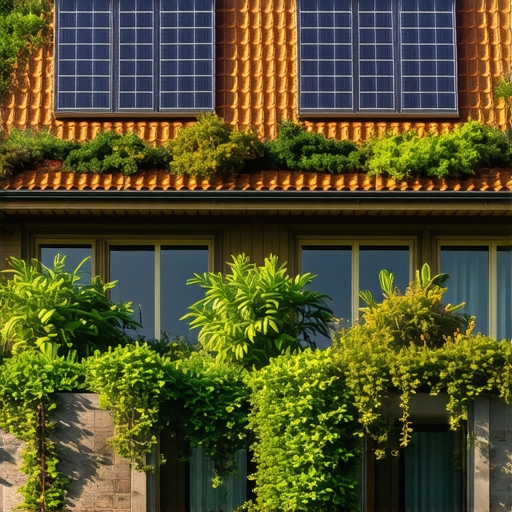
Lofts are perfect candidates for green roofs, but here is the forensic truth: water is patient. It will wait for you to make a mistake. A living roof is essentially a controlled swamp on top of your building. To make this work in 2026, you need a high-performance root-barrier membrane, usually a thick EPDM or TPO layer. The benefit is the thermal mass. In the heat of July, a standard roof can hit 160°F, forcing your AC to scream all day. A living roof stays significantly cooler, reducing the urban heat island effect. However, if your roofing professional doesn’t account for the saturated weight—the ‘dead load’—you’ll see structural deflection in the rafters. That deflection creates a ‘dead valley’ where water pools, eventually finding a microscopic void in a seam through hydrostatic pressure. You don’t just ‘plant’ a roof; you engineer a drainage plane.
3. Standing Seam Metal: The Permanent Shield
If you want to stop calling local roofers every ten years, you go with metal. Specifically, standing seam. Unlike exposed fastener systems where the rubber washers dry out and crack in five years, standing seam hides the clips under the metal. This allows for thermal expansion and contraction. Think of the roof as a living thing; it grows when the sun hits it and shrinks at night. If you pin it down too tight with screws, the metal will eventually ‘oil can’ or rip the fasteners out. For 2026 lofts, we’re seeing ultra-reflective coatings that bounce 85% of solar radiation back into space. It’s the closest thing to a ‘set it and forget it’ solution, provided you have a cricket installed behind any chimney or HVAC curb to divert water. Without a cricket, that area becomes a collection point for debris and ice dams.
4. White TPO and the Reflective Reality
Thermoplastic Polyolefin (TPO) is the workhorse of the modern urban loft. It’s a single-ply membrane that’s heat-welded at the seams. When we do a forensic teardown on a failed TPO roof, the failure is almost always at the welds. A ‘cold weld’ looks fine to the naked eye, but under the stress of wind uplift, it peels right apart. The ‘eco’ benefit here is the SRI (Solar Reflective Index). By keeping the building cool, you’re burning less carbon for climate control. But here is the catch: in cold climates, white roofs can shift the ‘dew point’ inside your insulation. If that happens, moisture from your shower or stove condenses on the underside of the roof deck, rotting it from the inside out. This is why air sealing the loft’s ceiling is more important than the color of the roof itself.
“The primary function of a building envelope is the management of water in all its states: liquid, solid, and vapor.” – NRCA Manual of Quality Control
5. Integrated Solar Shingles: The Grid-Tie Evolution
By 2026, we’re moving away from heavy solar panels bolted through the roof and toward integrated BIPV (Building Integrated Photovoltaics). These are shingles that are the solar cells. The forensic concern here is heat. Solar cells lose efficiency as they get hot. Traditional panels have an air gap underneath for cooling; integrated shingles do not. You need a specialized venting substrate—a ‘cool vent’ system—underneath the deck to move air and keep the cells from frying themselves. If your roofing companies don’t mention the ‘vented nail-base,’ they don’t know what they are doing. You’ll end up with an expensive roof that produces half the power it’s rated for because the cells are baking in their own heat.
The ‘Lifetime Warranty’ Trap
Don’t be fooled by the marketing. A ‘Lifetime Warranty’ is often a pro-rated piece of paper designed to protect the manufacturer, not you. Most failures happen due to poor workmanship—the ‘shiner’ in the valley or the lack of ice and water shield at the eaves. These are labor errors, and most material warranties won’t cover them. When choosing local roofers, ignore the glossy brochures. Ask to see their flashing details. Ask how they handle the capillary action of water moving sideways under a shingle. If they can’t explain the physics of how water moves, they shouldn’t be on your roof. You want a contractor who treats a roof like a forensic puzzle, ensuring every penetration is double-flashed and every square is ventilated to prevent the slow rot that turns your investment into oatmeal.