
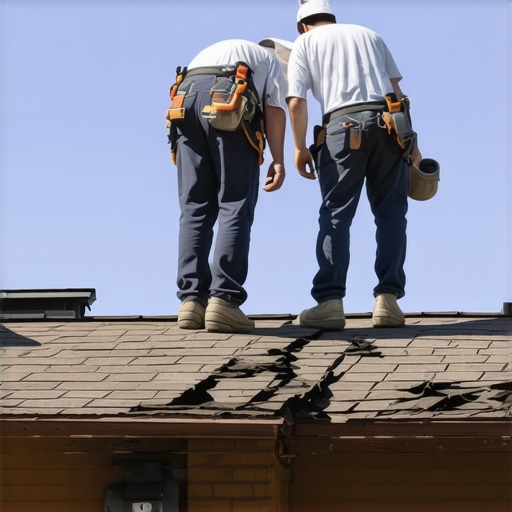
The Anatomy of a Failure: When the Secondary Barrier Quits
It starts with a rhythmic thump-thump-thump during a midnight rainstorm. You aren’t hearing the rain; you’re hearing the sound of your bank account draining. By the time that brownish ring appears on your living room ceiling, the real damage happened years ago. As a forensic roofer, I’ve spent two decades peeling back shingles like scabs to see the rot underneath. Walking on that roof last week in the outskirts of the city felt like walking on a wet sponge. I didn’t even need to lift a shingle to know exactly what I’d find underneath: a catastrophic failure of the 2026-spec underlayment that ‘local roofers’ swore was bulletproof.
We need to talk about what’s actually happening under those shingles. Most people think the shingles are the roof. They aren’t. They are the UV shield. The underlayment—that thin layer of synthetic or felt—is the actual waterproof membrane. When it fails, your house is essentially naked. In our volatile climate, where temperatures swing 40 degrees in twelve hours, the physics of your roof deck are working against you. The enemy isn’t just the rain; it’s the expansion and contraction that turns a tiny staple hole into a gaping tear.
“The roof covering is the first line of defense, but the underlayment is the final boundary against water intrusion.” – International Residential Code (IRC) Section R905
1. The ‘Shiner’ Conduit and Capillary Draw
The first sign of an underlayment tear isn’t always a hole; it’s a shiner. In trade talk, a shiner is a nail that missed the rafter and is sticking out of the plywood deck in the attic. When underlayment begins to tear around these fasteners due to thermal shock, it creates a path for capillary action. Water doesn’t just fall; it climbs. Surface tension pulls moisture through that tear, following the shank of the nail directly into your insulation. If you go into your attic with a flashlight and see rusted nail tips, your underlayment is likely shredding. This isn’t just a leak; it’s a structural compromise. We see this constantly when roofing companies use cheap, non-breathable synthetics that can’t handle the deck’s natural movement.
2. The ‘Wavy’ Deck Syndrome (Thermal Bridging)
Have you looked at your roof during a sunset? If the surface looks wavy or ‘scalloped,’ you aren’t looking at bad shingles; you’re looking at buckled underlayment. In our region, thermal bridging occurs when warm air from your house hits the cold underside of the roof deck. If the underlayment has lost its integrity or was installed too tight without room for expansion, it will ripple. These ripples create ‘mini-dams.’ Water gets trapped behind the shingle flap, sits there, and eventually works its way through the fastener holes. It’s a slow-motion car crash for your plywood. I’ve seen decks that looked like mushy cereal because the underlayment couldn’t breathe and eventually tore under the pressure of trapped water vapor.
3. The Migration of Granules in the Valleys
The valley of your roof is the high-traffic highway for water. When underlayment tears in a valley, it’s usually because the installer didn’t account for ‘lap’ requirements. If you see a heavy accumulation of granules in your gutters, it’s a sign that the shingles are rubbing against a failed, bunched-up underlayment underneath. The friction of the shingle against the uneven, torn membrane causes the protective granules to slough off prematurely. Once the underlayment is compromised in the valley, hydrostatic pressure forces water sideways, away from the metal flashing and directly into the fascia boards. This is why your eaves are probably starting to look gray and weathered.
4. Perimeter Bleeding and Fascia Rot
If you see dark streaks on your fascia boards or moisture behind your gutters, your underlayment is likely ‘short-lapping’ the drip edge. In the 2026 standards, we’re seeing more installers try to save a few bucks by not extending the underlayment over the metal edge. When the membrane tears at the edge—usually from UV degradation because it was left exposed too long during installation—water tracks backward. It follows the underside of the drip edge and rots the sub-fascia. I once tore off a roof where the entire perimeter was so rotted the gutters were literally held up by the shingles alone. This happens when local roofers treat the underlayment as an afterthought rather than the primary waterproofing layer.
“A roof is only as good as its flashing and the integrity of the layers beneath.” – National Roofing Contractors Association (NRCA)
The Physics of the Fix: Surgery vs. Band-Aids
You can’t fix torn underlayment with a bucket of mastic or a few extra nails. That’s like putting a Band-Aid on a gunshot wound. If the membrane is compromised, the shingles in that square must come off. We have to address the cricket—that small peaked structure behind chimneys—and ensure the water is being diverted correctly. The ‘surgery’ involves removing the shingles, inspecting the deck for rot, and installing a high-temp ice and water shield that self-seals around fasteners. Anything less is just delaying the inevitable. When hiring roofing professionals, ask them about their fastener patterns. If they don’t know what ‘over-driving’ a nail does to synthetic fabric, show them the door. You need a forensic approach, not a sales pitch. Don’t wait until the ceiling falls; the signs are already there if you know where to look.