
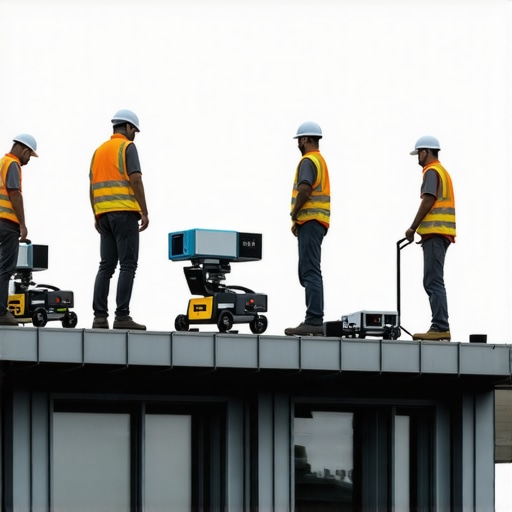
The Death of the Tape Measure and the Rise of the Point Cloud
My old foreman used to say, ‘Water is patient. It will wait for you to make a mistake.’ For decades, that mistake usually started with a tape measure and a guy balancing on a 10/12 pitch trying not to slide into the azaleas. By the time 2026 rolled around, the industry finally admitted that human error is the leading cause of the ‘shiner’—that missed nail that becomes a conduit for frost in a cold climate attic. Today, local roofers are ditching the ladders for LiDAR (Light Detection and Ranging), and it is not just about keeping the estimator off the shingles. It is about the physics of a perfect fit.
“Roof coverings shall be applied in accordance with the applicable provisions of this section and the manufacturer’s installation instructions.” – International Residential Code, Section R905.1
When we talk about roofing companies in 2026, we are talking about forensic precision. LiDAR quotes utilize a pulsed laser to map the roof deck in a 3D point cloud. Why does this matter to a homeowner? Because your roof isn’t flat. Over twenty years, rafters sag, ridges bow, and the house settles. A manual measurement treats your roof like a geometry textbook problem, but LiDAR sees the reality of the substrate. It identifies the ‘swale’ where water pools and the ‘kick-out’ where the flashing was originally botched by a ‘trunk slammer’ ten years ago. If you are in a northern zone like Minneapolis or Boston, this precision is the difference between a roof that lasts thirty years and one that breeds ice dams by year three.
The Physics of the Ice Dam: Why Precision Mapping Matters
In cold climates, the enemy isn’t just the snow; it is the heat escaping your living room. When a roofer uses LiDAR, they are often looking for the structural anomalies that hint at thermal bridging. Imagine an attic bypass where warm air leaks into the attic space, heating the underside of the roof deck to 40°F while the outside air is a brutal 10°F. The snow melts, runs down to the cold eave, and freezes. This creates a dam that forces liquid water back up under the shingles through capillary action. Water doesn’t just fall; it climbs. It uses surface tension to find the tiniest gap in your underlayment. If your local roofers aren’t using LiDAR to calculate the exact volume of your attic for ventilation requirements, they are just guessing. A guess leads to a soggy mess of rotting plywood that feels like oatmeal under your boots.
The Mechanism of Failure: Zooming into the Shingle
Let’s talk about the ‘square’—the industry term for 100 square feet of roofing material. In the old days, we’d round up. A little extra waste here, a few short bundles there. But with LiDAR, the quote is exact. This matters because it changes how we handle the ‘valley.’ The valley is the most vulnerable part of the system. It is where two roof planes meet and channel a torrent of water. If the flashing isn’t seated perfectly because the measurement was off by half an inch, that water will find its way behind the fascia board. You won’t see it for two years. By then, the mold has already colonized your structural headers. We call it ‘slow-motion demolition.’ 2026 roofing companies use LiDAR to ensure that custom-bent crickets—those small peaked structures behind chimneys—are fabricated to the exact degree of the roof’s pitch, ensuring water is diverted before it ever has a chance to sit and soak.
The ‘Lifetime Warranty’ Trap and Material Reality
Every roofing company loves to scream about a ‘Lifetime Warranty.’ In the trade, we know that is mostly marketing fluff. A warranty doesn’t cover ‘improper installation,’ which is the catch-all excuse for every failed claim. This is where LiDAR protection comes in. By having a digital twin of your roof before the first shingle is torn off, there is a record of the structural integrity. If you are choosing between asphalt, metal, or tile, the precision of the quote tells you about the load-bearing capacity of your current trusses. Asphalt is forgiving; metal is not. If a metal panel is off by a fraction of an inch, the expansion and contraction from thermal shock will eventually pull the fasteners loose, creating a ‘shiner’ that leaks every time the wind catches the rain just right.
“A roof is only as good as its flashing.” – Old Roofer’s Adage
The transition to LiDAR is also about the chemistry of the modern shingle. In 2026, we are seeing more high-polymer asphalt blends designed to resist UV degradation. These shingles are heavier and more rigid. They don’t ‘settle’ like the old organic mats did. They need a perfectly flat surface. If your local roofers are just slapping new shingles over an old, uneven deck without using LiDAR to find the ‘low spots’ that need shimming, you are going to see ‘telegraphing.’ That’s when the imperfections of the wood show through the new roof, making your $20,000 investment look like a DIY disaster. It’s not just about aesthetics; it’s about the wind. A shingle that doesn’t sit flat is a shingle that gets caught by a 60mph gust and snapped off at the nail line.
Why Local Roofers are Forced to Innovate
Local roofing companies are facing higher insurance premiums than ever. If a crew is on a roof for six hours instead of ten because the LiDAR quote allowed for pre-cut materials and a perfect staging plan, the risk of injury drops. The cost savings get passed down—or at least, they should. When you look for a contractor, don’t ask if they have a hammer; ask if they have a point cloud. Ask them how they plan to handle the drip edge transition and if they have accounted for the ‘R-Value’ of the air gap they are creating. If they look at you like you have two heads, move on. You want the forensic veteran, not the guy who still thinks a tape measure is the pinnacle of technology. Water is patient, and your roof should be more patient than the water.
[image placeholder]
The Forensic Verdict
Choosing a roofer in 2026 is an exercise in vetting their tech as much as their craftsmanship. The LiDAR quote is the first line of defense. It proves the contractor understands that a roof is a dynamic system of air, heat, and moisture, not just a pile of rocks glued to a board. If you want to avoid the ‘oatmeal plywood’ scenario, insist on precision. Your attic, your wallet, and your peace of mind depend on those laser-focused numbers. Don’t let a ‘shiner’ be the reason you’re replacing your ceiling drywall in five years.