
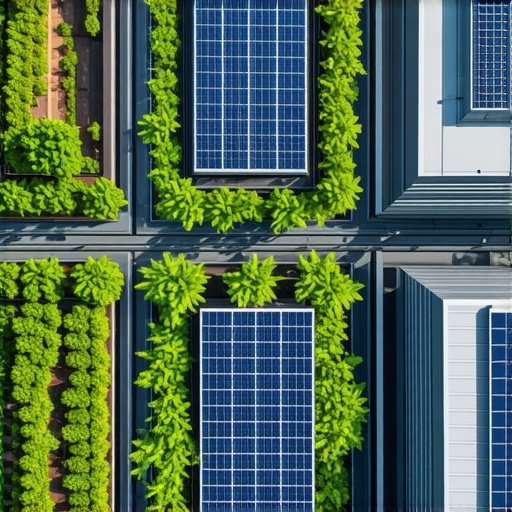
The Day the Garden Became a Swamp
Walking on that roof felt like walking on a giant, waterlogged kitchen sponge. It was an ‘eco-friendly’ showpiece on a luxury brownstone, but as my boots sank into the saturated sedum, I knew exactly what I’d find underneath. The homeowner was seeing a ‘green’ revolution; I was seeing $60,000 of rotten plywood and active mold colonies. I’ve spent 25 years in this trade, and I’ve seen enough ‘innovations’ fail to know that nature doesn’t care about your environmental intentions. If you don’t respect the physics of water, your green roof will eventually end up in your living room. Most local roofers will sell you the dream of a living garden, but few roofing companies understand the hydrostatic pressure created when four inches of soil holds a thousand gallons of rainwater against a membrane that wasn’t designed for constant immersion.
The Physics of Failure: Why Eco-Roofs Leak
Before we talk about the best systems for 2026, you need to understand how these things fail. It starts with capillary action. Water is a sticky molecule; it doesn’t just fall, it climbs. It finds the tiniest gap in a lap-weld or a pinhole in a flashing and gets pulled upward and inward. On a standard asphalt roof, the water sheds. On a green roof, the water sits. It waits. This is why the ‘Mechanism of Drainage’ is the most vital part of any sustainable install. If your drainage layer isn’t optimized, the soil stays anaerobic, the roots rot, and the acidity of the decaying plant matter begins to chemically attack the plasticizers in your waterproofing membrane. You aren’t just building a garden; you’re building a chemical laboratory on top of your house.
“A roof is only as good as its flashing, and a green roof is only as good as its drainage mat.” – Old Roofer’s Adage
1. The Multi-Layer TPO Hybrid System
Thermoplastic Polyolefin (TPO) isn’t new, but the 2026 variants are designed with higher-density scrims to resist root penetration. When roofing companies install these, they often skip the fleece-back layer to save a few bucks. That’s a mistake. The fleece acts as a cushion against the thermal expansion of the decking. In the Northeast, where we deal with brutal winter freeze-thaw cycles, that membrane is constantly shrinking and stretching. Without that buffer, the roots find the stress cracks. A proper TPO eco-system requires heat-welded seams—not glue. Glue is a temporary solution for a permanent problem. We look for a 60-mil minimum thickness because any thinner and you’re just asking for a ‘shiner’—a missed nail from the original deck—to puncture the whole system from below once the weight of the soil is applied.
[IMAGE_PLACEHOLDER]
2. Upcycled Slate and the Vapor Barrier Myth
Everyone wants the look of slate without the weight or the price tag. The new 2026 composite slates are made from 95% post-consumer waste, which is great for the planet. But here is the forensic truth: these materials expand at a different rate than the wood rafters below them. This leads to ‘oil canning’ or warping if the local roofers don’t leave the proper gaps in the valley. Furthermore, these dense materials can trap moisture in the attic. If your attic isn’t vented properly, the warm air from your shower or stove hits the underside of that cold ‘eco’ slate and turns back into water. This is ‘attic bypass’ condensation, and it will rot your decking faster than a leak from the outside will. You need a dedicated ridge vent and soffit system to ensure that ‘green’ doesn’t turn into ‘grey’ mold.
3. Living Metal: Zinc and Copper Longevity
If you want a roof that lasts 100 years, you buy metal. Zinc is incredibly eco-friendly because it’s 100% recyclable and requires less energy to produce than aluminum or steel. But here’s the trade secret: you have to watch out for galvanic corrosion. If a roofer uses stainless nails on a copper cricket or uses the wrong type of flashing, the two metals will literally eat each other through electrolysis. I once tore off a zinc roof where the installer had used galvanized fasteners; the nails had turned into dust in less than five years. For 2026, we are seeing pre-patinated zinc that reflects UV rays better than ever, reducing the ‘heat island’ effect in urban areas. It’s expensive, but as my old foreman used to say, ‘You can pay for a good roof once, or a cheap roof three times.’
4. Extensive Sedum Trays: The Modular Defense
If you’re dead set on a vegetative roof, go modular. These are self-contained trays that sit on top of a high-quality membrane. Why? Because when it leaks—and eventually, something will need maintenance—you can lift the trays and find the source. With a ‘monolithic’ green roof, you’re digging through tons of dirt like a forensic archaeologist trying to find a needle in a haystack. The tray system allows for airflow underneath the plant life, which prevents the membrane from staying at 100% humidity for its entire life. This airflow is the difference between a membrane that lasts 30 years and one that fails in ten.
5. Cool-Roof Albedo Coatings
In 2026, the tech in liquid-applied membranes is a total shift. We are talking about silicones that can reflect up to 90% of solar radiation. This isn’t just paint; it’s a chemical bond. For local roofers, this is often pitched as a ‘restoration’ of an old roof. But here is the trap: if there is moisture trapped in the square of insulation underneath that old roof, coating it is like putting a plastic bag over a wet foot. It’s going to rot. A forensic roof inspection requires an infrared scan to ensure the sub-structure is bone dry before any ‘eco’ coating is applied. Otherwise, you’re just sealing in the destruction.
“Vegetative roofing systems must incorporate a redundant root-barrier layer and a moisture-retention mat that does not compromise the primary drainage path.” – NRCA Technical Bulletin
The ‘Lifetime’ Warranty Trap
Don’t get blinded by the ‘Lifetime’ sticker. Most of those warranties are prorated and only cover the material, not the labor to tear off your expensive garden to fix a $5 leak. When interviewing roofing companies, ask them about their ‘workmanship’ warranty. A guy who won’t stand behind his labor for at least ten years isn’t a roofer; he’s a salesman with a nail gun. Check the valleys, inspect the flashing around the chimney, and ensure they aren’t leaving ‘shiners’ in the decking. The most eco-friendly thing you can do is build a roof that doesn’t need to be replaced for half a century. Waste is the enemy of sustainability.