
The Reality of the Rural Roof: Why Most Sustainable Barns Fail by Year Five
I’ve spent a quarter-century clambering over ridge vents and peeling back rotted rake edges, and if there’s one thing I can tell you, it’s that a barn is a different beast than a suburban ranch. Most roofing companies show up with a stack of asphalt shingles and a sales pitch about a ‘lifetime’ warranty that isn’t worth the paper it’s printed on once the wind starts howling across an open forty-acre pasture. My old foreman used to say, ‘Water is patient. It will wait for you to make a mistake.’ In the world of barns, that mistake is usually thinking you can treat a high-exposure agricultural building like a backyard shed.
When we talk about roofing in 2026, we aren’t just talking about keeping the hay dry. We’re talking about the physics of the structure. A barn often faces higher ammonia concentrations from livestock, which eats standard fasteners for breakfast, and massive thermal swings that make a roof expand and contract like a giant lung. If your local roofers aren’t talking about thermal movement, they’re just selling you a leak waiting to happen.
“The design and installation of a roof system must compensate for the effects of thermal expansion and contraction to prevent premature failure of the assembly.” – NRCA (National Roofing Contractors Association) Manual
1. The Return of the Standing Seam: High-Reflectivity Recycled Steel
Steel isn’t new, but the 2026 iterations are light-years ahead of the old corrugated tin that used to rattle on your grandfather’s tractor shed. We’re seeing 24-gauge standing seam panels made from 95% recycled content. The ‘eco’ part isn’t just the recycled material; it’s the emissivity. These panels are coated with infrared-reflective pigments that bounce heat back into the atmosphere instead of letting it bake your livestock. I’ve been in attics over 140°F because of dark shingles; with a cool-roof steel setup, you’re looking at a 30% reduction in cooling load. But here’s the kicker: if the installers don’t use a ‘cricket’ behind the chimney or large penetrations, water will pool and find a way through the fastener holes. It’s about the physics of the valley. Water doesn’t just fall; it clings. It uses capillary action to move sideways under a lap joint, climbing uphill through surface tension until it finds a shiner—a missed nail—and starts the slow rot of your plywood deck.
2. Integrated Solar Thatch and Photovoltaic Shingles
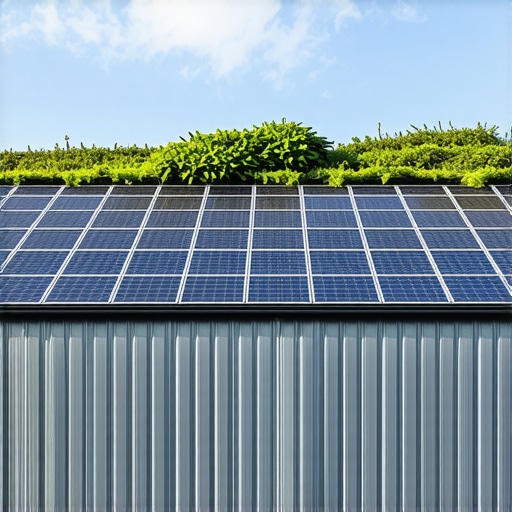
By 2026, the ‘bolted-on’ solar panel is becoming a relic. We’re seeing integrated systems that actually serve as the primary water barrier. For barns, this is a game of heat dissipation. A photovoltaic cell is a heat magnet. If that heat isn’t vented, it conducts directly into the roof deck. I’ve seen cheap solar installs where the heat literally charred the rafters underneath. A forensic teardown usually reveals that the air gap was choked by bird nests or poor design. You need a contractor who understands that a roof is a ventilated system, not a sealed box. If you ignore the airflow, those expensive eco-panels will cook themselves into a paperweight within a decade.
3. The Reclaimed Slate and Composite Revolution
Real slate is the gold standard, but it’s heavy enough to buckle a modern truss system if it wasn’t engineered for the load. The 2026 eco-alternative is composite slate made from recycled tires and post-consumer plastics. It looks the part, but you have to watch the ‘head-lap.’ That’s the amount of shingle covered by the two courses above it. On a barn with a low slope, water can be driven upward by high winds. If the head-lap is skimped on to save material, gravity loses the battle against wind-driven rain, and you end up with moisture trapped in the underlayment. When that water freezes, it expands, jacking the shingles up and creating a gap that the next storm will exploit. Any roofing expert worth their salt knows that the underlayment—the secondary water resistance—is more important than the shingles themselves.
“Roof coverings shall be installed in accordance with the manufacturer’s instructions and the requirements of this code.” – International Residential Code (IRC) R905.1
4. Living Green Roofs for Temperature Stability
In the Pacific Northwest or the humid Southeast, living roofs are gaining traction for barns. They provide incredible insulation, but they are a nightmare if you don’t understand hydrostatic pressure. You have a foot of wet soil sitting on a membrane. Gravity is constantly trying to push that water through any microscopic void in the seam. I’ve seen ‘green’ roofs where the root barrier failed, and the plants literally ate the structure, sending roots through the seams like slow-motion drills. If you go this route, you need stainless nails and high-grade membranes that can handle constant saturation without the polymer chains breaking down.
5. White TPO (Thermoplastic Polyolefin) for Large Spans
If you have a massive commercial-scale barn, you’re looking at TPO. It’s a single-ply membrane that is 100% recyclable. The problem? Most roofing companies ‘burn’ the seams. If the heat welder is off by five degrees, the seam looks sealed but has no structural integrity. It’s what we call a ‘cold weld.’ One good windstorm hits, and the whole roof peels back like a sardine can. I’ve walked roofs where I could pull the seams apart with my bare hands because the crew was rushing. You want a forensic-level inspection on those seams before you sign off on the job.
The ‘Lifetime’ Warranty Trap
Don’t let a salesman in a shiny truck talk you into a ‘lifetime’ warranty without reading the fine print. Most of those warranties are pro-rated and only cover material defects, not labor. If the roofer used the wrong gauge of drip edge or didn’t properly flash the gables, the manufacturer will laugh at your claim. A roof is a system, not a product. It’s the interaction between the deck, the drip edge, the ice and water shield, and the final covering. If one part of that system is ‘cheap,’ the whole thing is junk. When you’re looking at local roofers, ask them about their ‘uplift ratings.’ If they look at you sideways, keep looking. Your barn deserves better than a trunk-slammer’s best guess.
Reading through this post, I really appreciate the detailed focus on the nuances of barn roofing, especially the emphasis on thermal movement and water management. In my experience managing several historic farm buildings, I found that using standing seam recycled steel with proper flashing is crucial in high-wind areas. I’m curious about the installation techniques—does anyone have suggestions for ensuring proper ‘cricket’ placement behind large penetrations? Also, with green roofs gaining traction, I’ve seen some barns where the added weight caused structural issues. It seems essential to assess the load capacity beforehand. How do others handle the added weight and hydrostatic pressure in humid environments? I think that, ultimately, a tailored approach that respects the unique challenges of rural barns and uses high-quality, eco-friendly materials will help prevent the common pitfalls most fail to anticipate. Would love to hear about innovative solutions others have tried to improve durability over the long haul.