
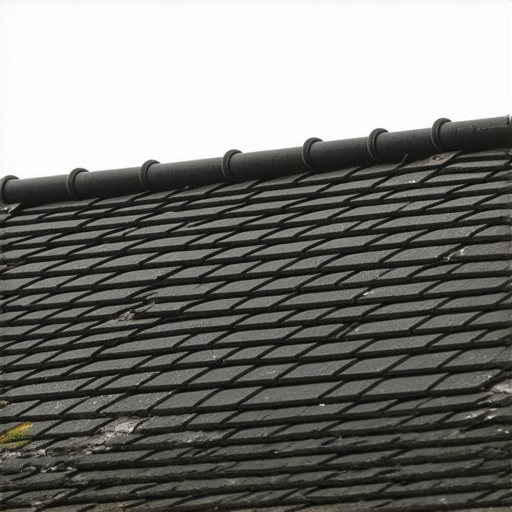
The Invisible Decay at the Roof’s Highest Point
Most homeowners spend their time worrying about the ‘curb appeal’ of their siding or the color of their front door, but as a guy who’s spent twenty-five years watching the way water behaves like a slow-motion wrecking ball, I focus on the peak. The ridge is the crown of your home, but it’s also the most exposed, punished, and frequently botched area of the entire structure. If you’re looking at your roof in 2026 and noticing something slightly ‘off’ about the silhouette against the sky, you aren’t just seeing things. You’re likely witnessing the beginning of a systemic failure. My old mentor, a grizzly veteran who could smell a leak from the driveway, always told me, ‘Water doesn’t need a door; it just needs an invitation.’ A ridge shingle gap is that invitation, written in neon lights. When we talk about 2026 ridge shingle gaps, we are talking about a specific breed of failure—often the result of the high-velocity construction era of the early 2020s reaching its breaking point. Roofing companies that cut corners during the supply chain crunches are now seeing their work literally peel back under the pressure of thermal shock and UV degradation.
“The ridge area is subject to higher wind pressures than other areas of the roof… Fasteners must be of sufficient length to penetrate through the ridge vent and into the wood decking.” — National Roofing Contractors Association (NRCA) Manual
Sign 1: The ‘Hinge’ Effect (High-Nailing)
The first sign isn’t a hole you can see from the street; it’s a structural sag I call the ‘Hinge.’ When local roofers get in a hurry, they tend to ‘high-nail.’ On a standard field shingle, this is bad enough, but on a ridge cap, it’s a death sentence. The ridge cap is bent over the peak of the roof. It’s under constant tension, trying to spring back to its flat state. If the nails are driven too high—meaning they aren’t hitting the thickened ‘nailing zone’—the shingle doesn’t actually stay pinned to the deck. Instead, it starts to pivot. In the variable climates of the Midwest or Central US, where the sun bakes the asphalt to 150°F during the day and the temperature drops forty degrees at night, that shingle expands and contracts. Because it isn’t anchored properly, it begins to ‘hinge’ upward, creating a gap that sucks in air—and water—via the Bernoulli Effect. As wind blows over the ridge, it creates a low-pressure zone that literally vacuums rain upward, under the shingle, and directly into your ridge vent or onto the raw decking.
Sign 2: The ‘Bleeding’ Nail or the ‘Shiner’
Walk your perimeter and look for rust streaks or dark, weeping stains near the peak. This is often the sign of a ‘shiner.’ In the trade, a shiner is a nail that missed the rafter or the structural wood and is just hanging out in the attic space or the vent gap. But on the outside, it refers to a nail that was driven crookedly or left ‘proud’ (sticking up). As the 2026 ridge shingle gaps widen, these fasteners are exposed to the elements. Once that galvanized coating wears off from friction and acid rain, the nail starts to bleed. That rust isn’t just an eyesore; it’s a physical pathway. Water follows the metal shank down like a highway, bypassing the shingle entirely and rotting out the plywood around the hole until the nail has no grip left. I’ve seen ridges where I could pull the cap shingles off with two fingers because the nails had turned into nothing more than rust-colored dust.
Sign 3: Accordion Gapping and Thermal Expansion
Asphalt is a petroleum product. It’s flexible when new, but as the oils evaporate over a few seasons, it becomes brittle. We are seeing a lot of roofs installed with ‘bargain’ shingles that lack the proper polymer modifiers to handle extreme thermal expansion. The ‘Accordion Gap’ happens when the ridge cap shingles shrink faster than the ridge vent they are covering. You’ll see a visible separation between the overlapping caps. In a proper installation, you should see a uniform ‘course’ of shingles. If you see more than a half-inch of the ‘under-lap’ or the ‘head-lap’ of the shingle below it, you have a gap. This is where wind-driven rain gets pushed sideways. It’s not falling down; it’s moving horizontally through the gap, saturating the fiberglass mat and eventually finding a ‘butt joint’ in the decking to drip through. It’s a slow soak, the kind that turns your attic insulation into a heavy, soggy mess before you ever see a spot on your ceiling.
“R905.2.8.5 Ridge shingles. Shingles used as ridge covers shall be of the same material and weight as those used for the roof cover and shall be installed in accordance with the manufacturer’s instructions.” — International Residential Code (IRC)
Sign 4: The ‘Shadow Line’ of UV Degradation
If you stand back and look at your ridge, do you see a dark shadow beneath the edge of the shingles that wasn’t there last year? That ‘shadow’ is often the shadow cast by a lifting shingle, but it can also be the sign of ‘scuffing’ and granule loss. Ridge shingles take the most direct UV hit of any part of the house. When a gap starts to form, the wind causes the shingle to vibrate—a phenomenon we call ‘flutter.’ This flutter knocks the protective granules off the asphalt. Once those granules are gone, the sun ‘cooks’ the bitumen. In my twenty-five years, I’ve seen shingles that look like they’ve been through a fire, but it was just a few years of high-altitude sun exposure and a loose fit. Once the shingle is brittle, it cracks at the bend, and that crack is a direct line to your ceiling.
The Forensic Fix: Why Caulk Isn’t the Answer
When people find these gaps, they call a local ‘handyman’ who climbs up there with a tube of cheap silicone. That is the ‘Band-Aid’ approach to a problem that requires surgery. Caulking a ridge gap is like trying to fix a broken leg with duct tape. The silicone will fail within a season because it can’t handle the movement of the roof. The real fix involves stripping the ridge, checking the ‘cricket’ if there’s a chimney nearby, and installing high-profile ridge caps with 2.5-inch ring-shank nails that actually bite into the wood. Roofing companies that know what they’re doing will tell you that the ridge is the one place you never, ever save money. If you see these four signs, don’t wait for the next thunderstorm to confirm your fears. Get a forensic inspection. Because by the time the water hits your dining room table, the damage to your decking and rafters is already five times the cost of a simple ridge replacement.