
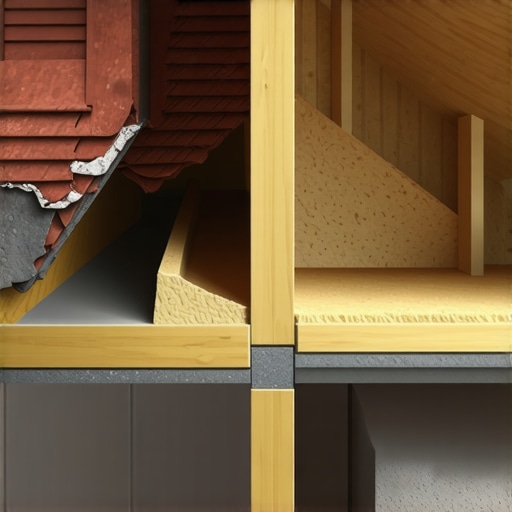
The Forensic Autopsy: Why a Brand New Roof Failed in Three Winters
Walking on that roof felt like walking on a sponge. I knew exactly what I’d find underneath before I even pulled my flat bar from my belt. The homeowner was baffled. They’d spent twenty grand with one of those high-volume local roofers just three years ago, yet here I was, looking at a sagging ridge line and shingles that looked like they’d been through a war. When we peeled back the first square, the plywood didn’t just look wet; it was delaminated and black, smelling of that sharp, earthy rot that tells you the wood has given up the ghost. This wasn’t a leak from the sky. It was a leak from the kitchen and the bathroom, drifting up through the attic like a ghost and killing the roof from the inside out. This is the reality of attic air leaks in 2026—a problem most roofing companies ignore because they only care about what’s on top, not what’s happening below the deck.
“A roof is only as good as its flashing, but a house is only as good as its envelope.” – Old Roofer’s Adage
The Physics of Failure: The Stack Effect and Vapor Drive
To understand why your roof is rotting, you have to understand the physics of a house. In a cold climate, your home acts like a giant chimney. This is called the ‘Stack Effect.’ Warm air is light; it rises. As it pushes against your ceiling, it searches for any microscopic exit—a recessed light fixture, a plumbing stack, or an unsealed attic hatch. These are known as attic bypasses. This isn’t just about losing heat and seeing your utility bill spike; it’s about moisture transport. Warm air holds water. When that moist air hits the freezing underside of your roof deck in the middle of a February freeze, it reaches its dew point and flashes into liquid water or frost. This ‘attic rain’ happens every single night, saturating the OSB or plywood. Local roofers who simply nail down new shingles without checking the air seal of the attic floor are just putting a new bandage on a gangrenous limb.
Sign 1: The Frost Forest on Your Roof Nails
If you want to see if your roofing companies did their job, go into the attic on the coldest day of the year. Look up. If you see white frost or ‘ice whiskers’ growing on the tips of the roofing nails, you have a massive air leak. Those nails are ‘shiners’—nails that missed the rafter or simply extend through the deck—and they act as heat sinks. They are the coldest surface in the attic. When warm, moist air from your living room leaks through the ceiling, it finds those cold nails and crystallizes. When the sun hits the roof the next morning, that frost melts and drips into your insulation, killing your R-value and feeding the mold spores waiting in the wood. It’s a slow-motion wreck that starts with a tiny gap around a wire.
Sign 2: The Ice Dam Rampart and the Gutter Freeze
Most homeowners blame their gutters for ice dams. They think if they just clean the gutters, the ice will go away. That is a myth. Ice dams are a thermal problem, not a drainage problem. When warm air leaks into your attic, it heats up the peak of the roof. The snow on the upper part of the roof melts, runs down to the eaves (which are still freezing because they overhang the house), and refreezes into a wall of ice. This ice wall creates a reservoir of standing water. Shingles are designed to shed water, not to hold it like a swimming pool. Eventually, that water finds a way under the starter strip and into your soffits. If you see massive icicles that look like stalactites hanging from your gutters, you don’t need a gutter cleaner; you need a forensic roofer to find the air leaks in your thermal envelope.
Sign 3: Ceiling Ghosting and Thermal Bridging
Have you ever noticed dark, gray streaks on your ceiling that follow the lines of your joists? That’s called ‘ghosting.’ It’s a classic sign that your attic is leaking air and losing heat. The cold joist acts as a bridge, making that part of the ceiling colder than the rest. Moisture and dust particles in the air are attracted to those cold spots. It’s a visual map of where your heat is escaping. Many roofing companies will tell you it’s just dirt, but a veteran knows it’s a sign of a failing air barrier. This thermal bridging is often accompanied by ‘attic bypasses’—large gaps around the chimney or the plumbing vent where the local roofers failed to use fire-rated foam or flashing during the last renovation.
Sign 4: Premature Granule Loss and ‘The Shingle Bake’
Heat shouldn’t just be a winter problem. In the summer, air leaks allow conditioned air to escape, but they also contribute to a lack of proper ventilation. If your attic is trapping heat because the bypasses are creating turbulent air flow that disrupts your soffit-to-ridge ventilation, your shingles are being baked from both sides. I’ve seen 30-year shingles curled and brittle after only eight years because the attic was hitting 160 degrees. If you find a heap of granules in your downspouts that looks like coarse sand, your roof is literally shedding its skin to survive the heat. This is common when roofing companies focus on the ‘square’ count and ignore the ‘cricket’ or the ‘baffle’ that ensures air moves correctly.
Sign 5: The Uneven Snow Melt – The ‘Hot Spot’ Map
Next time it snows, stand in your driveway and look at your roof. Does the snow melt evenly? Or do you see specific patches where the shingles are visible while the rest of the roof is white? Those bare spots are ‘hot spots.’ They are the exact locations of your attic air leaks. Maybe it’s a bathroom fan that isn’t vented through the roof but is just dumping air into the attic. Maybe it’s a poorly insulated pot light. Whatever it is, that heat is escaping at such a rate that it’s melting the snow through the shingles. This is the most honest inspection you’ll ever get, and it doesn’t cost a dime.
“The building code is a minimum standard, not a gold medal. If your roofer only meets code, they are giving you a D-minus roof.” – International Residential Code (IRC) Commentary
The Surgery: How to Properly Fix Attic Air Leaks
You cannot fix this with more insulation. Adding more fiberglass on top of an air leak is like putting a sweater on a person who is bleeding; it just hides the wound. You have to perform ‘the surgery.’ This means pulling back the insulation to expose the drywall-to-framing joints and sealing them with high-quality spray foam or caulk. You have to check the ‘baffles’ at the eaves to ensure they aren’t crushed, which would block the air coming from the soffits. You have to ensure that every penetration—wires, pipes, ducts—is airtight. Only then can you add the insulation that will actually do its job. If you are hiring local roofers, ask them specifically how they handle attic bypasses. If they look at you like you have two heads, move on to the next company. You want a veteran who knows that the space between the ceiling and the deck is where the life of the roof is won or lost. Don’t let a ‘trunk slammer’ tell you a few more vents will fix a physics problem. It takes forensic attention to detail to ensure your home remains bone-dry for the next twenty years.