
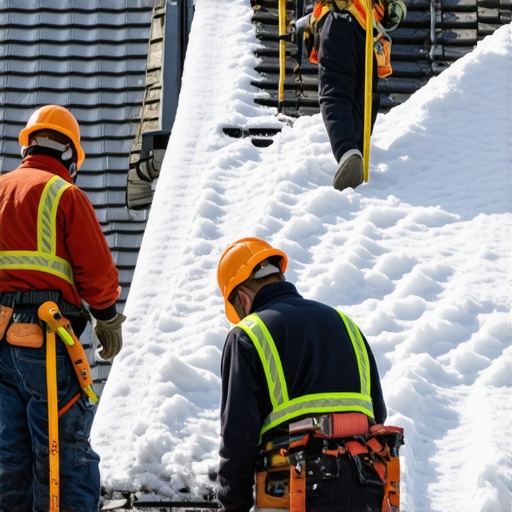
The Winter Nightmare Under Your Shingles
It starts with a soft, rhythmic thump-thump against the drywall in your guest bedroom. You think it is just the wind, but when you see that tea-colored ring blooming on the ceiling, you realize the reality: your roof is losing the war against the freeze. Most roofing companies will tell you it is just a simple leak. They are wrong. As a forensic roofer with twenty-five years of inspecting failures, I can tell you that by the time you see water, the crime has been committed for months. We are seeing a massive surge in failures because 2026 cold weather is not just about snow; it is about the physics of extreme temperature swings and the incompetence of contractors who treat a square of shingles like a puzzle piece rather than a functional moisture barrier.
The Mentor’s Warning
My old foreman used to say, ‘Water is patient. It will wait for you to make a mistake.’ He would spend an extra hour on a single valley, even when the wind was biting through his Carhartt jacket, because he knew that a single shiner—a nail that misses the rafter and hangs into the attic space—would eventually become a conduit for ice. In the 2026 landscape, local roofers are moving faster than ever, driven by high demand and shrinking margins, often neglecting the basic principles of thermal dynamics that keep a structure dry.
“Ice dams are the result of complex interactions between the building’s heat loss, the snow cover on the roof, and the outside air temperature.” – NRCA (National Roofing Contractors Association)
Mechanism Zooming: The Anatomy of an Ice Dam
To understand why your roof is failing, we have to look at the capillary action of water. When your attic is poorly insulated, heat leaks from the living space—what we call an attic bypass. This heat rises and warms the underside of the roof deck. The snow directly above it melts, and the liquid water runs down the slope until it reaches the cold eaves, which are sticking out past the warm attic. There, it refreezes. This creates a dam. But here is the forensic part: the water pooled behind that dam doesn’t just sit there. It uses hydrostatic pressure to push its way upward under the shingles. Standard asphalt shingles are designed to shed water moving down, not to hold back standing water moving up. If your roofing companies didn’t install a high-quality ice and water shield—a self-adhering modified bitumen membrane—at least two feet past the interior wall line, that water is going into your plywood. I have seen plywood turn into something resembling wet cardboard because of a three-inch oversight at the gutter line.
Thermal Bridging and the ‘Shiner’ Problem
In the brutal 2026 winters, we are seeing more ‘attic frost’ than ever before. This happens because of thermal bridging. Every nail driven through your roof acts as a tiny bridge for cold. If a roofer is sloppy and leaves shiners (nails protruding into the attic instead of the rafter), those nails become freezing cold spikes. When warm, moist air from your shower or kitchen hits those cold nails, it flash-freezes into frost. Come the first spring thaw, all that frost melts at once. Homeowners call me screaming that their roof is leaking, but when I get in the attic, the shingles are fine—the problem is 1,000 tiny icicles melting off the nail heads. This is a failure of ventilation and precision, not the material itself.
“Roof systems shall be designed and installed in accordance with this code and the manufacturer’s installation instructions.” – International Residential Code (IRC) R903.1
The Forensic Fix: Band-Aids vs. Surgery
When you call local roofers in the middle of February, most will offer you the ‘Band-Aid.’ They will climb up with a puck of roofing cement and try to smear it over the problem area. In 140°F summer heat, that caulk will crack. In sub-zero winter, it won’t even bond. True forensic roofing requires ‘surgery.’ This means identifying the attic bypass—the light fixtures, plumbing stacks, or chimney chases where heat is escaping. It means checking the R-value of your insulation and ensuring your soffit vents aren’t clogged with blown-in fiberglass. If the roofing material is already compromised, a partial tear-off is the only way to ensure the ice and water shield is integrated with the flashing. Don’t let a ‘trunk slammer’ tell you a bit of tar will fix a structural thermal issue. You aren’t just paying for shingles; you are paying for the physics of staying dry.
Why 2026 Materials Change the Game
We are now seeing synthetic underlayments that claim to be ‘all-weather,’ but many of them become brittle when the mercury drops below zero. A veteran roofer knows that you have to warm up the rolls of membrane in the truck before applying them, or they won’t seal around the nail shank. If your contractor is throwing shingles down at 7:00 AM in a frost, the self-sealing strips won’t engage. The first high wind of March will catch those shingles and flap them like playing cards in a bicycle spoke. This is why timing and temperature-aware installation are non-negotiable for roofing companies that actually intend to be in business long enough to honor their warranty.