
The Smell of a Dying Roof
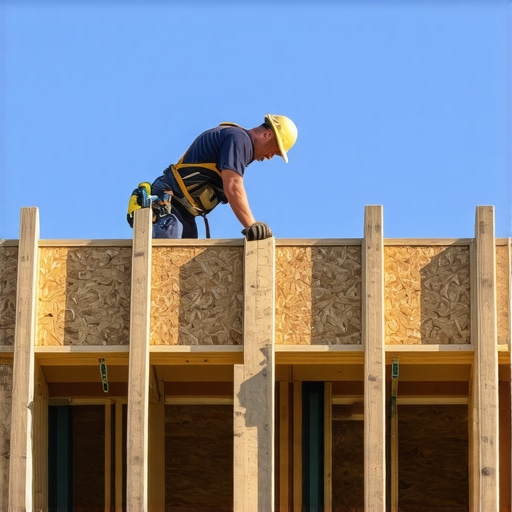
I stepped onto a roof last Tuesday in a neighborhood where the houses all look like they were built by the same guy on a deadline. The homeowner was complaining about a ‘small spot’ on his guest bedroom ceiling. But the moment my boot hit the shingles, I didn’t need to see the ceiling. Walking on that roof felt like walking on a sponge. I knew exactly what I would find underneath: a structural disaster hiding behind 30-year architectural shingles. The air coming out of the attic vents smelled like a damp basement—a mix of old cedar and active fungal growth. Most local roofers would just slap a patch on it, collect a check, and disappear. But if you are looking at your roof as we approach 2026, you need to understand that the bones of your house—the joists—are under more stress than ever due to changing climate patterns and aging insulation. When roofing companies talk about a ‘replacement,’ they usually just mean the skin. We need to talk about the skeleton.
The Physics of Structural Failure: Why Joists Give Up
Roof joists don’t just snap. They rot from the inside out through a process of slow-motion suicide called thermal bridging and condensation. In our cold northern climate, the enemy isn’t just the rain; it is the heat escaping your living room. When warm, moist air hits the underside of a cold roof deck, it turns back into liquid. This isn’t just a leak; it is an ‘attic bypass.’ Over time, this moisture seeps into the wood grain of the joists. I’ve seen 2x10s that looked solid from three feet away but would crumble if you poked them with a screwdriver. The water uses capillary action to move sideways across the grain, bypassing your Ice & Water Shield and attacking the very foundation of the roof.
“A roof is only as good as its flashing.” – Old Roofer’s Adage
1. The Deflection and ‘Sponge’ Test
The first way to check your 2026 roof joists is the one I used on that Tuesday morning: the deflection test. When a pro walks a roofing surface, they aren’t just looking for missing granules. We are feeling for ‘give.’ A healthy roof should feel like walking on a concrete sidewalk. If there is a bounce, or if the plywood feels like it is bowing between the rafters, the joist has lost its structural tension. This often happens because of ‘shiners’—nails that missed the joists entirely during the last install. These shiners act as tiny lightning rods for frost. They freeze in the winter, melt in the spring, and drip directly into the side of the joist, softening the wood until it can no longer hold a square of shingles without sagging.
2. The Forensic Attic Inspection (The Black Stain Rule)
You can’t trust what you see from the ladder. You have to get into the ‘hot zone.’ I’m talking about the crawlspace where the temperature hits 140°F in the summer. Take a high-lumen flashlight and look at the ‘tails’ of your joists—where they meet the exterior walls. If you see black staining or white, powdery ‘efflorescence’ on the wood, you have a ventilation failure that is eating your structure. By 2026, many older homes will hit their ‘moisture saturation point’ if they haven’t been upgraded to modern airflow standards. If your roofing companies aren’t checking the soffit intake, they are setting you up for a joist collapse within a decade.
“Roof assemblies shall be designed and installed in accordance with this code and the approved manufacturer’s installation instructions.” – International Residential Code (IRC)
3. Laser Leveling and Plane Analysis
The third method is purely mathematical. We use long-range laser levels to check the ‘plane’ of the roof. If you stand at the gable end and look down the ridge line, it should be as straight as a gunshot. If it dips in the middle, your joists are ‘rolling’ or ‘crowning’ in the wrong direction. This is often caused by the weight of multiple layers of shingles. I’ve seen ‘trunk slammer’ contractors pile three layers of asphalt on a roof to save on dump fees. That’s about 6,000 pounds of extra weight. Your joists weren’t designed to carry a literal elephant on top of your house. Eventually, the wood fibers compress and lose their memory, leading to a permanent sag that traps water in the valley and creates a swimming pool over your head.
4. Moisture Metering and Fiber Density
Finally, we use the tech. A professional moisture meter should be pressed into the joists at several points, especially near the cricket—that small peaked structure behind your chimney. If the moisture content in the wood is over 19%, you have active decay. At this point, the wood is no longer structural; it is food for mold. When we see this during a forensic teardown, the plywood often comes off like oatmeal. You can’t just nail new shingles into oatmeal. You have to perform ‘surgery’—removing the rotten sections and sistering new, pressure-treated lumber to the existing joists to restore the load-bearing capacity before the 2026 snow loads hit.
The Fix: Surgery vs. The Band-Aid
Most people want the Band-Aid. They want a bucket of mastic and a ‘see ya later.’ But if your joists are failing, a Band-Aid is just hiding a terminal illness. Real local roofers will tell you that the only fix for structural joist damage is a full tear-off. We strip it down to the bones, replace the compromised timber, and then build the ‘defense-in-depth’ system: high-quality synthetic underlayment, proper flashing at the walls, and a ventilation system that actually breathes. If you wait until the joist actually snaps, you aren’t just looking at a new roof; you are looking at a structural engineer, a drywall crew, and a massive bill from an insurance company that might deny the claim due to ‘negligent maintenance.’ Don’t let your roof become a forensic scene. Check the bones now, before the 2026 season makes the decision for you.