
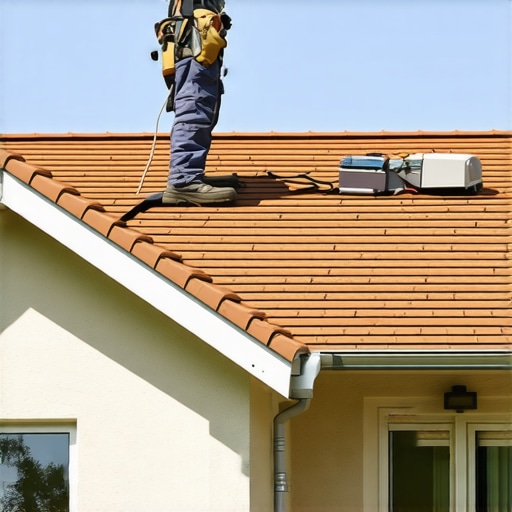
The 2:00 AM Thump: A Forensic Look at Shingle Lift
I’ve spent three decades climbing ladders, and if there is one sound that haunts a homeowner’s sleep, it’s the rhythmic slap-slap-slap of an architectural shingle that’s lost its grip. By the time you hear it, the failure happened months, maybe years, ago. We’re heading into 2026, and the data from forensic roof inspections shows a disturbing trend: shingles aren’t just wearing out; they are lifting in wind speeds they were supposedly rated to handle. As local roofers, we’re seeing the results of ‘trunk-slammer’ installs where the physics of the roof were ignored for the sake of a quick paycheck.
My old foreman used to say, ‘Water is patient. It will wait for you to make a mistake, but wind? Wind is a bully. It finds the loose tooth and yanks it.’ He was right. Shingle lift isn’t a mystery; it’s a mechanical failure of the building envelope. When we talk about preventing lift in the coming years, we aren’t talking about better glue; we’re talking about respecting the aerodynamics of a structure. If your roofing companies aren’t discussing static pressure and fastener pull-through, they aren’t roofing—they’re just decorating.
1. The Precision of the Starter Strip and Drip Edge
The edge of your roof is the front line. Most local roofers see the drip edge as a simple piece of metal to keep water off the fascia. In reality, it is the anchor point for the entire system’s wind resistance. If the starter course—that first layer of shingles—isn’t properly offset and bonded to the drip edge, you’ve essentially built a wing. As wind hits the vertical wall of your house, it is forced upward. This creates a high-pressure zone at the eave. If there is even a millimeter of gap, that pressure gets under the shingle, creating lift.
“A roof is only as good as its flashing and its first six inches of perimeter.” – Old Roofer’s Adage
We see ‘shiners’—nails driven too high or missed entirely—at the eave more than anywhere else. When that happens, the starter strip isn’t locked down. In 2026, we expect to see more localized micro-bursts. A proper install requires a dedicated starter strip with a factory-applied adhesive line that sits precisely where it can bond with the first course of shingles. Using a cut-up three-tab shingle as a starter? That’s a 1990s shortcut that leads to 2026 failures.
2. The ‘Shiner’ Epidemic: Why Fastener Placement is Non-Negotiable
Let’s talk about ‘shiners.’ In trade talk, a shiner is a nail that missed the rafters or, worse, missed the nail zone on the shingle itself. Most modern shingles have a narrow strip, usually about an inch wide, where the nail must penetrate. If the nail is too high, it only catches the top layer of the shingle laminate. If it’s too low, it’s exposed to the elements. When a roofer is ‘running and gunning’ to finish a 30-square job in a day, their nail gun placement gets sloppy.
Mechanism zooming: Think about the physics of a lever. If the nail is placed too high (high-nailing), the wind only needs a fraction of the force to peel that shingle back. It’s basic leverage. Once the wind gets a ‘tab’ up, it creates a pocket of low pressure above the shingle and high pressure underneath. This is Bernoulli’s principle in action on your roof. The shingle doesn’t just blow off; it is sucked off. High-quality roofing companies now use ‘enhanced fastening’ patterns—six nails instead of four—specifically to increase the pull-through resistance during these high-lift events.
3. Thermal Bonding and the Myth of ‘Instant’ Seals
I’ve walked on roofs in the dead of winter where I could lift the shingles with my pinky finger. Why? Because the sealant strip never ‘activated.’ Most asphalt shingles rely on a strip of modified bitumen that requires heat to bond the layers together. If a roof is installed in November and we don’t get a solid week of 60-degree days, that bond doesn’t set. The shingles sit there, ‘floating’ all winter.
This is where local roofers often fail their clients. They install the roof and walk away. But if that sealant strip gets contaminated by construction dust or autumn leaves before it bonds, it will never achieve its full wind rating. For 2026, we are pushing for the use of hand-sealing in cold-weather applications. It’s tedious. It’s a pain in the neck. But taking a tube of asphalt cement and applying three dabs per shingle ensures that the ‘bully’ wind can’t find a way in.
“Adherence to the manufacturer’s specified temperature for thermal sealing is the difference between a 130mph rating and a 60mph failure.” – Forensic Roofing Institute
4. Managing Attic Pressure to Combat Lift
This is the one most roofing companies ignore because it requires looking *inside* the house. Your roof isn’t just a lid; it’s part of a pressure-balanced system. If your attic ventilation is clogged—say, your soffit vents are buried under blown-in insulation—your attic becomes a pressurized balloon. During a storm, as wind moves over the ridge vent, it creates a vacuum. If the attic can’t ‘breathe’ from the soffits, the house will try to equalize pressure by pushing air *through* the roof deck. This internal pressure pushes against the underside of the shingles, assisting the wind in lifting them.
I recently did a forensic tear-off where the plywood was delaminating because the attic was a literal sauna. The heat had baked the shingles from the inside out, making the sealant strip brittle. Once that strip became brittle, it snapped under the first 40mph gust. Preventing 2026 shingle lift requires a balanced system: intake at the eaves, exhaust at the ridge, and zero obstructions in between. We call this ‘ventilation hygiene,’ and it is the secret to a roof that lasts 30 years instead of ten.
The Cost of the ‘Cheap’ Quote
When you look at quotes from local roofers, you’ll see a wide range. The cheap guy is saving money on the details I just described. He’s using ‘shiners,’ he’s skipping the starter strips, and he isn’t checking your soffit vents. In the roofing world, you don’t pay for the shingles; you pay for the physics. If you ignore the mechanics of how wind interacts with your home, you’ll be calling me in 2026 to figure out why your ‘lifetime’ roof is sitting in your neighbor’s yard. Invest in the install, or prepare for the autopsy.