
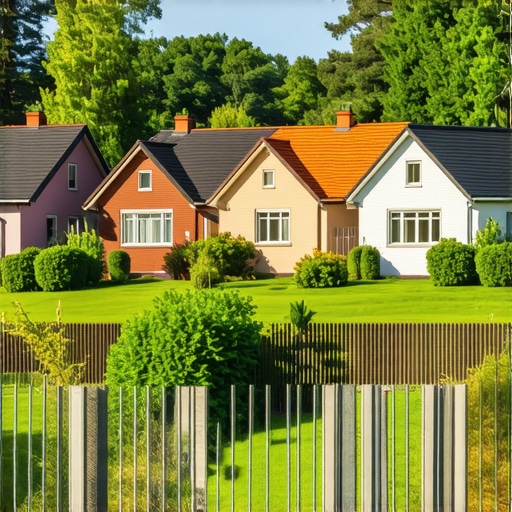
The Old Man’s Warning: Why 2026 Aesthetics Start With Physics
My old foreman used to say, ‘Water is patient. It will wait for you to make a mistake.’ He said it while we were standing on a 12-pitch victorian in a biting wind, watching a ‘trunk slammer’ across the street hammer away at shingles without a lick of starter strip. Fast forward to today, and most roofing companies are still more interested in the color of the shingle than the integrity of the deck. As we look toward 2026, ‘curb appeal’ is the buzzword every homeowner is chasing, but if your local roofers are just slapping on pretty layers without understanding the forensic reality of a roof system, you’re just putting a tuxedo on a corpse.
True curb appeal isn’t just about a fresh color palette; it’s about the structural geometry and the technical execution that keeps that beauty from sagging or staining within three seasons. When you hire roofing companies, you aren’t just buying a product; you are buying a 25-year insurance policy against gravity and moisture. Let’s look at the five ways the industry is shifting for 2026 and how to avoid the ‘shiners’—those missed nails that signal a hack job—while making your house the envy of the block.
“A roof is only as good as its flashing.” – Old Roofer’s Adage
1. The Rise of Synthetic Slate and the Death of ‘Cheap’ Asphalt
By 2026, the market is moving away from the paper-thin three-tab shingles that have plagued neighborhoods for decades. Homeowners are realizing that asphalt is essentially a sponge held together by oil that dries out under UV radiation. The new standard for curb appeal involves synthetic composites that mimic slate or hand-split cedar shakes. These materials don’t just look better; they handle thermal shock—the rapid expansion and contraction caused by 100-degree days followed by 60-degree nights—without cracking. When investigating a failed roof, I often see where ‘budget’ roofing companies ignored the expansion joints, leading to buckling that ruins the roof’s silhouette. In 2026, the ‘Material Truth’ is that durability is the aesthetic. If the material can’t handle the sun’s radiation, those deep charcoal tones you picked will fade to a sickly gray in forty-eight months.
2. Mechanical Ventilation as a Design Element
You might think a ridge vent is just a plastic strip, but in the forensic world of roofing, it is the lungs of the house. Most local roofers will tell you that you need more ‘curb appeal’ by hiding vents, but 2026 trends are leaning into visible, high-efficiency low-profile metal venting. Why? Because a hot attic is a roof killer. I’ve seen plywood turned to oatmeal because an installer didn’t understand the physics of an intake-to-exhaust ratio. When the attic hits 140°F, the shingles literally cook from the inside out, causing the granules to slough off and end up in your gutters. That ruins curb appeal faster than any storm. 2026 designs use ridge lines that are clean and intentional, integrating the ventilation into the ‘square’—that’s 100 square feet of roofing for the laypeople—to ensure the roof looks sharp and stays cool.
3. The ‘Cricket’ and the Geometry of Drainage
Nothing kills curb appeal like a massive water stain running down the side of a chimney. This is where the ‘forensic’ side of roofing comes in. Most leaks don’t happen in the field of the roof; they happen at the transitions. In 2026, sophisticated roofing companies are emphasizing the ‘cricket’—a small peak built behind a chimney to divert water. Without a cricket, water dams up, and through capillary action, it crawls uphill under the shingles and into your living room. A well-constructed copper or color-matched steel cricket isn’t just a functional necessity; it shows a level of craftsmanship that screams quality to anyone who knows what they’re looking at. It tells the neighborhood that you didn’t just hire the cheapest guy with a ladder; you hired an artisan.
“The roof is the most important part of the building, for it is that which protects all the rest.” – Architectural Axiom
4. Integrated Solar and the ‘Cool Roof’ Revolution
We are moving past the era of bulky, ugly solar panels bolted through the shingles with hardware that eventually leaks. Curb appeal in 2026 is about integrated solar shingles. These are shingles that are the solar cells. From a forensic standpoint, this eliminates hundreds of penetration points where a local roofer might miss the rafter and leave a ‘shiner.’ These integrated systems use ‘Cool Roof’ technology—highly reflective granules that bounce UV rays back into the atmosphere. This prevents the thermal degradation of the asphalt binder. When you look at a house with an integrated system, you don’t see a science project on the roof; you see a sleek, uniform surface that looks like a million bucks while paying for itself in R-value efficiency.
5. The Detail in the Drip Edge and Valley Work
If you want to know if roofing companies are worth their salt, look at the valleys. Most will just weave the shingles together because it’s fast. A pro will use an open metal valley. This creates a clean, sharp line that defines the roof’s planes. In 2026, high-contrast valley metal—like a bronze metal in a black shingle field—is becoming a major design trend. But beyond the look, it prevents ‘hydrostatic pressure’—that’s the force of water building up in a heavy downpour that pushes moisture under the shingle edges. Combine this with a heavy-gauge drip edge that prevents water from wicking back into the fascia boards, and you have a roof that stays crisp and rot-free for thirty years. If your roofer doesn’t talk about ‘wicking’ or ‘capillary breaks,’ they aren’t thinking about your curb appeal; they’re thinking about their next paycheck.
How to Pick a Contractor Who Won’t Disappear
The ‘Lifetime Warranty’ is the biggest marketing lie in the industry. Those warranties usually only cover the material, not the labor to fix a mistake. When choosing between local roofers, ask them to show you their flashing details, not just their shingle samples. A real expert will talk to you about the ‘Ice and Water Shield’—that sticky membrane that goes under the shingles at the eaves to prevent ice dams. They will explain how warm air leakage from your house can melt snow on the roof, which then refreezes at the cold overhang, forcing water up and over the top of the shingles. If they can’t explain the physics of an ice dam, they shouldn’t be on your roof. 2026 is about smarter homes, and that starts with a roof that understands how to handle the elements, not just one that looks good in a brochure. Look for the forensic signs of quality: straight lines, no ‘shiners,’ and a clean job site. That is the true path to curb appeal.
This article hits the nail on the head about the importance of understanding the forensic details behind roofing choices. I’ve had firsthand experience with seemingly minor issues like improperly installed valleys or neglected expansion joints leading to major problems down the line. The focus on materials that can withstand thermal shock and UV exposure is especially crucial since I live in a climate with extreme temperature swings. It’s interesting to see how integrated solar shingles are becoming more mainstream, not just for their eco-benefits but also for their aesthetic appeal — no more bulky panels! When selecting a contractor, I always ask to see their detailed flashing techniques and their approach to ventilation, as these often reveal their expertise or lack thereof. Has anyone found that investing in higher-quality materials and craftsmanship really offsets the premium costs in the long run? I’d love to hear about real-world experiences on this front.
Reading through this post really underscores how crucial it is to look beyond just the aesthetic when considering roofing upgrades. I appreciated the emphasis on the forensic approach—details like proper flashing, drainage geometry, and ventilation often get overlooked, but they truly determine the longevity and curb appeal of a roof. I’ve personally seen projects where neglecting these fundamentals led to costly repairs within a few years, especially in areas with significant temperature fluctuations. It’s interesting how integrated solar shingles are becoming not just a sustainable choice but also a design statement, blending seamlessly into the roof’s profile. On the topic of craftsmanship, I’d love to hear how other homeowners vet their contractors—do you ask for testaments, portfolio photos, or maybe even references from past clients? Seeing meticulous flashing work and proper water-proofing details has always reassured me of quality. What’s your experience been with the balance of upfront costs versus long-term durability and beauty?