
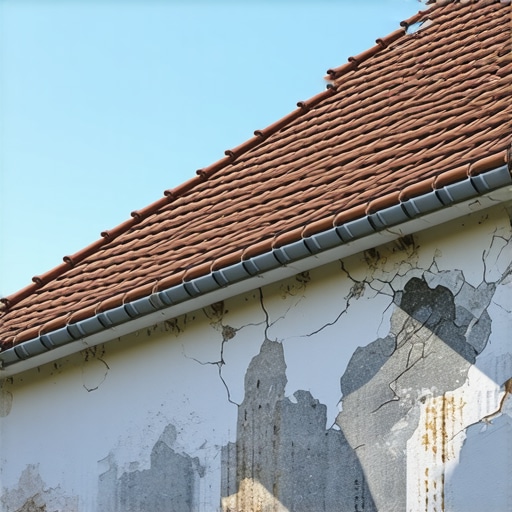
The Sound of a Slow Disaster: Why Your Ridge is Screaming for Help
It starts with a sound you usually ignore—a rhythmic tapping during a Northeast gale that you convince yourself is just a loose shutter. But as a forensic roofer who has spent three decades crawling through cramped, 140-degree attics, I know that sound. It’s the sound of a ridge cap shingle flapping like a dying bird because the ‘local roofers’ who installed it ten years ago used 1-inch nails instead of 1.75-inch fasteners. By the time you see the brownish ring forming on your dining room ceiling, the autopsy of your roof is already well underway. The ridge is the most vulnerable part of your roofing system. It’s the spine of the house, and in our climate of freeze-thaw cycles and 60-mph gusts, it takes a beating that standard shingles never face. My old foreman, a man who could spot a ‘shiner’ from the curb, used to tell me: ‘Kid, water is patient. It doesn’t need a hole; it just needs an invitation. It will wait for you to take a shortcut, then it will rot the house out from under the owner.’ This article isn’t a sales pitch; it’s a forensic breakdown of the four signs of ridge wear that roofing companies often overlook until it’s too late.
The Physics of Failure: Why the Peak is the First to Go
To understand why your ridge is failing, you have to understand the Bernoulli principle. When wind hits the side of your house, it’s forced upward, speeding up as it crests the peak. This creates a low-pressure zone directly over your ridge vent. If that vent isn’t perfectly integrated with the shingle courses, that low pressure doesn’t just pull air out of your attic—it sucks rain and snow upward, defying gravity. This is called capillary action, and it’s the primary reason for ‘untraceable’ leaks.
“A roof is only as good as its flashing and its ability to manage pressure differentials.” – Old Roofer’s Adage
When I perform a forensic inspection, I’m looking for more than just missing granules. I’m looking for how the physics of the house is fighting the material.
1. The ‘Accordion’ Effect: Thermal Expansion of Plastic Vents
In 2026, we are seeing the mass failure of ‘builder-grade’ plastic ridge vents installed during the housing booms of the last decade. These plastic strips are often 4 feet long and pinned down with nails. Here’s the problem: plastic expands and contracts at a much higher rate than the wood deck underneath it. Over years of scorching summers and bitter winters, the vent literally tries to walk off the roof. It buckles, creating an accordion-like wave. This wave pulls the nails out of the wood, creating ‘shiners’—nails that no longer grip the rafters. Once that nail is loose, water follows the shank of the nail straight down into your insulation. If you look at your roofline from the street and see a ‘wavy’ peak, your local roofers didn’t account for thermal shock.
2. The ‘Bald Apex’ and UV Degradation
The ridge of your roof is the closest point to the sun, and it takes the brunt of UV radiation. While the rest of your roofing might look fine, the ridge caps—which are often just standard shingles bent over a sharp 90-degree angle—suffer from ‘stress cracking.’ When you bend a thick asphalt shingle, you create micro-fissures in the bitumen. The sun bakes these cracks, and the granules fall off, leaving the ‘bald’ asphalt exposed. Once the asphalt is bare, it dries out, becomes brittle, and cracks wide open. If you see piles of granules in your gutters that look like coffee grounds, your ridge is likely losing its protective skin.
3. The ‘Spongey Peak’ (The Hidden Rot)
Walking on a roof tells me more than looking at it. If I step near the ridge and it feels like I’m walking on a mattress, I know exactly what I’ll find underneath. This is usually caused by ‘attic bypasses’—warm, moist air from your bathroom or kitchen leaking into the attic because of poor sealing. That moisture rises to the highest point (the ridge), hits the cold underside of the roof deck, and turns into liquid. It’s like a rainstorm inside your house every winter. This moisture rots the plywood from the inside out. By the time the ridge wear is visible on the outside, the decking is often as soft as oatmeal.
“Ventilation shall be provided at a rate of 1 square foot of net free area for every 150 square feet of attic floor.” – IRC Building Code R806.1
If your local roofing companies didn’t balance your intake vents at the soffits with your exhaust at the ridge, your roof is essentially a slow cooker.
4. Gasket Degradation on Mechanical Fasteners
Many modern ridges use mechanical vents held down by screws with neoprene gaskets. These rubber washers are the only thing keeping water out of the screw hole. By 2026, these rubber gaskets, which were never designed to last 30 years, are drying out and cracking. Once the gasket fails, every rainfall sends a small amount of water down the threads of the screw. It doesn’t cause a flood immediately; it just keeps the wood damp enough for mold to thrive. I once tore off a ridge in a local neighborhood where the entire ridge board was covered in black mold, simply because of twelve failed rubber washers. It was a $50 fix that turned into a $12,000 structural repair.
The Band-Aid vs. The Surgery
Most local roofers will try to sell you a bucket of caulk. They’ll climb up, smear some ‘black jack’ over the cracks, and charge you $500. This is a Band-Aid on a gunshot wound. Caulk is a temporary fix that will fail within two seasons of thermal expansion. The ‘surgery’ involves a proper tear-off of the ridge area. We pull back the shingles to the first course, inspect the decking for ‘ghosting’ or rot, and install a high-performance ridge vent with a built-in weather filter. This isn’t just about shingles; it’s about engineering a system that breathes while staying bone-dry. If your contractor doesn’t talk to you about ‘Net Free Area’ or ‘Intake Balance,’ they aren’t roofing—they’re just nailing things down and hoping for the best. Don’t let a ‘trunk slammer’ handle your ridge; your home’s skeletal integrity depends on that peak being airtight and watertight.