
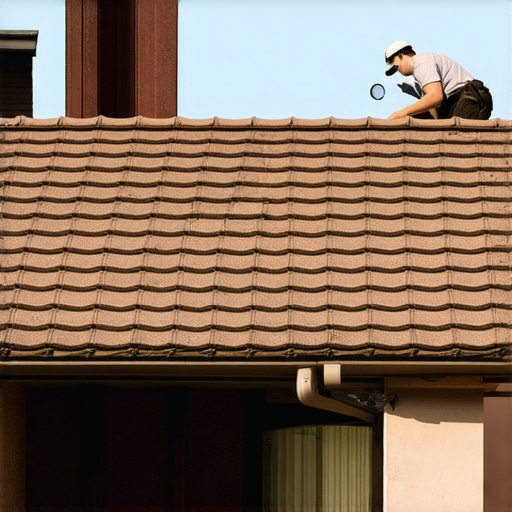
The Forensic Autopsy of a Modern Roof Failure
You’re sitting in your living room during a late-season Nor’easter, and you hear it. Not the wind, but the steady, rhythmic tink-tink-tink of water hitting a plastic bucket. Most homeowners call local roofers and expect a quick patch, but as someone who has spent 25 years peeling back the layers of failed systems, I can tell you that a leak is rarely just a leak. It is the final act of a long, silent tragedy playing out on your roof deck. By the time that water reaches your ceiling, the physics of failure have been at work for years. We are entering an era where roofs installed during the high-pressure material shortages of 2021 are starting to show what I call ‘2026 Shingle Holes’—micro-failures caused by rushed labor and thermal stress that are just now reaching a breaking point.
The Ghost in the Deck: A Forensic Scene
Walking on a roof in a cold climate after a heavy freeze-thaw cycle is a sensory experience. I remember a job last November where the shingles looked pristine from the ladder. But the moment I stepped onto the north-facing slope, the surface felt like walking on a wet sponge. I knew exactly what I’d find underneath. When we tore the squares off, the 7/16-inch OSB decking didn’t just break; it crumbled like dry cake. The culprit wasn’t a missing shingle. It was a series of ‘shiners’—nails that missed the rafter and were left exposed in the attic space. These cold metal shanks acted as condensers, pulling warm, moist air from the house and turning it into a slow drip that rotted the wood from the inside out for five straight winters. If you don’t know what to look for, you’re just paying for a cosmetic fix while the skeleton of your home dissolves.
“A roof is only as good as its flashing, and its longevity is dictated by the management of air, not just water.” – Old Roofer’s Adage
1. The ‘Shiner’ and the Physics of Capillary Action
When roofing companies rush a crew, the nail gun becomes a liability. A ‘shiner’ is a nail that missed the framing member. In our Northern climate, these are death sentences for a roof. Through a process called capillary action, moisture finds the path of least resistance. Water doesn’t just fall; it climbs. It moves sideways under the shingle, finds the rusted shank of that misplaced nail, and follows it straight into the decking. Over time, the hole around that nail expands as the wood fibers swell and contract. By 2026, many homes built or reroofed recently will see these holes manifest as localized rot. You spot them by looking for dark circles on your attic plywood—not necessarily where the water is dripping, but where the air is escaping.
2. The Thermal Bridge: Why Your Attic is Killing Your Shingles
In cold regions, the enemy isn’t just the rain; it’s the heat you’re losing from your house. We call this ‘thermal bridging.’ When warm air leaks through an unsealed attic bypass—like a recessed light or a poorly insulated hatch—it hits the underside of the cold roof deck. This creates condensation. This moisture eventually rots the nails holding your shingles in place. Once the nail head rusts off, the shingle is no longer secured. It might look fine, but in a high-wind event, it’ll lift just enough to let wind-driven rain under the course. This creates a hidden hole that no drone inspection will ever catch. You have to get into the crawlspace and smell the air; if it smells like a damp basement, your roof is already failing from the bottom up.
3. The ‘Drip Edge’ Deception
Many local roofers skip the drip edge or install it over the underlayment incorrectly. The drip edge is a metal flashing that directs water into the gutter and away from the fascia. Without it, water wicks back under the shingles via surface tension. This saturates the edge of the plywood. Once that edge turns to ‘oatmeal,’ the shingles lose their grip. You can spot this by looking at your gutters. If you see water stains running behind the gutter, your roof has a perimeter hole that is rotting your fascia boards and inviting carpenter ants into your structure.
“Properly designed and installed flashing is the most critical element in preventing water infiltration at roof transitions.” – NRCA Roofing Manual
4. Valley Physics and the Hydrostatic Pressure Trap
The valley is where two roof planes meet, and it’s the most high-traffic area for water. Most roofing companies today use ‘closed’ valleys where shingles overlap. If the roofer didn’t ‘dub’ the corners—cutting the top corner of the shingle to redirect water back into the center of the valley—the water will travel sideways under the shingle. This is hydrostatic pressure at work. During a heavy downpour, the volume of water is so high that it creates a mini-river that finds any tiny gap or ‘shingle hole’ in the underlayment. If your valley looks ‘lumpy,’ it’s a sign that debris and water are trapped underneath, slowly eating away at the Ice & Water shield.
5. The 2026 Material Fatigue: Granule Loss and UV Pitting
We are seeing an uptick in premature granule loss. Shingles rely on these ceramic granules to protect the asphalt from UV radiation. When a roof is poorly ventilated, the shingles bake from both sides—the sun above and the trapped attic heat below. This ‘cooks’ the asphalt, causing it to shrink and crack. These micro-fissures, or ‘pitting,’ are the 2026 shingle holes I’m talking about. They aren’t caused by hail, but by thermal shock. If you see piles of granules in your downspouts that look like coffee grounds, your shingles are thinning out. Once the asphalt is exposed, a single summer can create a hole large enough to compromise the entire system.
The Surgery: Why Caulk is Never the Answer
If a contractor walks onto your roof with a tube of caulk to fix a leak, fire them. Caulk is a band-aid on a gunshot wound. Real roofing is ‘the surgery’—tearing back the affected area to the deck, replacing the rotten OSB, and installing new flashing and underlayment. You cannot ‘seal’ a hole from the top if the wood underneath is saturated. The cost of waiting is exponential. A $500 repair today saves a $20,000 deck replacement in two years. Don’t let a ‘trunk slammer’ convince you otherwise. Demand to see the flashing, demand to see the ventilation calculations, and never trust a roof that hasn’t been forensically inspected from the attic side first.