
The Physics of Failure: Why 2026 Roofing Companies Are Switching to Graphene
Walk onto any roof in the blazing heat of a Phoenix or Las Vegas afternoon and you’ll feel the problem before you see it. The air shimmering off the granules isn’t just heat; it’s the sound of a countdown. After twenty-five years of pulling up failed systems, I’ve seen enough ‘baked’ shingles to know that our industry has been fighting a losing battle against thermal shock. By the time 2026 rolled around, the industry finally hit a breaking point. Most roofing companies were tired of warranting systems that simply couldn’t handle the 160°F deck temperatures we’re seeing now. That is where graphene primers entered the scene, not as a ‘game-changer’ marketing gimmick, but as a forensic necessity for survival in the desert heat.
My old foreman used to say, ‘Water is patient. It will wait for you to make a mistake.’ He was right, but in the Southwest, the sun is even more patient. It waits for the oils in your asphalt to migrate, leaving behind a brittle, carbonized husk that cracks the moment a cold front hits. This thermal cycling—the rapid expansion and contraction of the roof deck—is what kills a roof. Traditional primers were just ‘glue.’ They held the mess together for a few years, but they did nothing to manage the energy hitting the surface. Graphene changed the math by turning the entire roof surface into a heat sink rather than a heat trap.
“Proper ventilation and thermal management are the primary factors in extending the service life of asphaltic membranes.” – National Roofing Contractors Association (NRCA)
To understand why local roofers are obsessed with this stuff, you have to look at the mechanism of heat transfer. When we talk about graphene, we are talking about a single layer of carbon atoms arranged in a hexagonal lattice. In a roofing primer, these particles create a lateral highway for thermal energy. Instead of the heat dwelling on a single ‘shiner’ or a poorly driven nail that’s conducting heat directly into the plywood, the graphene spreads that thermal load across the entire square. It’s the difference between holding a magnifying glass over a leaf and spreading that same light across the whole yard. We’re seeing deck temperatures drop by 20 to 30 degrees simply because the primer is moving the energy to the eaves and ridges where the ventilation can actually carry it away.
I’ve stood on roofs where the plywood had basically turned into charcoal because of the ‘oven effect.’ You step on a rafter and you hear that sickening crunch—that’s not just old wood; that’s lignin failure caused by decades of trapped infrared radiation. When roofing companies apply a graphene-infused base, they are effectively installing a molecular radiator. It stops the ‘potato chip’ effect where the edges of the shingles curl up and become vulnerable to wind uplift. If you’ve ever seen a roof after a haboob or a high-wind event, the shingles that fly off are almost always the ones that were thermally compromised first.
“The building envelope must be designed to mitigate the effects of extreme thermal cycling to prevent premature fatigue of the weather-resistive barrier.” – International Residential Code (IRC)
Let’s talk about the ‘Material Truth’ regarding warranties. Most local roofers will hand you a ‘Lifetime Warranty’ pamphlet that is mostly just high-gloss paper and empty promises. Those warranties usually have more holes in them than a rusted-out valley. They often exclude ‘thermal movement’ or ‘acts of God,’ which is roofing-speak for ‘the sun was too hot.’ By using graphene primers, the 2026 standard for roofing companies has shifted from ‘covering’ the failure to preventing the physics of the failure itself. It’s an insurance policy for the bitumen. It keeps the oils locked in the shingle longer, maintaining the flexibility needed to withstand a mid-July thunderstorm hitting a 150-degree roof.
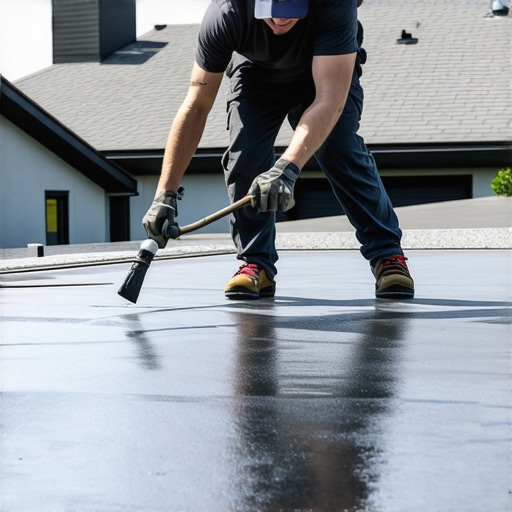
The trap many homeowners fall into is hiring ‘trunk slammers’—those guys who show up with a ladder and a bucket of cheap silver coating. They’ll tell you it’s the same thing as a graphene primer. It isn’t. Real graphene primers require a specific application rate, usually measured in microns, to ensure the carbon lattice is contiguous. If the application is spotty, you get ‘thermal hot spots,’ which can actually cause more damage than no primer at all. You want a pro who knows how to check for ‘shiners’ and understands the importance of a properly constructed cricket behind a chimney. If they aren’t talking about the science of heat dissipation, they’re just selling you a temporary band-aid.
When you are vetting roofing companies today, ask them about their interlayer adhesion stats. If they look at you like you have two heads, move on. A quality local roofer in a high-UV zone should be able to explain how the primer interacts with the aged substrate. We aren’t just slapping a new layer of ‘makeup’ on a house; we are performing surgery on the building envelope. The cost of waiting for your roof to fail is always higher than the cost of a high-spec installation. Once that water gets past the secondary barrier because the shingles have turned into crackers, you aren’t just replacing a square of roofing—you’re replacing fascia, soffits, and potentially your sanity when the mold starts growing in the attic bypass. Invest in the carbon technology now, or keep the bucket under the leak later. The choice is yours, but the physics of the sun won’t wait for you to decide.