
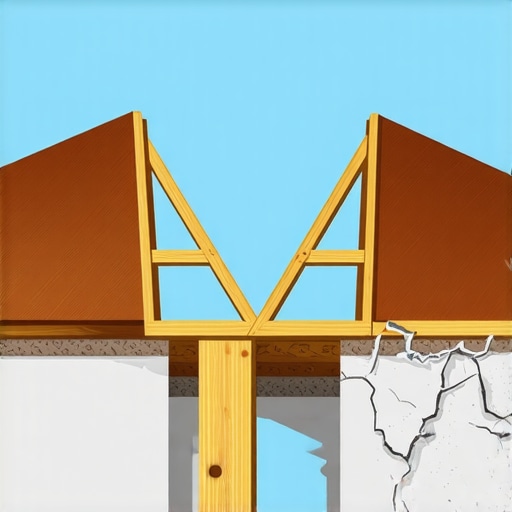
The Anatomy of a Hidden Failure: Why Your Roof is Heaving
I’ve spent a quarter-century hauling my tool belt up 12-pitch slopes, and if there is one thing I’ve learned, it’s that water doesn’t just fall; it hunts. Walking on that roof felt like walking on a sponge. I knew exactly what I’d find underneath. It wasn’t just a missing shingle or a botched bit of flashing around a chimney. It was a structural slow-motion car crash. When we talk about 2026 rafter stress, we aren’t talking about a single storm event. We are talking about the cumulative physics of heat, humidity, and the sheer weight of a roofing system that was never designed for the modern climate shifts we are seeing in the Northeast. Local roofers often focus on the aesthetic—the ‘curb appeal’ of a new architectural shingle—but the forensic reality is buried in the attic. If you don’t understand how your rafters are reacting to the pressure of 2026, you’re just putting a $20,000 band-aid on a broken bone.
Sign 1: The Longitudinal Bow and Compression Fatigue
The first sign of looming rafter failure isn’t a leak; it’s a silhouette. If you stand at the corner of your property and look along the ridge line, you might notice a slight dip, a wave in the OSB or plywood. This is the result of longitudinal bowing. In cold climates like ours, where ice dams are the primary antagonist, the rafters are subjected to thousands of pounds of static load for months. But it’s not just the weight of the snow. It’s the moisture. When local roofers fail to address attic bypasses—those tiny gaps around light fixtures or plumbing stacks—warm, moist air from your shower and kitchen migrates into the attic. This air hits the cold underside of the roof deck and condenses. The wood fibers in your rafters absorb this moisture, causing the cell walls to swell and soften. Over time, under the weight of several squares of shingles, the wood begins to ‘creep.’ Once wood fibers have deformed under load while damp, they don’t just snap back into place when they dry. They stay bowed. This is a structural ‘shiner’ waiting to happen, where the fasteners lose their grip because the wood is no longer stable.
“A roof is only as good as its flashing.” – Old Roofer’s Adage
Sign 2: The ‘Sweating’ Fastener and Interstitial Rot
The second sign is more insidious. You’ll see it in the attic before you see it on the ceiling. Look for ‘shiners’—those nails that missed the rafter during the last install by some ‘trunk slammer’ looking to set a speed record. In a poorly ventilated attic, these nails act as heat sinks. In the dead of winter, they are freezing cold. When that warm air bypass hits them, they ‘sweat.’ This localized moisture drips directly onto the side of your rafters. By 2026, many homes built during the housing booms of the late 90s and early 2000s are hitting a critical threshold where this intermittent wetting has turned into localized fungal decay. The wood looks fine from a distance, but if you poke it with a screwdriver, it’s got the consistency of wet cardboard. This is what we call interstitial rot. It’s the mechanism of failure that causes a roof to suddenly ‘pancake’ during a heavy snow load. The rafter hasn’t snapped; the connection points—the bird’s mouth cuts and the ridge beam attachments—have simply dissolved. Most roofing companies won’t even mention this because it requires a flashlight and a crawl space, not just a drone and a sales pitch.
Sign 3: Plate Separation and Hydraulic Expansion
The third sign involves the physics of the ‘cricket’ and the ‘valley.’ When local roofers don’t properly flash these high-volume water areas, moisture gets trapped behind the drip edge. Through a process of capillary action, water is drawn upward, against gravity, into the end-grain of the rafters. Think of a rafter like a bundle of drinking straws. If you put the end of those straws in a puddle, the water moves up. In 2026, we are seeing an increase in ‘hydraulic expansion.’ During the day, the sun beats down on the roof, melting the ice. That water seeps into the wood. At night, it freezes. Water is one of the few substances that expands when it freezes, and it does so with enough force to crack engine blocks. Inside your rafters, this expansion literally tears the wood fibers apart from the inside out. You’ll see this as ‘checking’ or long splits in the wood. It’s a sign that your roof’s skeletal system is losing its ability to carry a load. When you call roofing companies for an estimate, ask them how they handle the intake ventilation at the eaves. If they don’t mention airflow, they don’t understand the physics of your roof.
“The roof shall be designed and constructed to support all nominal loads and any load combinations.” – International Residential Code (IRC) R802
The Forensic Fix: Beyond the Shingle
Fixing rafter stress isn’t about more caulk. It’s about ‘surgery.’ It might mean sistering new lumber to the old, damaged rafters to restore structural integrity. It definitely means fixing the attic ventilation so that the wood can actually dry out. A roof needs to breathe just as much as it needs to shed water. If you keep the attic temperature within a few degrees of the outside temperature, you stop the freeze-thaw cycle that leads to hydraulic expansion. This is the difference between a ‘cheap’ roofer and a forensic professional. One sells you a product; the other protects your home’s skeleton. If you’re seeing these signs, don’t wait for the 2026 winter to prove me right. The cost of a repair is a fraction of the cost of a structural collapse. Get a pro who knows how to look under the hood, not just someone who can swing a hammer. If they don’t know what a ‘cricket’ is or why a ‘shiner’ is a death sentence for a rafter, send them packing.