
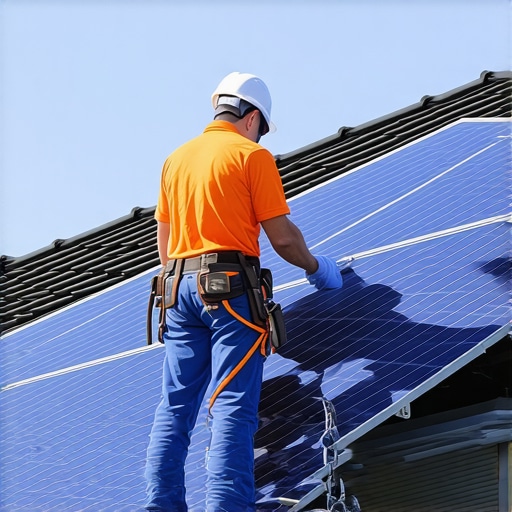
The 2026 Shift: Why Your Roofer is Suddenly an Energy Consultant
It is 2026, and if you have called out a few local roofers lately, you have probably noticed something different. They are no longer just looking at your shingles and counting the squares; they are checking your utility bills and pulling out thermal imaging cameras. This is not some marketing gimmick or a way to pad the bill. As a forensic roofing veteran with over two decades of scraping my knuckles on hot roof decks, I can tell you: the convergence of roofing and solar was inevitable. For years, I watched homeowners make the catastrophic mistake of bolting high-tech silicon panels onto 15-year-old asphalt roofs, only to have the whole system ripped off three years later when the underlying deck failed. By 2026, the industry finally grew a conscience—or at least got tired of the lawsuits.
The Forensic Scene: When a Roof Becomes a Sponge
Walking on that roof in the desert heat of Henderson felt like walking on a pack of soda crackers. I knew exactly what I would find underneath before I even lifted a single tab. The homeowner was complaining that her high-efficiency solar panels weren’t saving her a dime. When I got up there, the heat coming off the roof was an invisible wall. The shingles were brittle, curling like dried tobacco leaves under the relentless UV radiation. Beneath the panels, the temperature was a manageable 110 degrees, but the exposed sections were hitting 165 degrees. This thermal shock was tearing the roof apart. The roofing companies of the past would have just sold her a patch job. But in 2026, we do a full solar audit because the roof and the panels are now a single mechanical system. If one part fails, the whole house suffers.
“The roof covering shall be designed and installed in accordance with this code and the applicable manufacturer’s installation instructions to ensure that it provides a weather-protective barrier.” – International Residential Code (IRC) R905.1
The Physics of Failure: Why Solar Audits Matter
When we talk about a solar audit, we are not just talking about how much sun hits your house. We are looking at the mechanism of failure. In a desert climate, the biggest enemy is UV-driven degradation of the asphalt binders. When you install solar racking, you are adding dozens, sometimes hundreds, of new penetrations into the water-shedding surface. Each one of those is a potential leak point. A true solar audit investigates the structural integrity of the rafters to handle the dead load of the panels and the uplift forces during a high-wind event. We look for “shiners”—those missed nails from the original build that are now thermal bridges, pulling heat directly into your attic. If your roofing contractor isn’t looking at your attic insulation levels during a solar quote, they are doing you a disservice. A solar array is useless if your 140-degree attic is fighting your air conditioner through a leaky ceiling.
The Material Truth: Asphalt vs. The Southwest Sun
The roofing companies that survived into 2026 are those that stopped selling “lifetime warranties” and started selling performance. Most asphalt shingles are held together by oils that begin to evaporate the second they hit the yard. In the Southwest, this process is accelerated. We see thermal expansion where the racking system moves at a different rate than the shingles. Without a proper audit to ensure the roof has at least 20 years of life left, you are effectively building a house on a foundation of sand. We analyze the valley areas and the crickets—those small diversions behind chimneys—to ensure they can handle the altered water flow patterns that solar panels create. Water is patient; it will find a shiner or a poorly flashed bolt and wait for the perfect moment to rot your plywood into something resembling oatmeal.
“A roof system’s longevity is predicated on the harmony of its components, from the deck to the outermost layer.” – National Roofing Contractors Association (NRCA)
The Trap: Why “Free Solar” is a Roofing Nightmare
You have seen the signs at every intersection: “Free Solar for Homeowners.” What they don’t tell you is that the guys installing those panels are often not local roofers; they are electricians who might not know a drip edge from a starter strip. By 2026, the horror stories reached a tipping point. I have seen panels installed over three layers of old shingles—a clear code violation—because nobody did a structural audit first. A 2026 solar audit by a legitimate roofing professional includes a moisture scan of the decking. We need to know if there is trapped vapor between the felt and the plywood. If you seal that up under a solar array, you are creating a greenhouse for mold. The audit ensures that your investment in renewable energy doesn’t result in a $20,000 mold remediation bill five years down the road.
How to Evaluate Your Roofing Solar Audit
When you sit down with roofing companies today, the audit should be a thick document, not a one-page flyer. It should include a detailed map of your roof’s pitch, an assessment of the current shingle granule loss, and a calculation of the attic’s ventilation efficiency. If the panels block your ridge vents, your attic temperature will skyrocket, and your shingle warranty will be voided. We look for the “shiner” and the “valley” integrity because that is where the water moves via capillary action. If the audit doesn’t mention the age and condition of your flashing, walk away. You are being sold a product, not a solution. In 2026, the best roofers are those who act like forensic investigators, looking for the small mistakes that lead to big disasters.