
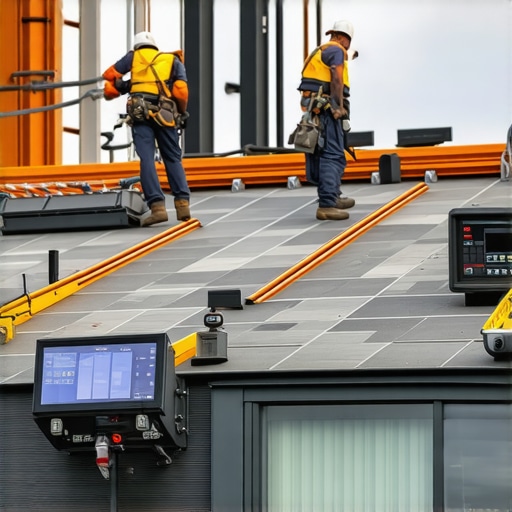
The Death of the Static Ridge Vent
For decades, we’ve been slapping plastic strips or corrugated rolls onto the peak of a house and calling it ‘ventilation.’ I’ve spent twenty-five years peeling back those strips only to find the ridge beam looking like a piece of charcoal because the attic was a 160-degree pressure cooker. My old foreman used to say, ‘If the attic can’t breathe, the house has asthma, and the shingles are the first to choke.’ He was right. By the time 2026 rolled around, the industry finally hit a breaking point. The traditional static vent—a passive piece of plastic that relies on the ‘hope and prayer’ method of physics—is being replaced by Smart Caps. These aren’t just covers; they are active diagnostic tools that local roofers are now using to prevent the slow-motion car crash that is premature roof failure.
The Physics of the ‘Death Peak’
When you look at a roof, you see shingles. When I look at a roof, I see a thermal battlefield. In most regions, especially where the humidity hangs thick enough to chew, the ridge of the roof is where the most violence happens. Heat rises, hitting the peak, but without active management, it just sits there. This creates a feedback loop. The plywood starts ‘mushrooming’—expanding and contracting so violently that the nails (those little silver bastards we call shiners when they miss the rafter) start to back out. Once a nail backs out, you’ve got a direct straw for water to suck into the attic through capillary action.
“Proper attic ventilation is not merely a recommendation; it is a fundamental requirement to prevent the accumulation of moisture and the degradation of the structural roof deck.” – NRCA Manual excerpt
This is why the shift in 2026 is so dramatic. We are moving from passive shedding to active management.
What Exactly is a 2026 Smart Cap?
Imagine a ridge vent that actually knows what the dew point is. The 2026 Smart Caps that reputable roofing companies are installing now feature integrated sensors and variable-geometry baffles. When the attic temp spikes or the humidity levels hit the ‘rot zone,’ the baffles adjust. It’s about preventing that ‘sponge’ feeling under your boots. I’ve walked on far too many roofs that felt like a trampoline because the owner saved five hundred bucks on cheap ventilation five years prior. A Smart Cap mitigates the thermal shock that kills asphalt shingles. In the heat of the day, shingles can reach 150°F; if the attic isn’t venting that heat, the shingle’s oils bake out, leaving you with brittle crackers instead of waterproofing. Local roofers who actually care about their reputation are moving to these systems because it stops the ‘callback’—that dreaded phone call three years later when the ceiling starts showing tea-colored stains.
The Material Truth: Why Your ‘Lifetime’ Shingle is Lying
Let’s talk about the ‘Lifetime Warranty’ trap. Most roofing companies sell you on a 50-year or ‘Lifetime’ shingle. But read the fine print. Those warranties are often voided if the ventilation doesn’t meet specific, often impossible, standards. The 2026 Smart Caps provide a digital record of attic conditions, effectively ‘bulletproofing’ the homeowner against warranty denials. If you’re choosing between standard asphalt and a high-performance system, the cap is the heart of the deal. Without it, you’re just putting a new suit on a corpse. You can have the best starter strip, a perfect cricket behind the chimney, and flawless valley flashing, but if the ridge is stagnant, the system fails.
“A roof is only as good as its flashing—and its ability to exhale.” – Old Roofer’s Axiom
The Cost of ‘Trunk Slammer’ Shortcuts
You’ll still find guys in beat-up trucks offering to do a square for half the price of the professionals. They won’t mention Smart Caps. They’ll use a cheap power fan that actually sucks the air-conditioned air out of your house through the recessed lights. That’s a system failure. Professionals in 2026 are focused on the balance between intake (at the soffits) and exhaust (at the ridge). If that ratio is off, you get negative pressure. In the winter, that negative pressure pulls warm, moist air from your bathroom into the attic, where it hits the cold plywood and turns into ‘attic frost.’ When that melts, it looks like a roof leak, but it’s actually a ventilation crime. This is why you need local roofers who understand regional psychrometrics, not just someone who can swing a hammer.
How to Verify Your Installation
If you’re watching a crew work, look at the ridge. If they are just cutting a narrow sliver in the decking, they’re choking the house. A real pro opens that ridge up, clears the debris, and ensures the Smart Cap has a clear path to breathe. They’ll also check for those shiners I mentioned earlier. Every missed nail is a thermal bridge that invites condensation. In 2026, we don’t just ‘roof’—we manage a building envelope. If your contractor isn’t talking about CFM (Cubic Feet per Minute) of airflow, they’re living in 1995. Don’t let them put an old-school cap on a modern home. It’s the difference between a high-performance engine and one with a potato shoved in the exhaust pipe.