
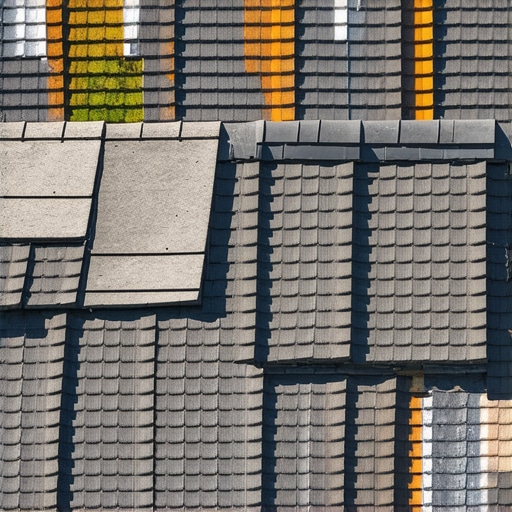
The Forensic Reality of a Failing Deck
Walking on that roof felt like walking on a sponge. I knew exactly what I’d find underneath—a landscape of rot that didn’t start yesterday, but was the inevitable result of five years of thermal cycling and atmospheric abuse. When you’ve spent 25 years on a pitch, your boots tell you more than your eyes ever could. That give in the plywood? That’s not just age. That’s the structural integrity of your home surrendering to physics. If you think your roof is fine because you don’t see a waterfall in your living room, you’re missing the slow-motion car crash happening above your head. By 2026, the shortcuts taken by local roofers during the building booms of the last decade are finally coming due. Here is the forensic breakdown of how your shelter is actually failing.
1. The Granule Graveyard: UV Degradation and Asphalt Migration
Go look at your downspouts. If you see a pile of ceramic-coated stone dust, your shingles are literally losing their armor. This isn’t just cosmetic. These granules are there to protect the asphalt from UV radiation. When the sun beats down on a 140°F deck in the humid Southeast, it cooks the volatile oils out of the asphalt. Once those oils migrate out, the shingle becomes brittle. It shrinks. It cracks. By 2026, many ‘lifetime’ shingles installed ten years ago are reaching a critical state of brittleness where even a light breeze can snap a tab. Mechanism Zooming: Without granules, the UV rays hit the fiberglass mat directly, breaking down the bonding resins. This is the first stage of the ‘sponge’ effect I felt under my boots.
2. The Capillary Creep of Wind-Driven Rain
Water doesn’t just fall down; it moves sideways and upwards. In storm-prone regions, wind-driven rain is forced under the shingle laps through capillary action. If your local roofing companies didn’t install a proper starter strip or if they skimped on the offset, that water migrates toward the fasteners.
“A roof is only as good as its flashing.” – Old Roofer’s Adage
Once moisture reaches the nail hole, the ‘shiner’—a nail missed by the installer or driven at an angle—becomes a conduit. It rusts, expands, and creates a permanent path for moisture to enter the roof deck. We aren’t talking about a flood; we’re talking about a slow, rhythmic drip that turns your 7/16-inch OSB into something resembling wet cardboard.
3. Thermal Shock and the ‘Fish-mouth’ Effect
In high-heat environments, your roof undergoes massive expansion and contraction every single day. This thermal shock causes the shingles to buckle, creating a gap known in the trade as a ‘fish-mouth.’ These aren’t just ugly; they are aerodynamic failures. Once a shingle fish-mouths, it loses its wind rating. A 40-mph gust that should have blown over the roof now gets underneath the tab, using the shingle as a sail. By 2026, we are seeing a massive uptick in these failures on roofs that weren’t properly ventilated. If your attic is a pressure cooker, your shingles are being baked from both sides.
4. The Cricket Crisis: Dead Valleys and Wall Transitions
If you have a chimney or a dormer, you likely have a ‘dead valley’—a spot where water pools because there isn’t enough pitch to shed it. A professional roofer installs a cricket—a small peaked structure—to divert that water. Most ‘trunk slammers’ skip this. They just goop it up with roofing cement. By the time 2026 rolls around, that caulk has dried out, cracked, and started holding water against your house.
“Roofing systems shall be flashed in accordance with the manufacturer’s installation instructions and the requirements of this section.” – International Residential Code (IRC) R903.2
When that flashing fails, the water doesn’t just stay in the attic; it travels down the wall studs, rotting your headers and inviting termites before you ever see a spot on the ceiling.
5. The Attic Bypass: Internal Vapor Pressure
Decay often starts from the inside. If your bathroom fans are venting into the attic instead of through the roof, you are pumping gallons of moisture directly into your roof’s underside. This creates ‘attic bypasses’ where warm, moist air hits the cold underside of the roof deck, condensing into frost or liquid water. This leads to delamination—the layers of your plywood literally peeling apart. If you walk on a roof and it feels bouncy, you aren’t just looking at a shingle problem; you’re looking at a structural failure caused by poor ventilation. If your roofing companies didn’t calculate the Net Free Venting Area (NFVA), they didn’t give you a roof; they gave you a ticking clock.
The Fix: Surgery vs. The Band-Aid
You can call someone to slap some mastic on a leak, but that’s like putting a Band-Aid on a gunshot wound. The forensic reality is that once the deck is soft, the ‘square’ needs to come off. You need a tear-off to inspect the substrate. If you wait until 2027, you aren’t just replacing shingles; you’re replacing rafters and fascia boards. Don’t fall for the ‘Free Roof’ insurance scams or the ‘Lifetime’ marketing fluff. Real roofing is about physics, fasteners, and flashing. Anything else is just waiting for the next storm to prove you wrong.