
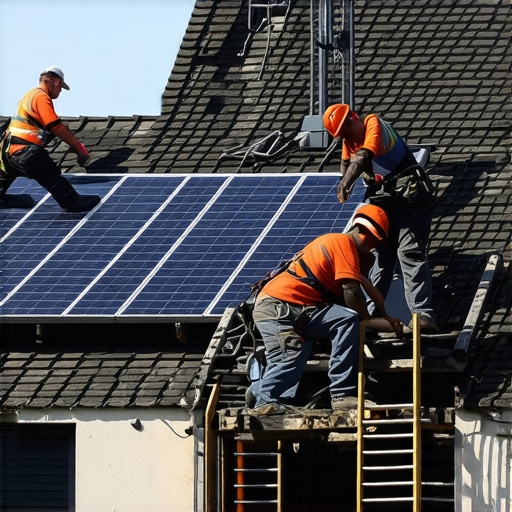
The Scorched Earth Reality of 2026
The heat of 2026 isn’t just a weather report; it is a mechanical assault on your home’s primary defense. When I climb a ladder in the middle of a July afternoon, the air shimmering off the deck isn’t just hot—it is a 160-degree convection oven that cooks the life out of inferior materials. My old foreman, a man who had more scars from tin snips than he had teeth, used to lean over a valley and wheeze, ‘Water is patient, kid, but the sun is a slow-motion fire. It won’t wait for you to make a mistake; it creates them for you.’ He was right. Most roofing companies today are still quoting jobs based on 1990s weather patterns, but if you are looking at local roofers who aren’t talking about the physics of thermal shock, you are just buying a very expensive countdown clock.
“A roof is only as good as its flashing.” – Old Roofer’s Adage
Mechanism Zooming: The Physics of Thermal Expansion
Let’s look at what is actually happening when the sun hits your roof. We call it diurnal temperature swing. In a 2026 summer, your roof might climb from a cool 75 degrees at 4:00 AM to a blistering 155 degrees by 2:00 PM. This isn’t just a temperature change; it is a physical expansion of every component. The decking, the underlayment, and the shingles are all growing and shrinking at different rates. If your local roofers used cheap shiners—nails that missed the rafter and are just hanging through the plywood—those nails will start to ‘back out’ as the wood fibers expand and contract around them. Once that nail head lifts just an eighth of an inch, it creates a pathway. When the inevitable afternoon monsoon hits, capillary action sucks that water right under the shingle and down the shank of the nail. You don’t see the leak for two years, but by then, your plywood has the structural integrity of wet cardboard.
The Asphalt Trap: Why Your Warranty is a Paper Shield
In this climate, the typical three-tab or even standard architectural shingle is under siege. The UV radiation doesn’t just bleach the color; it undergoes a process called photo-oxidation. This breaks down the long-chain hydrocarbons in the bitumen, which is the ‘glue’ that holds the shingle together. You’ll notice it first as granule loss. Those little ceramic rocks in your gutters? That is your roof’s sunscreen washing away. Once the granules are gone, the fiberglass mat is exposed. The sun then bakes the mat until it becomes brittle. Then comes the thermal shock: a sudden 2026 summer downpour hits the 150-degree roof, dropping the temperature by 60 degrees in three minutes. The shingle tries to shrink instantly, but because the volatiles have been cooked out, it can’t flex. It cracks. This is why a ‘Lifetime Warranty’ is often marketing fluff; it covers manufacturer defects, not the ‘Act of God’ that is a standard Tuesday in July.
“The building envelope must be designed to manage the flow of energy and moisture.” – NRCA Manual
The Forensic Anatomy of a Proper Summer Roof
If you want to survive the next decade, you have to move beyond ‘basic’ roofing. You need to talk about Solar Reflective Index (SRI). A high SRI means the material reflects infrared and UV rays rather than absorbing them into your attic. If your attic is hitting 140 degrees, your air conditioner is fighting a losing battle through the ceiling. We’re seeing more 2026 roofing companies moving toward stone-coated steel or high-end synthetic composites. These materials don’t just sit there; they breathe. We install them on a batten system that creates an air gap—an ‘above-sheathing ventilation’ layer. This allows the heat to dissipate before it ever touches your actual house. And don’t get me started on crickets. If you have a chimney wider than 30 inches and your roofer didn’t build a wood-framed diverter to move water around it, they didn’t finish the job. They just left a dam for debris and heat-stressed sealants to fail.
The Cost of the ‘Trunk Slammer’ Special
I’ve walked onto too many ‘new’ roofs where the local roofers skipped the drip edge or reused old flashing to save a few bucks. In the 2026 heat, old lead flashing becomes soft and pliable, often pulling away from masonry. If you don’t use stainless or heavy-gauge powder-coated steel, you are asking for a failure point. A real forensic analysis of a roof failure usually starts at the valleys. Most guys just ‘weave’ the shingles because it is faster. A pro uses an open metal valley with a high-temp ice and water shield underneath. Why? Because the heat in a valley is concentrated. It acts like a magnifying glass. If you don’t have metal there to shed that heat and water, the asphalt will delaminate in half its expected lifespan. Stop looking for the lowest bid; look for the guy who can explain the molecular breakdown of a modified bitumen membrane under extreme UV stress. That’s the guy who will keep your living room dry when the sky falls.