
The 4 PM Wobble and the Physics of the Fall
I have spent three decades watching guys scramble across steep-slope 10/12 pitches, and if there is one thing I have learned, it is that the human body is the weakest link on any job site. You can have the best architectural shingles and the thickest ice and water shield, but if the man installing them is vibrating from exhaustion, the whole system fails. My old foreman used to say, ‘Water is patient. It will wait for you to make a mistake.’ He was talking about a poorly flashed cricket or a shiner driven through a valley, but in 2026, the industry has realized that those mistakes happen because of biological failure. That is why local roofers are ditching the old nylon harnesses for biometric systems. We are not just looking at a piece of safety gear; we are looking at the forensic prevention of human error.
The Biological Mechanism of a Roofing Error
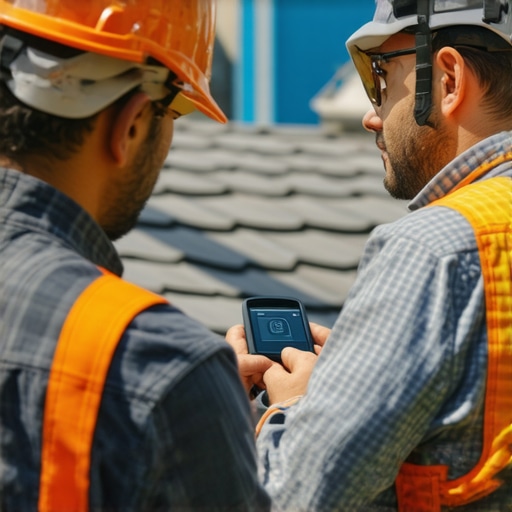
When you are tearing off a square of old, brittle asphalt in the freezing winds of a Minnesota November, your body is fighting a losing battle. Thermal bridging is not just something that happens in your attic insulation; it happens in your joints. As your core temperature drops, your fine motor skills are the first to go. Those ‘missed’ nails—the ones we call shiners because the silver heads catch the light when they miss the rafter—are not just laziness. They are the result of micro-tremors. Biometric safety gear now tracks the roofer’s heart rate, hydration levels, and even skin temperature. If a guy is redlining his heart rate while lugging bundles up a ladder, the system flags the foreman. It’s about stopping the ‘4 PM wobble’ before it turns into a workers’ comp claim that puts roofing companies out of business.
“A roof is only as good as its flashing, and the flashing is only as good as the hands that bend it.” – Old Roofer’s Adage
In the North, where ice dams turn a small leak into a structural catastrophe, the precision of the installation is everything. If a roofer is dehydrated, he’s not thinking about the capillary action that draws melting snow upward under the shingles. He’s thinking about getting off the roof. Biometrics force a level of accountability that no ‘safety officer’ standing on the ground with a clipboard ever could. [image_placeholder]
The Insurance Trap: Why Your Local Roofers Are Changing
Let’s talk about the money, because that is where the cynicism usually starts. Why are roofing companies suddenly so invested in your heart rate? It’s the insurance premiums. In 2026, the cost of insuring a roofing crew is astronomical. The ‘Lifetime Warranty’ stickers you see on every truck are often marketing nonsense because the companies behind them vanish after one big lawsuit. By using biometric monitoring, contractors can prove to their underwriters that they are minimizing risk. It’s a forensic approach to labor. If a sensor detects a sudden drop in a roofer’s gait stability, indicating he’s lost his footing on a slick patch of frost, the harness can pre-tension before he even realizes he’s slipping. This isn’t ‘high-tech’ for the sake of it; it’s a survival mechanism for a trade that has been bleeding talent for years.
The Forensic Scene: Anatomy of a High-Altitude Slip
Walking on a roof in the late autumn feels like walking on a sponge if the decking is rotted, but it feels like walking on glass if there’s a thin layer of ‘black ice’ on the felt. I’ve seen what happens when a guy trusts his boots more than the physics of friction. When a roofer slips, the ‘swing fall’ is what kills them. They aren’t just falling down; they are swinging back into the side of the house. Biometric harnesses today use gyroscopes to calculate the swing radius in real-time. If you’re working too far from your anchor point, the haptic feedback in your vest buzzes. It’s annoying as hell, but it keeps you alive. We are moving away from the ‘trunk slammer’ era where safety was an afterthought and toward a period where data dictates every move on the roofing deck.
“Safety is not an intellectual exercise to keep us in good graces with the administration. It is a matter of life and death.” – National Roofing Contractors Association (NRCA) Guidelines
The ‘Band-Aid’ vs. The ‘Surgery’
Homeowners often ask me if they should just patch a leak or go for the full replacement. I tell them that a patch is a Band-Aid, and if you don’t address the attic bypasses and the R-value of your insulation, you’re just waiting for the next disaster. The same logic applies to safety. You can give a guy a rope and a bucket, but that’s a Band-Aid. The ‘surgery’ is implementing a system where the biology of the worker is integrated into the job site. In the North, where we deal with thermal expansion and contraction that rips apart inferior materials, we need installers who are at 100% capacity. When you hire local roofers in 2026, look at their gear. If they’re still using the same frayed ropes from the 90s, they’re going to treat your valley flashing with the same disregard. High-tech safety is the ultimate litmus test for a contractor’s quality. If they care enough to monitor their own vitals, they probably care enough to ensure your shingles are nailed in the common bond and not high-nailed into oblivion.