
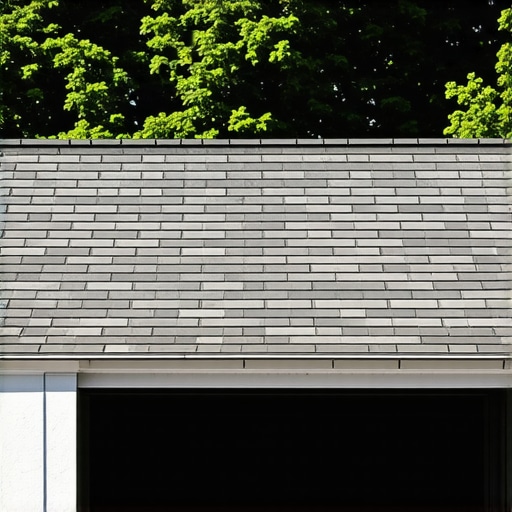
The Deceptive Simplicity of the 2026 Roof Deck
Walk into any local supply house today and you’ll see the racks overflowing with what the marketing departments call ‘2026 Hybrid Shingles.’ To the average homeowner, they look like the same gritty rectangles we’ve been slapping on houses for decades. But to a forensic roofer who has spent twenty-five years crawling through fiberglass-filled attics and peeling back failed membranes, these materials represent a pivot point in building science. The roofing industry is shifting away from the brittle, oxidized asphalt of the early 2000s toward a chemically modified composite that behaves more like a shock absorber than a rock. My old foreman used to say, ‘Water is patient. It will wait for you to make a mistake.’ He was right. Water doesn’t sleep, it doesn’t get tired, and it spent the last forty years finding the microscopic cracks in standard asphalt shingles as they baked under the relentless sun.
The Physics of the Hybrid Shift: Mechanism Zooming
Why are roofing companies suddenly obsessed with hybrids? It comes down to the molecular architecture of the mat. Standard shingles rely on a fiberglass core saturated with heavy petroleum-based asphalt. As the UV radiation beats down, those oils outgas—that’s that ‘new roof smell’—leaving behind a dry, brittle skeleton that cracks when the temperature swings thirty degrees in a single afternoon. The 2026 hybrid shingles utilize an SBS (Styrene-Butadiene-Styrene) polymer modification. Imagine the asphalt as a hard piece of chocolate; if you bend it, it snaps. Now imagine adding a rubberized network throughout that chocolate. It stretches. It recovers. This is vital in the North where thermal bridging occurs. When your attic is a toasty 70°F and the outside air is a brutal -10°F, your roof deck is literally being pulled in two directions. Hybrids handle that tension without the granular loss that plagues cheaper alternatives.
“The assembly of the roof shall be designed to resist the wind loads and shall be installed in accordance with this code and the manufacturer’s installation instructions.” – International Residential Code (IRC) R905.1
The Local Roofer’s Nightmare: The Shiner and the Valley
You can buy the most expensive material on the planet, but if your local roofers are firing nails like they’re at a shooting gallery, you’re doomed. I’ve performed countless forensic inspections where a ‘hybrid’ roof failed within three years. The culprit wasn’t the shingle; it was the shiner. That’s a nail that missed the framing or the double-layer nailing zone, sitting exposed in the valley or just high enough to bridge the gap between layers. In a cold climate, that nail becomes a thermal conduit. Warm air from the house hits that cold steel, condenses, and drips. Over time, that drip turns your plywood into something resembling wet oatmeal. When we talk about roofing in 2026, we’re really talking about a system. You need a cricket behind every chimney to divert the flow, otherwise, even a hybrid shingle will succumb to the hydrostatic pressure of standing water during a spring thaw. The water gets forced under the shingle by capillary action—the same way a sponge pulls water upward—and once it hits the nail hole, the game is over.
Climate Logic: Why the North Demands More
In the North, our biggest enemy isn’t just the snow; it’s the Ice & Water Shield requirements. A hybrid shingle works in tandem with these self-healing membranes. When the sun hits a dark roof in February, it creates a micro-climate. The snow melts at the peak, runs down to the cold eave, and freezes. This creates an ice dam. The water then backs up under the shingles. This is where ‘mechanism zooming’ gets interesting: the water doesn’t just sit there; it exerts pressure. If you have a standard asphalt shingle, that pressure can eventually break the seal strip. The 2026 hybrid shingles have a reinforced, wider tacking zone that maintains its adhesive bond even when submerged under two inches of slush. This is why roofing companies are pushing these materials; it reduces the number of ‘call-backs’ for leaks that aren’t actually material failures, but physics failures.
“A roof is only as good as its flashing.” – Old Roofer’s Adage
The Warranty Trap and the Material Truth
Don’t let a slick salesperson sell you on a ‘Lifetime Warranty’ without reading the fine print. Most of those warranties are prorated and only cover manufacturing defects, not ‘acts of God’ or poor installation. If a contractor leaves a square (that’s 100 square feet of roofing) with high nails, your warranty is effectively a piece of scrap paper. The ‘Material Truth’ of 2026 is that the labor is more important than the product. When you’re vetting local roofers, ask them about their ventilation strategy. If they don’t mention R-Value or the Attic Bypass, they’re just shingle-slappers. A hybrid roof on a house with poor ventilation will still fail. The heat builds up in the attic, cooks the shingles from the bottom up, and causes delamination. You want a team that understands that the roof is the ‘skin’ of the house, and it needs to breathe just as much as it needs to protect.
Forensic Conclusion: Picking Your 2026 Strategy
If you’re looking at a replacement this year, look for the ‘Polymer Modified’ label. Avoid the trunk-slammers who quote you a price that seems too good to be true—they’re likely saving money by skipping the Ice & Water Shield or using galvanized nails that will rust out in a decade instead of stainless steel. A real pro will look at your valleys, check the height of your crickets, and ensure every square is laid with surgical precision. The 2026 hybrid shingle is a fantastic tool, but in the hands of a hack, it’s just an expensive way to watch your ceiling rot. Trust the physics, not the brochure.