
The Death of the Tape Measure and the Rise of the Point Cloud
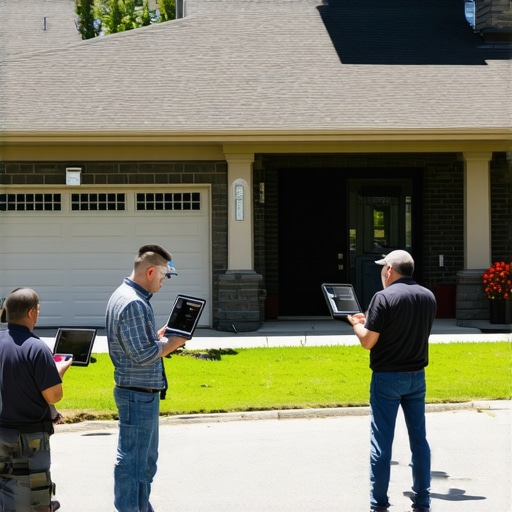
I remember my old foreman, a man whose knees sounded like a bag of gravel every time he climbed a ladder, used to say, ‘Water is patient. It will wait for you to make a mistake, and it will find that one shiner you left in the valley.’ He was right. Back then, we measured roofs with a 30-foot Stanley and a prayer. We guessed the pitch, we rounded up the square count, and we hoped the edge flashing would cover the sins of a crooked deck. But as we move through 2026, the era of ‘eyeballing it’ is officially dead. Local roofers are no longer just hammers for hire; they are data analysts using LiDAR (Light Detection and Ranging) to map every sub-millimeter dip and swell in your roofing system. If your contractor shows up without a digital scan, they aren’t just old-school—they are missing the forensic evidence that prevents your house from rotting from the inside out.
The Physics of the Scan: Why 2026 LiDAR Apps Matter
LiDAR isn’t just a fancy camera; it’s a laser-pulsing beast that creates a 3D ‘point cloud’ of your home. Why does this matter for roofing companies? Because a roof isn’t a flat surface; it’s a living, breathing structural assembly that reacts to thermal loads. In cold climates like ours, where the mercury drops and the wind howls off the plains, the roof deck undergoes massive expansion and contraction. I’ve seen decks where the plywood had buckled so slightly you couldn’t see it with the naked eye, but that 1/8-inch lift was enough to break the seal on a starter strip.
“A roof is only as good as its flashing, and flashing is only as good as the substrate it’s pinned to.” – Old Roofer’s Adage
By using 2026 LiDAR apps, roofing companies can identify ‘decking deflection’—the technical term for when your roof starts to sag between the rafters. This isn’t just about aesthetics. If you lay new shingles over a deflected deck, you’re creating a ponding area where ice dams will thrive. The LiDAR scan catches this before the first nail is even pulled.
Mechanism Zooming: Capillary Action and the Precision Gap
To understand why this technology is mandatory, you have to understand the mechanism of a leak. Water doesn’t just fall; it climbs. Through capillary action, water can actually travel upward between two tight surfaces. If a valley isn’t cut with mathematical precision, or if the ‘cricket’ (that small peaked structure behind a chimney) isn’t angled perfectly to divert flow, water will find its way under the shingles. 2026 LiDAR apps allow local roofers to simulate water flow on a digital twin of your roof. We can see exactly where the ‘velocity zones’ are—the spots where rainwater hits the highest speed and is most likely to blow past a poorly installed drip edge. It’s the difference between guessing where the water goes and knowing where it will strike. We’re looking for that one ‘shiner’—a nail that missed the rafter and hit the open air of the attic. A shiner acts as a cold-sink, collecting frost in the winter that melts in the spring, making it look like you have a massive leak when you actually just have a physics problem.
The Material Truth: Asphalt, Metal, and the LiDAR Advantage
When you’re looking at roofing companies for a full replacement, the material choice is only half the battle. Whether you’re going with architectural asphalt or a standing-seam metal system, the accuracy of the ‘square’ count (the 100-square-foot units we use to measure roofs) determines your waste factor. In the old days, contractors would ‘pad’ the estimate by 15% to cover mistakes. LiDAR reduces that waste to nearly zero. But the real value is in the structural analysis. For those in heavy snow zones, LiDAR measures the exact pitch to determine if you need an ‘Ice & Water Shield’ three feet past the interior wall line or six feet. The IRC Building Code is very specific about this, but most trunk-slammers just guess.
“The roof shall be covered with approved roof coverings secured to the building or structure in accordance with the provisions of this code.” – International Residential Code (IRC) R903.1
LiDAR ensures the roofing system actually meets the code instead of just looking like it does from the curb.
The ‘Lifetime Warranty’ Trap
Let’s talk about the ‘Lifetime Warranty’ nonsense that roofing companies love to bark about. Most of those warranties are voided the moment an installer ignores ‘thermal bridging.’ If your attic isn’t vented properly, the heat builds up to 140°F, cooking the shingles from the bottom up. LiDAR-integrated apps in 2026 now include thermal sensors that map heat signatures during the scan. If your roofer isn’t checking your attic bypasses and R-value while they’re measuring your shingles, they are setting you up for a warranty claim that will be denied because of ‘improper ventilation.’ The tech allows us to see the ‘ghosting’ of rafters through the shingles, which tells us exactly where you’re losing heat and where the ice dams will form next winter.
Choosing a 2026 Contractor: Beyond the Hammer
If you’re hiring local roofers today, ask them one question: ‘How do you calculate your valley offsets?’ If they say they do it by hand, walk away. In 2026, the best roofing companies are using LiDAR to ensure that every valley, every cricket, and every piece of flashing is laser-aligned. This isn’t about being ‘fancy’; it’s about the fact that labor is too expensive to do the job twice. You want a forensic approach. You want someone who looks at your roof and sees a complex hydraulic system, not just a pile of shingles. Protecting your home starts with the data, and in this trade, data is the only thing that beats the patience of water.