
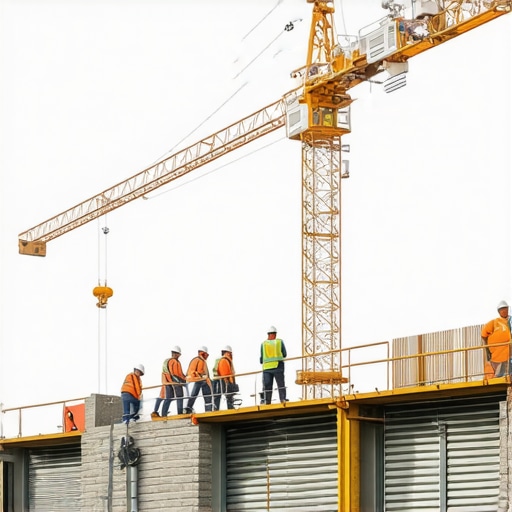
My old foreman used to say, ‘A crane is a tool for the smart and a weapon for the lazy. Use it to save your back, not to break the house.’ Back in the day, we lugged every bundle up a ladder until our knees sounded like a bag of gravel. Today, 2026 roofing companies wouldn’t dream of a job without a crane pick. It makes sense on paper. You save time, you save the crew’s energy, and you get the material where it needs to go. But after twenty-five years of performing forensic teardowns on failed systems, I can tell you that the convenience of a crane often masks a structural catastrophe waiting to happen. I have walked onto jobsites where the crane operator, rushing to beat the hourly rental clock, dropped three tons of asphalt shingles onto a single ridge line. The result? Cracked rafters and a roof deck that dipped like a swayback horse before the first nail was even driven.
The Physics of the Point Load: Why Your Decking Cries
When local roofers talk about ‘staging’ a roof, they are talking about where they park the materials. A standard square of architectural shingles weighs anywhere from 230 to 250 pounds. Most residential roofs are engineered to handle a certain amount of ‘dead load’ and ‘live load,’ but they aren’t designed to support three or four pallets concentrated on a four-foot by four-foot section of 7/16-inch OSB. This is where mechanism zooming becomes necessary. Imagine the cellular structure of that plywood. When you exert localized hydrostatic-like pressure from a heavy pallet, you aren’t just stressing the wood; you are compressing the fibers and potentially shearing the nails that hold the decking to the trusses. If the crew doesn’t spread those bundles out immediately, you end up with a permanent deflection in the roof plane. Later, when the shingles are installed, that slight dip becomes a collection point for water. Even a quarter-inch depression can trap moisture, leading to premature granule loss and, eventually, the slow rot of the substrate.
“Structures shall be designed to resist the loads and load combinations… Roofs shall be designed for the maximum expected snow load or the minimum roof live load, whichever produces the greater force.” – International Residential Code (IRC) R301.1
The problem in 2026 isn’t the technology; it’s the speed. Contractors are trying to offset rising labor costs by shrinking the window of the crane rental. They want the crane in and out in ninety minutes. This lead to ‘shiners’—nails that miss the rafter because the deck has shifted or warped under the weight of the staged material. A shiner is a highway for water. In the winter, warm air from the attic hits that cold nail head, condenses into a droplet, and falls right onto your insulation. You think you have a leak, but what you actually have is a ‘crane-inflicted’ thermal bridge failure.
The Modern Crane Pick: Precision vs. Pressure
In the current market, roofing companies are using advanced telematics to place loads, but the veteran eye knows that the machine doesn’t account for the age of the house. If you’re roofing a twenty-year-old home in a climate that sees heavy thermal shock—hot days followed by cold nights—the wood is already brittle. When the crane sets the load down, the vibration alone can be enough to crack old gables or disturb the flashing around a chimney or a cricket. I’ve seen crickets—those small peaked structures behind chimneys designed to divert water—split right down the middle because the house settled under the weight of a crane-delivered load. Once that cricket is compromised, water finds its way into the smallest gap through capillary action, pulling moisture uphill and behind the counter-flashing until your ceiling looks like a watercolor painting.
The Warranty Trap and the ‘Lifetime’ Illusion
Every roofer today wants to sell you a ‘Lifetime Warranty.’ It sounds great when you’re signing the check. But read the fine print. Those warranties almost always exclude ‘structural movement’ or ‘improper installation.’ If a crane pick damages your trusses or causes the decking to heave, the shingle manufacturer isn’t going to pay a dime when the shingles start to crack or blow off. They’ll blame the substrate. And that local roofer who used the crane? He might be three counties away by the time the wood starts to rot. You need to ensure they are using load-spreading plates or dunnage when staging. If I see a crew stacking more than ten bundles high in one spot, I know they don’t care about the long-term health of the home. They just want to get the ‘squares’ down and move to the next zip code.
“A roof is only as good as its flashing, and its flashing is only as good as the deck it’s fastened to.” – Old Roofer’s Adage
What to Watch For During the Pick
If you are watching the process, look at the outriggers of the crane. If the operator doesn’t use pads on your driveway, he’s going to crack the concrete. But more importantly, watch how the material is released. It should be a soft touch. If the house shakes, you have a problem. Ask the foreman how they plan to distribute the weight. They should be spreading bundles across the ridges and hips, never concentrated in the valleys. The valley is the most vulnerable part of your roof; it’s where the most water flows and where the most structural support is often lacking. Staging material in a valley is a rookie mistake that leads to lifelong leaks. In 2026, we have the tools to do this right, but the trade is losing the patience to execute. Don’t let your home be the victim of a fast crane and a slow brain.
Reading this post really highlights how much craftsmanship and attention to detail matter even in a fast-paced industry like roofing. I recall a project where a crane was used, and the crew opted for quick staging, but the resulting minor shift caused a noticeable water leakage that we had to rework weeks later. It’s a stark reminder that rushing through a job can lead to long-term issues that aren’t immediately apparent. I especially agree with the point about spreading out the loads on the roof—this not only prevents structural damage but also avoids creating water traps that can deteriorate the decking over time. When I’ve managed roofing teams, I always emphasize careful load distribution and thorough post-project inspection. Has anyone adopted new technology or methods recently to improve load management during crane picks? It seems like the industry is at a crossroads between speed and quality, and I’m curious how others find that balance in their projects.