
The Material Truth: Why Your Next Roof Depends on a Sticky Mess
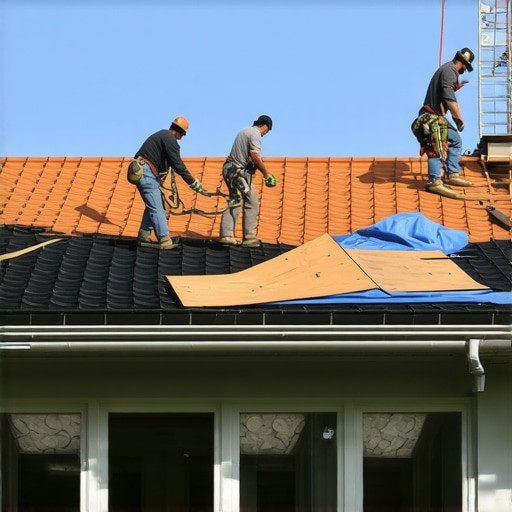
I’ve spent nearly three decades smelling hot asphalt and listening to the rhythmic ‘thwack’ of pneumatic nailers across every suburban sprawl you can imagine. Over those twenty-five years, I’ve seen roofing companies come and go, mostly ‘trunk slammers’ who think a bucket of plastic cement and a pack of 3-tab shingles makes them an artisan. They aren’t. They are the reason I spend my Tuesdays performing forensic tear-offs to figure out why a three-year-old roof is leaking into a child’s bedroom. My old foreman, a man who had more scars from roofing knives than he had teeth, used to say, ‘Water is patient. It will wait for you to make a mistake.’ He was right. Water is the ultimate auditor; it finds the missed nail, the buckled underlayment, and the poorly flashed valley every single time. Specifically, in our humid, storm-lashed coastal climates, water doesn’t just fall—it attacks. It’s driven horizontally by sixty-mile-per-hour winds, searching for a way to defy gravity and move upward under your shingles through capillary action. This is where the old ways of roofing—the felt paper and the staples—are failing homeowners. As we look toward the 2026 standards, the industry is finally catching up to what we veterans have known: the future of dry homes isn’t just the shingle; it is the self-adhered membrane.
The Anatomy of an Underlayment Failure
To understand why the 2026 generation of self-adhered membranes is a shift in the building paradigm, you have to understand the failure of the ‘standard’ install. For decades, local roofers relied on #15 or #30 felt. It’s essentially recycled paper soaked in asphalt. When it gets wet during installation, it wrinkles. Those wrinkles create ‘fishmouths’—small gaps that prevent the shingles from laying flat. When the sun beats down and turns your attic into a 140°F oven, that felt dries out, becomes brittle, and loses its ability to hold a seal. When a storm hits, wind-driven rain gets pushed under the shingle. If that water hits a staple hole in dried-out felt, you don’t have a roof anymore; you have a sieve. The physics of failure starts at the ‘shiner’—that’s trade talk for a nail that missed the rafter and is just sitting there in the plywood. As the house shifts and the temperature fluctuates, that nail moves. In a traditional system, that movement creates a permanent hole. In the new world of 2026 self-adhered technology, the membrane is engineered with high-density cross-laminated polyethylene backed by a thick layer of rubberized asphalt or butyl adhesive. This isn’t just ‘sticky paper.’ It is a chemically active barrier that performs a ‘gasket effect.’ When a nail passes through it, the rubberized bitumen squeezes around the shank of the nail, creating a watertight O-ring. Even if the nail backs out slightly due to thermal expansion, the seal remains intact.
“Underlayment is the primary line of defense against water infiltration when the primary roof covering is breached or bypassed by wind-driven rain.” – NRCA (National Roofing Contractors Association) Manual
Benefit 1: Secondary Water Resistance (The SWR Shield)
The biggest shift we are seeing with local roofers adopting 2026 specs is the move toward full-deck Secondary Water Resistance (SWR). In the past, we only used ‘Ice and Water Shield’ at the eaves and in the valleys. But that left the rest of the 30 squares of decking vulnerable. The 2026 self-adhered membranes are designed to be applied to the entire deck. This creates a monolithic skin over the plywood. Imagine your house being shrink-wrapped before the shingles even go on. If a hurricane-force wind rips the shingles off your house—which can happen even with the best installation—the self-adhered membrane stays behind. I have seen homes in the Southeast that lost every single shingle during a tropical depression, yet the interior stayed bone-dry because the local roofers had used a full-deck self-adhered system. This is the difference between a total loss insurance claim and a simple shingle repair. The adhesive bond of these 2026 membranes to the oriented strand board (OSB) or plywood is so aggressive that it often requires a heat gun or a specialized solvent to remove. That is the kind of tenacity you want when the sky turns gray and the wind starts howling.
Benefit 2: Molecular Stability in Extreme Heat
One of the cynical jokes in the trade is that ‘Lifetime Warranties’ only last as long as the contractor’s phone number stays active. Most asphalt-based products degrade because of UV radiation and thermal shock. The 2026 class of membranes has moved toward advanced butyl formulations. Unlike older SBS (Styrene-Butadiene-Styrene) products, these newer membranes don’t ‘bleed’ or lose their tackiness when the roof deck hits extreme temperatures. In a typical July, a roof can cycle from 70°F at dawn to 160°F by 2 PM. This causes the wood to expand and contract. If your underlayment is rigid, it tears. If it’s too soft, it oozes out from under the shingles, staining your fascia and clogging your gutters. The 2026 technology uses a split-back release liner and a dimensionally stable top surface that reflects a portion of the IR spectrum. This keeps the adhesive layer within its optimal operating temperature, ensuring that the bond to the wood doesn’t ‘cook’ and become brittle over time. When you hire local roofers who understand this chemistry, you aren’t just buying a roof; you’re buying a thermal management system.
“A roof is only as good as its flashing and its ability to manage hydrostatic pressure at the deck level.” – Modern Building Science Axiom
Benefit 3: The Elimination of Capillary ‘Creep’
Water has a frustrating property called surface tension. It allows liquid to ‘climb’ upward between two narrow surfaces—like the space between a shingle and a piece of felt. This is capillary action. Most leaks don’t happen because of a hole directly over the drip; they happen because water traveled twelve feet sideways from a ‘cricket’ (that V-shaped diverter behind your chimney) or a poorly integrated valley. Traditional synthetic underlayments are slick, which actually encourages water to run quickly, but they don’t seal at the laps. The 2026 self-adhered membranes feature ‘tacky laps.’ When one sheet overlaps the next, the two layers of bitumen fuse together at the molecular level. It’s not just a flap of plastic; it’s a welded seam. This prevents water from being blown upward under the lap. For local roofers, this means fewer callbacks. For you, it means you don’t have to worry about that subtle, slow rot in your rafters that usually goes unnoticed until you can poke a screwdriver through your ceiling.
Benefit 4: Enhanced Traction and Safety for Installation Quality
You might wonder why a roofer’s safety matters to your roof’s longevity. It’s simple: a roofer who feels like they are going to slide off a steep 12/12 pitch roof is a roofer who rushes. Rushed work leads to ‘shiners,’ poorly aligned starter strips, and high-nailing. Older membranes were notoriously slippery, especially with a little morning dew or sawdust. The 2026 self-adhered products have integrated a non-woven polyester or embossed poly top surface. This ‘grip’ technology allows the crew to walk comfortably and focus on the precision of their nailing pattern rather than their footing. When local roofers can move confidently, they take the time to properly wrap the chimney, weave the valleys, and ensure the drip edge is correctly tucked under the membrane. Precision is the byproduct of a stable work surface. The aggressive grip of these new membranes ensures that even on the hottest days, the material doesn’t ‘surf’ or slide under the installer’s feet, which is a common cause of membrane tearing in cheaper products.
The ‘Lifetime’ Trap: Choosing the Right Local Roofers
Don’t be fooled by a shiny brochure. A ‘Lifetime Warranty’ on a shingle is useless if the underlayment underneath it rots out in ten years. When you are interviewing roofing companies, ask them specifically about their underlayment 2026 specs. Do they use a mechanical-fastened synthetic, or are they moving to a self-adhered system? If they tell you ‘felt is fine,’ they are living in the 1990s. You want a crew that talks about deck preparation. For a self-adhered membrane to work, the deck must be clean, dry, and free of old staples. If they try to ‘recover’ over an old layer of felt, run. That’s not roofing; that’s a scam. A real pro will show you how they prime the deck if the wood is particularly weathered. They’ll talk about the ‘overlap’—usually four inches on the horizontals and six inches on the verticals. They will know that the membrane needs to be rolled with a weighted roller to ensure ‘pressure-sensitive’ adhesion. This is the difference between a roof that lasts until the next big storm and one that protects your family for decades. The 2026 membranes are the closest thing we have to a ‘set it and forget it’ solution, but only in the hands of a veteran who respects the physics of the house. Don’t let a ‘trunk slammer’ turn your biggest investment into a forensic investigation for someone like me ten years down the road. Demand the stickiest, toughest defense available. Your attic—and your wallet—will thank you when the next 100-year storm arrives right on schedule.