
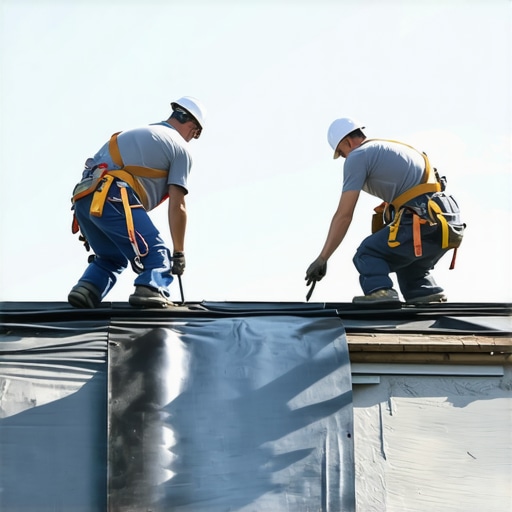
The Deception of the ‘Standard’ Roof
Walk onto any suburban street and you will see a sea of asphalt shingles. To the untrained eye, they look fine. To me, they look like a countdown clock. I have spent twenty-five years peeling back those layers, and frankly, I am tired of seeing homeowners get fleeced by the same old ‘trunk slammers’ selling ‘limited lifetime’ promises that don’t last fifteen years. The roofing industry is undergoing a massive shift, and if you are talking to local roofers about a replacement, you need to understand why 2026-spec recycled rubber is currently the only material I’d put on my own mother’s house. It is not about being ‘green’—it is about the physics of not having your ceiling end up on your floor.
The Forensic Scene: The Trampoline Effect
Last month, I was called out to inspect a five-year-old roof in a neighborhood plagued by high winds and fluctuating temperatures. Walking on that roof felt like walking on a sponge. I knew exactly what I’d find underneath before I even pulled my hammer. As I pried up a section of the ‘premium’ architectural shingles, the smell of sour, rotting OSB hit me like a physical wall. The shingles themselves were brittle enough to snap between two fingers. The ‘Local Roofers’ who installed it used standard galvanized nails that had started to weep rust, creating ‘shiners’ in the attic that dripped every time the humidity spiked. This wasn’t a leak in the traditional sense; it was a total material failure. The asphalt had baked, cracked, and allowed capillary action to draw moisture up and under the lap, turning the decking into oatmeal. This is the reality of traditional materials in an era of extreme weather. This is why the 2026 recycled rubber compounds are changing the conversation.
“A roof is only as good as its flashing, but the material must survive the thermal dance of the seasons.” – Old Roofer’s Adage
1. Superior Thermal Resilience and the Death of Thermal Shock
In the trade, we talk a lot about ‘thermal shock.’ Imagine it is a 95°F day. Your roof surface is hitting a blistering 150°F. Then, a summer thunderstorm rolls in, and the temperature drops 40 degrees in ten minutes. Asphalt shingles are essentially a paper or fiberglass mat soaked in oil and covered in rocks. When they get hit with that temperature swing, they undergo violent contraction. Over time, this makes them lose their granules—the ‘sand’ you find in your gutters. Once those granules are gone, the UV light eats the oil, and the roof dies. 2026 recycled rubber, specifically those formulated with EPDM-derived polymers, doesn’t care about the heat. At a molecular level, these materials are designed to expand and contract without losing their structural integrity. We are talking about a material that stays flexible down to -40°F. When local roofers install rubber, they are installing a shock absorber for the house. It absorbs the UV radiation rather than being destroyed by it, maintaining a stable temperature in the attic and reducing the strain on your rafters.
2. Impact Resistance: Why ‘Class 4’ Actually Matters
I have seen hail the size of marbles turn a brand-new asphalt roof into a piece of Swiss cheese. The problem is that the impact creates micro-fractures in the bitumen mat. You won’t see it from the ground, but the next winter, water gets into those cracks, freezes, expands, and pops the shingle open. Recycled rubber has a natural elasticity that asphalt lacks. When a hailstone hits a rubber shingle, the material deforms and then bounces back. Most 2026 rubber products carry a Class 4 impact rating, the highest in the industry. For roofing companies, this is a major selling point because it often triggers a significant discount on homeowners’ insurance premiums. You aren’t just buying a roof; you are buying an insurance policy against the next storm. I’ve gone back to sites after major storms where the rubber roofs were the only ones left standing without a single ‘bruise’ or lost square.
3. The ‘Lifecycle Myth’ and the Reality of Longevity
The industry loves the word ‘Lifetime.’ It’s a marketing term, not a technical one. A ‘Lifetime’ asphalt shingle is usually pro-rated so heavily after ten years that the warranty is effectively worthless. 2026 recycled rubber products are a different breed. Because they are often made from recycled tires and post-consumer plastics, they are engineered for a 50-year service life. Think about it: tires are designed to handle 80mph friction on hot asphalt while supporting tons of weight. When you process that into a roofing tile, you get a material that is nearly chemically inert. It doesn’t rot, it doesn’t grow algae (the black streaks you see on old roofs), and it is heavy enough to resist wind uplift that would peel a standard shingle like a banana. When you hire roofing companies to install rubber, you are effectively ending the cycle of tear-offs. It is the last roof you will likely ever pay for.
“The International Residential Code (IRC) requires roof coverings to be compatible with the environment and the slope, yet we continue to use 19th-century technology for 21st-century storms.” – Forensic Engineering Note
4. Moisture Mitigation and the Physics of the Valley
The ‘Valley’ of a roof is where two slopes meet. It is the most common point of failure I see in my forensic work. Most local roofers just throw some metal flashing down or weave the shingles. Over time, debris builds up, slows the water down, and hydrostatic pressure pushes that water under the shingles. Recycled rubber tiles are often designed with an interlocking tab system. This isn’t just for wind resistance; it creates a mechanical seal against water. When we talk about mechanism zooming, look at the capillary action. Water has a natural tendency to ‘climb’ into small gaps. Traditional shingles have thousands of these gaps. Rubber tiles, especially the newer 2026 large-format versions, minimize these entry points. Furthermore, because rubber is non-porous, it doesn’t hold onto moisture. It dries faster, which means your roof deck stays bone-dry. If you have a ‘cricket’ behind a chimney or a complex valley, rubber is much easier to flash properly because it can be heat-welded or sealed with specialized adhesives that create a monolithic barrier.
The Trap: Don’t Hire a ‘Trunk Slammer’
Just because the material is superior doesn’t mean the installation will be. I’ve seen guys put high-end rubber over rotten plywood because they didn’t want to do the ‘dirty work’ of a full tear-off. If your roofing companies aren’t talking about attic ventilation and checking your soffits, they aren’t roofers; they’re just shingle-tossers. A rubber roof needs to breathe just like any other. If you trap heat in the attic, you’ll cook the decking from the inside out, regardless of what’s on top. Look for a contractor who understands the ‘whole-house’ system. Ask them about ‘shiners’—if they don’t know that it refers to a nail that missed the rafter and will cause condensation drips, walk away. 2026 recycled rubber is a premium product, and it requires a premium installer who doesn’t cut corners on the starter strip or the drip edge. The cost of waiting for your current roof to fail is always higher than the cost of a proactive replacement. When that water finally hits your dining room table, it’s already done five thousand dollars of damage to your structure that you can’t see.
The Bottom Line
We are moving away from the era of ‘disposable’ roofing. The environmental impact of dumping tons of asphalt into landfills every twenty years is becoming unsustainable, and the cost of labor is too high to keep replacing cheap roofs. Recycled rubber is the forensic answer to a decade of roofing failures. It solves the thermal shock problem, it laughs at hail, and it seals the house better than any bitumen-based product ever could. If you’re looking for local roofers, stop asking for the cheapest quote and start asking for the best material. Your future self, standing under a dry ceiling during a category-two windstorm, will thank you.