
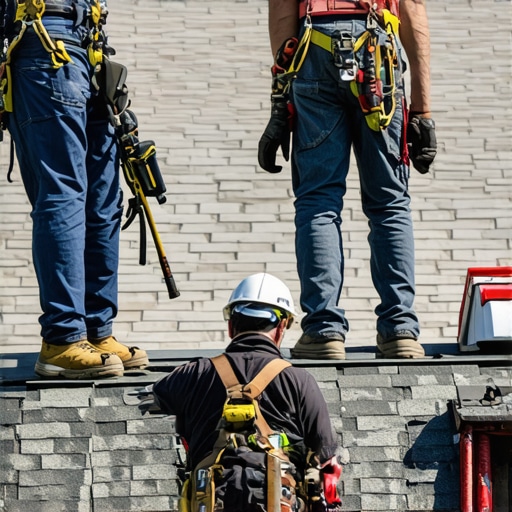
The Brutal Reality of the Steep Slope
Listen, I have spent the better part of three decades crawling over 10/12 pitches and scraping my knuckles on asphalt granules. I have seen it all, and frankly, I am tired of seeing homeowners get fleeced by roofing companies that think a ‘new roof’ is just a fresh layer of shingles. It is not. A roof is a complex thermal management system. When we talk about 2026 standards, we are talking about surviving weather patterns that would have stripped the rafters bare twenty years ago. My old foreman used to say, ‘Water is patient. It will wait for you to make a mistake.’ He was right. That mistake is usually a shiner—a missed nail that misses the rafter and hangs out in the attic, collecting frost in the winter and dripping onto your insulation in the spring until the plywood turns to something resembling wet oatmeal.
“A roof is only as good as its flashing.” – Old Roofer’s Adage
In our climate, the steep slope is your best friend and your worst enemy. It sheds water fast, which is great, but it also creates a massive surface area for UV radiation to bake. By 2026, we are seeing shingles that are literally outgassing their oils faster than ever before. If you are looking at local roofers, you need to stop asking about the color and start asking about the chemistry. [IMAGE_PLACEHOLDER] Most asphalt shingles are basically sand and oil on a fiberglass mat. When the sun hits a steep south-facing slope, the temperature on that deck can hit 160°F. That heat causes thermal expansion. The shingles expand, the nails pull, and if the roofer ‘high-nailed’ the course, you are one windstorm away from a catastrophic failure.
The Anatomy of Failure: Why ‘Lifetime’ is a Lie
Let’s talk about the ‘Lifetime Warranty’ trap. Any of the big roofing companies will offer it, but read the fine print. It usually only covers manufacturer defects, not ‘improper installation.’ And trust me, I have done enough forensic inspections to know that 90% of failures are installation-based. Take the valley, for example. I have seen guys just weave shingles through a valley and call it a day. In a climate where ice dams are a threat, that is a death sentence. Water gets trapped in the weave, freezes, expands, and lifts the shingle edges. Capillary action then sucks that meltwater uphill, right over the top of the underlayment. If they didn’t install a heavy-duty Ice & Water Shield—a self-adhering membrane that seals around every nail—you are going to have a ceiling leak before the first thaw.
“The roof covering shall be installed in accordance with the manufacturer’s installation instructions.” – IRC Building Codes Section R905
A real pro builds a ‘cricket’ behind your chimney. A cricket is a small peaked structure designed to divert water away from the chimney’s back wall. Without it, the chimney acts like a dam. Debris, leaves, and snow pile up there, holding moisture against the masonry and the roof deck. I once investigated a home where the chimney flashing looked perfect from the ground, but because there was no cricket, the thermal bridging from the house heat had melted the snow, which then refroze, creating a pool that eventually pushed its way through the mortar joints.
The 2026 Material Truth: Asphalt vs. Synthetic
As we look toward 2026, the material choice for a steep slope is becoming polarized. You have the traditional asphalt, which is getting thinner and more dependent on chemical additives, and you have the synthetics and metals. If you are hiring local roofers, ask them about the R-Value of the roof assembly. Most won’t have an answer. But a high-performance roof needs to breathe. If your attic is 140°F, your shingles are being cooked from both sides. We are now seeing a move toward ‘vented nailbase’—a layer of insulation with air channels built in—that goes right under the roof deck. It breaks the thermal bridge and keeps the shingles cool, which can double their actual lifespan, regardless of what the warranty says. Don’t be fooled by ‘free roof’ scams after a storm. Those guys are looking for a quick insurance payout. They use the cheapest nails, the thinnest felt, and they disappear before the first ‘shiner’ starts to drip.