
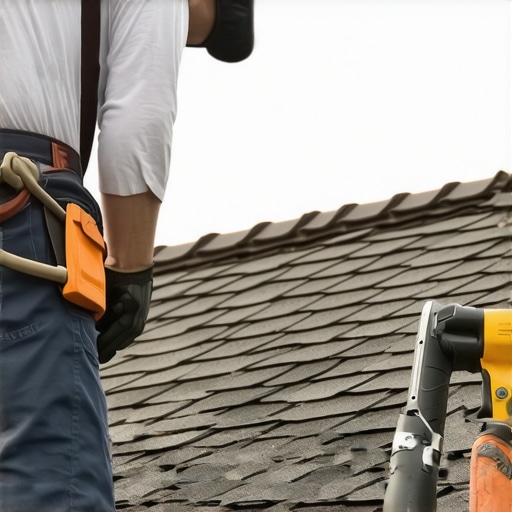
The Anatomy of a Hidden Leak: Why Your Roof is Pushing Back
You’re standing in your driveway, squinting against the sun, and you see it—a small, sharp bump under a shingle that wasn’t there last summer. Most homeowners ignore it. Most roofing companies call it a ‘minor blemish.’ But to a forensic investigator, that little protrusion is a ticking clock. In the trade, we call it a nail pop, and by 2026, we’re expecting a massive surge in these failures due to the rapid-cycle thermal expansion we’ve been seeing in the Northeast. When the attic hits 140°F in July and drops to sub-zero in January, your roof isn’t just sitting there; it’s breathing, stretching, and occasionally, it’s spitting out its own fasteners. My old foreman used to say, ‘Water is patient. It will wait for you to make a mistake.’ A nail pop is more than a mistake; it’s an invitation for gravity to drive moisture directly into your structural roofing deck.
The Physics of the ‘Slow Jackhammer’
To understand why local roofers are staying busy fixing these, you have to look at the ‘Mechanism of Failure.’ It’s not just a loose nail. It’s a metallurgical and organic conflict. Most roof decks are made of OSB or plywood. These materials are hygroscopic—they absorb moisture from the humid air trapped in your attic because of poor ventilation. As the wood fibers swell, they lose their grip on the smooth shank of the roofing nail. When the sun beats down, the shingles get hot and the wood dries out and shrinks. This constant cycling creates a pumping action. The nail is slowly forced upward, millimeter by millimeter. Once the head of the nail touches the underside of the asphalt shingle, it begins to ‘telegraph’ through the mat. This is where the real damage starts. The nail head acts like a chisel, slowly wearing away the protective granules from the underside of the shingle until it eventually punctures the surface.
“A roof is only as good as its flashing and the integrity of its fasteners.” – NRCA Manual of Standard Practice
1. The Shadow Line: Early Detection from the Ground
The first sign isn’t a hole; it’s a shadow. When you look at your roof during the ‘golden hour’—early morning or late afternoon—the low angle of the sun will reveal anomalies. A nail pop creates a tiny, tent-like protrusion. From the ground, this looks like a dark, crescent-shaped shadow under a specific shingle tab. If you see a row of these, you’re likely looking at a ‘shiner’ or a poorly hit line where the original local roofers missed the rafter or used the wrong pressure on their pneumatic guns. These shadows are the precursors to a breach. If the shingle looks like it’s being pushed from below, the protective bitumen layer is already being stretched to its breaking point.
2. The Granular Bald Spot: The Friction Point
Asphalt shingles rely on ceramic-coated granules to shield the underlying bitumen from UV radiation. When a nail pushes up, it creates a high-pressure point. Every time the wind blows, that shingle tab vibrates against the nail head. This friction grinds the granules away. If you climb a ladder and see a small, circular patch of ‘bald’ asphalt—looking black and shiny compared to the rest of the gritty shingle—you’ve found a nail pop in progress. By 2026, as these shingles age and lose their flexibility, these bald spots will turn into cracks. Once the UV rays hit the exposed bitumen, it becomes brittle and snaps, leaving a literal hole for water to enter via capillary action.
3. The Attic ‘Shiner’: The Interior Evidence
Sometimes the best way to spot a problem is to go where the light doesn’t shine. Grab a flashlight and head into the crawlspace or attic. Look at the underside of the roofing deck. A ‘shiner’ is a nail that was driven through the plywood but missed the rafter entirely. In the winter, these nails become thermal bridges. The cold from the outside travels down the metal shank. When the warm, moist air from your bathroom or kitchen hits that cold nail, it condenses into a droplet of water. If you see rusted nails or dark rings of rot around a fastener, that’s a nail pop waiting to happen. The wood around that nail is already ‘oatmeal,’ and it no longer has the structural integrity to hold the fastener in place. This is a classic forensic indicator that your local roofers didn’t just miss a nail; they failed to manage your attic’s micro-climate.
4. The Flapping Tab: Adhesion Failure
Modern shingles have a sealant strip—a line of thermal glue that bonds one course to the next. A nail pop breaks this bond. When the nail pushes the shingle up, it creates a gap. This gap allows wind to get underneath the tab. If you notice a single shingle tab flapping in the breeze while the others stay flat, don’t assume it’s just ‘old glue.’ More often than not, there’s a fastener underneath that has backed out, acting as a wedge that prevents the sealant from re-engaging. Once that bond is broken, the shingle is no longer part of a monolithic drainage system; it’s a loose flap that will eventually tear off in the next storm.
“The building envelope must be designed to shed water, not just resist it.” – IRC Building Code R905
The Surgery: Why You Can’t Just ‘Hammer It Down’
I’ve seen plenty of ‘trunk slammers’ try to fix this by just hitting the shingle with a hammer. That’s a death sentence for your roof. Hammering a popped nail through the top of a shingle creates a ‘slug’—a hole that you then have to cover with caulk. Caulk is a temporary fix in a permanent environment. The real repair—the ‘surgery’—requires carefully breaking the sealant bonds of the surrounding shingles with a flat bar, pulling the offending nail out entirely, and installing a new, larger-gauge galvanized nail in a fresh piece of wood. Then, you have to treat the old hole with a high-grade flashing cement. It’s tedious, it’s hot, and it’s why roofing companies often charge a premium for repair work. But if you ignore these four signs, you won’t be looking at a repair in 2026; you’ll be looking at a full tear-off when your ceiling starts to sag from the slow, patient infiltration of water.