
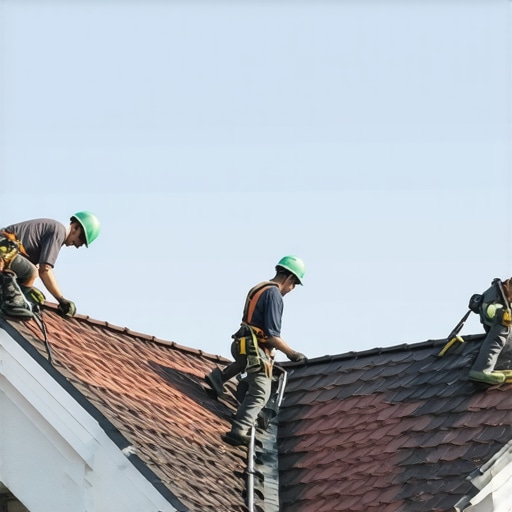
The Anatomy of a Failed Ridge: Why Your Ceiling is Leaking
The water on your dining room table isn’t the problem. It’s the symptom. When a homeowner calls me out to look at a leak near the peak of their roof, they expect me to point at a broken shingle. Instead, I usually end up pointing at the ridge gap—that critical junction where the two planes of your roof meet. By 2026, you’d think roofing companies would have mastered this, but I still see the same physics-defying mistakes every single week. My old foreman used to say, ‘Water is a persistent predator. If there’s a gap the size of a whisker, the wind will find it and the rot will finish it.’ He wasn’t exaggerating. In our humid, wind-battered coastal climate, a ridge gap isn’t just a hole; it’s an intake valve for disaster.
The Physics of the ‘Upward Leak’
Most people think water only moves down. In the roofing world, that’s amateur hour. Through a process called capillary action, water can actually climb. When wind hits the side of your house, it creates a high-pressure zone. The air inside your attic is at a different pressure. This pressure differential acts like a vacuum, sucking wind-driven rain right under the edge of your ridge cap shingles and through any unsealed gaps. Once that moisture gets past the primary barrier, it hits the roofing deck. If your local roofers didn’t use a secondary water resistance layer, that water sits on the plywood, soaking into the grain until the wood resembles a wet sponge. You don’t see it until the mold has already claimed the territory.
“Effective attic ventilation requires a balanced system of intake and exhaust to prevent moisture accumulation and thermal stress.” – NRCA Manual
The 2026 Standard: Mechanism Zooming on the Ridge
So, how do the pros actually fix this in 2026? It’s not about slathering a tube of cheap caulk over the hole. That’s a ‘band-aid’ fix that will bake and crack in the 140°F sun within two seasons. Professional roofing companies now utilize integrated ridge systems. We start by stripping the peak down to the structural lumber. We look for ‘shiners’—those missed nails that missed the rafter and act as tiny lightning rods for frost and condensation. Then, we install a high-performance ridge vent with an external baffle. This baffle is the secret sauce; it creates a low-pressure zone that pulls air out of the attic while physically blocking rain from being pushed in. Underneath that vent, we’re now seeing the use of butyl-backed transition tapes that create a literal gasket between the vent and the shingles. It’s surgery, not a patch job.
The Tropical Threat: Wind and Salt Air
In our region, we aren’t just fighting gravity; we’re fighting 100-mph gusts. A ridge gap that isn’t properly secured becomes a lever. The wind gets under the ridge cap, lifts it, and creates a ‘zipper effect’ where the entire peak of your roof peels off. We insist on stainless steel fasteners here. Why? Because the salt air turns standard galvanized nails into dust in less than a decade. When those nails fail, the ridge gap opens up, and you’re essentially living in a house with a convertible top that won’t close. Local roofers who cut corners on fastener quality are the reason I stay so busy with forensic inspections.
“Fasteners shall be driven flush and shall not be over-driven or under-driven to ensure maximum uplift resistance.” – International Residential Code (IRC)
The Cost of Hesitation
I’ve seen roofs where a simple $500 ridge repair was ignored for two years, resulting in a $20,000 full deck replacement because the ‘cricket’ behind the chimney was incorrectly flashed and the ridge gaps allowed water to bypass the roofing felt entirely. If you hear a whistling sound in your attic during a storm, or if you see dark staining on your ridge beam, the clock is ticking. You need roofing companies that understand the thermal expansion of modern materials and the brutal reality of wind-driven rain. Don’t wait for the ceiling to sag. A roof is a system, and the ridge is its most vulnerable link. Fix it right, or fix it twice.