
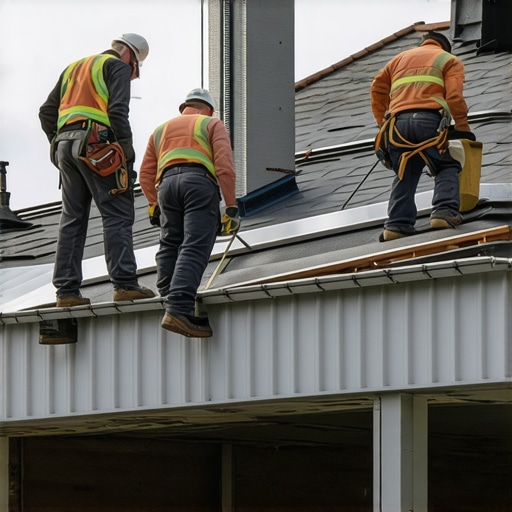
The Gritty Reality of the 2026 Roof Slag Crisis
Walking on a roof in the humid corridors of the Gulf Coast these days doesn’t feel like it used to. I stepped onto a ranch-style deck in Biloxi last Tuesday, and it felt like I was walking on a beach of ground-up obsidian. That crunching sound? That wasn’t just old shingles. That was slag build. As a forensic investigator who has spent nearly three decades watching local roofers cut corners, I can tell you that the industry is hitting a wall. We are seeing a massive acceleration in granule migration—what we in the trade are calling ‘slag’—thanks to the brutal combination of 100-plus degree days and the lower-quality bitumen fillers that have crept into the supply chain over the last few years.
When you look at your roof from the driveway, you see a color. When I look at it, I see a complex layering of ceramic-coated minerals designed to protect a volatile petroleum mat from being baked alive by UV radiation. When those minerals let go, they don’t just disappear. They wash down, collect in the valleys, and form a concrete-like sludge that chokes your drainage. This is the ‘Slag Build’ phenomenon of 2026, and if you aren’t looking for it, your attic is already starting to cook.
“The primary purpose of the mineral surfacing is to protect the asphalt coating from the weathering effects of sunlight and to provide fire resistance.” – National Roofing Contractors Association (NRCA) Manual
Sign 1: The Gutter ‘Black Gold’ Accumulation
The first sign isn’t on the roof; it is in your hands. If you scoop a handful of debris out of your gutters and it feels heavy, like wet buckshot, you have a slag problem. In the forensic scene I encountered last week, the homeowner thought his gutters were just backed up with leaves. I reached in and pulled out three inches of pure asphalt granules. The shingles weren’t just shedding; they were hemorrhaging. This isn’t just ‘age.’ This is a failure of the embedment process. When roofing companies use high-speed production lines, the granules aren’t always pressed deep enough into the hot asphalt. By 2026, after a few seasons of thermal expansion and contraction, that ‘slag’ moves south, leaving the top of your shingle naked. Once that mat is exposed, the sun eats it in months, not years.
Sign 2: The ‘Molten’ Valley and the Cricket Failure
Physics doesn’t care about your warranty. When water moves across a roof, it follows the path of least resistance. But when slag builds up in a valley, it creates micro-dams. I’ve seen cases where the accumulation was so thick it actually diverted water sideways under the flashing. This is where the ‘Mechanism Zooming’ gets scary. Imagine a single drop of water hitting a pile of slag. Through capillary action, that water is sucked upward, defying gravity, and pulled right over the edge of the underlayment. If your local roofers didn’t install a proper cricket behind your chimney, that slag builds up like a sandbar in a river. Eventually, the water has nowhere to go but into your plywood. I’ve torn off roofs where the decking was so saturated it had the consistency of wet cardboard, all because a pile of ‘slag’ held moisture against a seam for six months straight.
“Roofing systems shall be designed and installed in accordance with this code and the manufacturer’s installation instructions.” – International Residential Code (IRC), Section R903.1
Sign 3: The ‘Shiner’ Rust Bleed through Slag Crust
If you see orange streaks bleeding through the dark grit on your roof, you’re in trouble. This usually means the slag build has become so acidic and moisture-retentive that it is eating the heads of your fasteners. We call a missed nail a shiner. When a shiner is buried under a layer of wet asphalt slag, it creates a galvanic reaction. The nail head rusts away, leaving a perfect hole for water to enter the house. In my 25 years, I’ve found that the ‘cheap’ roofing companies are the ones who leave the most shiners. They’re moving too fast, their nail guns are set to the wrong PSI, and they’re blowing nails right through the shingle. You won’t see it the first year. But by year three, when the slag has gathered over those holes, you’ll have a ceiling leak that no one can find because the ‘slag’ is hiding the source.
The Material Truth: Asphalt vs. The World
In this climate, especially across the humid Southeast, we have to talk about material reality. Most people buy asphalt because it’s cheap. But in 2026, ‘cheap’ is becoming very expensive. If you’re looking at a replacement, you have to weigh the options through the lens of thermal shock. Concrete tile is great, but it’s heavy enough to snap rafters on an older home not built for the load. Metal roofing is the king of shedding slag—mostly because it doesn’t have granules to lose—but if you’re near the coast, you better be using stainless fasteners or that salt air will turn your roof into a giant flake of rust in a decade. The ‘Lifetime Warranty’ offered by many local roofers is a marketing shell game. They cover the material, but they don’t cover the labor to fix the ‘slag’ damage, and they certainly don’t cover the mold in your insulation.
How to Vet Local Roofers in a Post-Slag Market
Don’t ask them for a quote. Ask them for a ‘Forensic Deck Inspection.’ A real pro will get in your attic first. They’ll look for light peeking through the rafters and check for the smell of damp wood. If a contractor just looks at your roof from the ground with a drone and hands you a paper, kick them off your property. You need someone who understands the physics of ventilation. A roof that is too hot will produce more slag. If your attic is 140 degrees, your shingles are literally melting from the bottom up. Ensure they are using high-quality ice and water shields in the valleys, even if the local code doesn’t strictly require it. You want a square of protection, not just a strip of felt.