
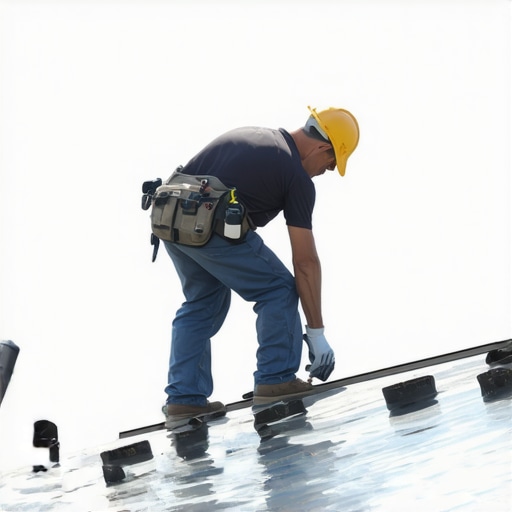
The 140-Degree Attic Truth
My old foreman used to say, ‘Water is patient, but the sun is hungry. It will eat your roof while you’re still sleeping.’ Back then, we were just slapping down 30-pound felt and hoping the granules didn’t bake off in three summers. Fast forward to 2026, and the game has changed because the physics of the desert haven’t. If you are sitting in a house in Phoenix, Vegas, or El Paso, your roof isn’t just a lid; it’s a heat-sink that is currently undergoing a slow-motion explosion. Roofing companies today are ditching the old-school mastic and ‘gunk in a bucket’ for advanced Cool Seals, and it isn’t just a trend—it’s a survival tactic against thermal shock.
The Physics of the Thermal Shimmy
When we talk about roofing in the Southwest, we are dealing with UV radiation that turns standard asphalt into brittle charcoal. Most local roofers see it every day: shingles that look like burnt toast after only seven years. This happens because of the thermal shimmy. During the day, your roof deck expands under 160-degree surface temperatures. At night, when the desert air drops forty degrees in three hours, the material snaps back. This constant expansion and contraction puts immense stress on every single nail—or shiner—and every seam. 2026 Cool Seals are engineered with a high-solids elastomeric polymer that acts like a rubber band. Instead of cracking under the pressure, the seal stretches. We call this ‘elongation capacity,’ and in 2026, if your sealant doesn’t have at least a 600% elongation rating, you’re basically using duct tape.
“Roofing systems must be designed to accommodate the movements of the materials within the system, especially in regions with high diurnal temperature swings.” – NRCA Manual
Why Asphalt is Losing the War
The average homeowner thinks a ‘Lifetime Warranty’ means the roof will last forever. It doesn’t. Most of those warranties cover manufacturer defects, not the inevitable ‘cooking’ of the bitumen. Modern roofing companies are moving toward Cool Seals because they provide a reflective barrier that bounces the UV photons back into space before they can hit the asphalt core. When you apply a high-grade seal over the starter strip and the valleys, you are effectively lowering the surface temperature by up to 50 degrees. This stops the oils in the shingles from outgassing. If you’ve ever smelled that ‘new roof’ scent in the heat of July, that’s actually the sound of your roof’s life expectancy evaporating into the atmosphere.
The Anatomy of a Modern Sealant Application
We don’t just ‘paint’ these seals on. A professional application involves a forensic look at the cricket—that little peak behind your chimney—and the flashing. Capillary action is a sneaky devil; it can pull water uphill if the seal isn’t integrated into the substrate. 2026 technology uses cross-linking resins that bond at a molecular level to the granules. This isn’t the thick, goopy tar your grandfather used to patch a leak. This is thin-film technology that maintains its breathability. You want the moisture inside your attic to escape (vapor permeability), but you want the liquid water and the heat to stay out. If your roofer doesn’t know the difference between ‘perm ratings’ and ‘solids content,’ you’re hiring a painter, not a technician.
“A roof is only as good as its flashing.” – Old Roofer’s Adage
The ‘Cheap Contractor’ Trap
I’ve seen it a thousand times: a guy in a beat-up truck offers to seal your roof for a third of the price. He’s using an acrylic-based product he bought at a big-box store. In the desert, acrylic is a death sentence. It chalks, it yellows, and it peels like a bad sunburn. Professional roofing companies in 2026 are using silicone-based or hybrid Cool Seals because they are inorganic. They don’t provide food for algae, and they don’t break down under UV. When you pay for a professional seal, you are paying for the chemistry, not just the labor. A single square (100 square feet) of roof deserves a coating that won’t turn into a potato chip after one summer.
The Long-Term Economics of Cool Seals
Let’s talk about the ‘Band-Aid’ versus ‘Surgery.’ Replacing a whole roof is the surgery. It’s messy, it’s loud, and it’s expensive. A Cool Seal is the preventative medicine. By maintaining the integrity of the valleys and ridges with a high-reflectivity sealant, you can push that $20,000 replacement down the road by another decade. Local roofers are pivoting to this model because it builds trust. I’d rather show a customer a 5-year maintenance plan than tell them they need a full tear-off because they ignored the UV damage. It’s about the heat, the expansion, and the inevitable failure of traditional materials in a changing climate. If you’re not sealing, you’re just waiting for the next leak to hit your dining room table.