
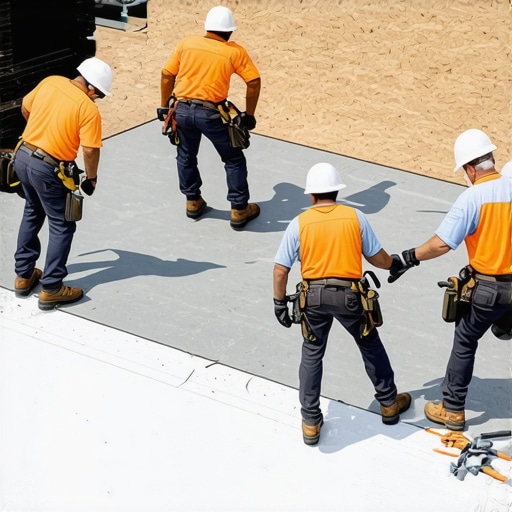
The Material Truth: Why Your 2026 Roof Replacement Hinges on a Hidden Layer
Walk into any supply house today and you will see rows of synthetic rolls that look like high-tech tarps. The industry has come a long way from the days of #15 and #30 organic felt—that oily, heavy paper that used to be the gold standard. My old foreman used to say, ‘Water is patient. It will wait for you to make a mistake.’ He was right. Most homeowners focus on the color of their shingles, but as a forensic investigator who has spent three decades tearing off failed systems, I can tell you that the shingles are just the skin. The underlayment is the muscle, and in 2026, local roofers are shifting toward Hybrid Ply for reasons that have everything to do with physics and nothing to do with marketing brochures.
“Underlayment is the secondary line of defense that must perform when the primary roof covering is breached or bypassed by wind-driven rain.” – NRCA (National Roofing Contractors Association) Manual
When we talk about Hybrid Ply, we are talking about a multi-layered composite that blends the grip of traditional felt with the sheer strength of cross-woven polymers. If you are hiring roofing companies this year, you need to understand why this specific material has become the baseline for a high-performance install. It is not about being fancy; it is about preventing the rot that I see every single day in attics where the underlayment failed long before the shingles did.
1. The Physics of Fastener Pull-Through
One of the most common failures I see is what we call a ‘blow-off,’ but it rarely starts with the shingle. It starts when the underlayment tears away from the deck. Standard synthetic underlayment is thin. When a local roofer drives a staple or a nail through it, that hole is a point of weakness. In high winds, the pressure differential creates an uplift force. Hybrid Ply uses a dense, rubberized core that grips the shank of the nail. It prevents the ‘shiner’—that missed nail that hits nothing but air—from becoming a direct conduit for water. The material resists pulling over the head of the fastener, ensuring that even if a few shingles go missing in a gale, your plywood stays dry.
2. Thermal Shock and Membrane Fatigue
In regions where the sun beats down during the day and the temperature drops 40 degrees at night, roofs experience massive thermal expansion. Asphalt shingles and the deck underneath are constantly moving. Cheap underlayments get brittle. They crack at the stress points, usually in the valley or where the roof meets a dormer. Hybrid Ply remains pliable. It acts as a slip-sheet, allowing the different layers of the roof to move independently without tearing the water barrier. If your underlayment cannot handle the stretch, you are going to see hydrostatic pressure pushing water through microscopic cracks during the next big thaw.
3. Vapor Permeability: Letting the House Breathe
The biggest enemy of a modern home is trapped moisture. We seal these houses so tight today that the attic becomes a pressurized box of humid air. If your underlayment is a total vapor barrier, that moisture hits the underside of the cold roof deck and turns into ‘attic rain.’ I have seen plywood that looked like it had been underwater for years, all because the underlayment didn’t let the house breathe. 2026 Hybrid systems are engineered with microscopic pores. They are small enough to block liquid water molecules but large enough to let water vapor escape. This prevents the ‘oatmeal plywood’ syndrome that forces homeowners into a full deck replacement when they only expected a shingle swap.
4. Secondary Water Resistance (SWR) Integration
Many 2026 roofing companies are now using Hybrid Ply because it mimics the performance of an ice and water shield but across the entire square. When you have wind-driven rain hitting the roof at 60 miles per hour, water doesn’t just fall; it moves sideways and upward through capillary action. It gets under the laps of the shingles. Hybrid Ply often features a self-sealing component. When a nail goes through it, the bitumen-based middle layer ‘grabs’ the nail, creating a gasket. This is the surgery versus band-aid approach. You are building a waterproof vessel, not just a decorative cover.
5. UV Exposure and the Scheduling Reality
Let’s be real: sometimes a project gets delayed. I’ve seen ‘trunk slammer’ contractors leave a roof ‘dried-in’ for two weeks while they wait for a delivery. Standard felt will curl and degrade within 48 hours of UV exposure. Once it curls, the shingles will never lay flat, creating ‘fish-mouths’ that catch the wind. Hybrid Ply is treated with UV stabilizers that allow it to sit exposed for up to 90 days without losing structural integrity. This ensures that the foundation of your roof is perfectly flat when the shingles finally go down.
“The roof shall be covered with an approved underlayment applied over the entire roof deck.” – International Residential Code (IRC) R905.1.1
6. The Anti-Slip Surface for Installer Precision
You might wonder why you should care if the material is slippery. You should care because a roofer who is afraid of falling is a roofer who is rushing. Hybrid Ply has a walk-on surface typically made of a non-woven fiber. This allows the crew to move confidently, ensuring they hit the nail line every single time. When a roofer slips, they might miss a cricket or skip a bit of flashing detail just to get off the slope faster. A safe roof is a well-installed roof.
7. The Lifetime Warranty Trap
Most ‘Lifetime Warranties’ offered by roofing companies are prorated and come with a dozen loopholes. One of the biggest loopholes is ‘improper installation’ or ‘substandard components.’ If you use a bottom-shelf underlayment, you effectively void the premium warranty on the shingles themselves. Manufacturers in 2026 are strict: they want a system. By using a Hybrid Ply that matches the shingle’s expected lifespan, you ensure that the manufacturer has no excuses if the material fails prematurely. You aren’t just buying a product; you are buying an insurance policy against future litigation.
The Verdict from the Roof Deck
Don’t let a contractor talk you into the ‘standard’ felt just because it saves them three hundred dollars on the bid. That three hundred dollars is the difference between a roof that lasts 25 years and one that starts leaking at the 12-year mark when the underlayment finally gives up the ghost. When you are vetting local roofers, ask them about the ‘perm rating’ and ‘tear strength’ of their hybrid underlayment. If they look at you like you have two heads, move on. You want a forensic-minded pro who knows that a roof is won or lost in the layers you can’t see from the driveway.