
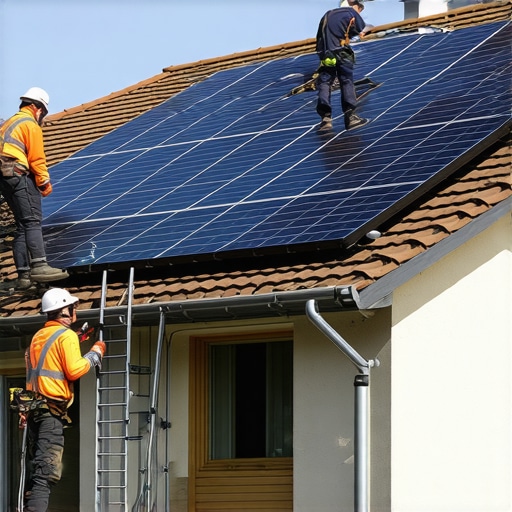
The Collision of Solar Dreams and Roofing Realities
By 2026, the roof isn’t just a lid on a box; it is a power plant. But here is the thing: most roofing companies are still treating solar as a bolt-on afterthought. I have spent twenty-five years watching water find its way through the tightest spots, and let me tell you, a solar rack is essentially a series of a hundred potential leak points drilled into your home’s most vital defense. When we talk about how local roofers are securing panels in 2026, we aren’t talking about just slapping some rails down. We are talking about the forensic management of thermal expansion and structural integrity.
My old foreman used to say, ‘Water is patient. It will wait for you to make a mistake.’ That quote rings in my ears every time I see a ‘solar specialist’—who has never even carried a bundle of shingles—drilling lag bolts into a roof deck. In 2026, the industry has finally realized that the solar installer and the roofer must be the same person, or at least speak the same language. If they don’t, you’re just counting down the days until your ceiling starts to bubble.
The Physics of the Penetration: Mechanism Zooming
Let’s zoom in on a single mount. In the old days, you’d find a rafter, drill a hole, and squirt some caulk in there. That is a recipe for disaster. In 2026, high-end roofing systems use elevated water-shedding mounts. Think about the capillary action. When rain hits a flat solar mount, it doesn’t just run off. Surface tension pulls that water underneath the mounting plate. If that plate is sitting flat against the shingle, it traps moisture. Over time, the granules on your shingles erode, the fiberglass mat becomes exposed, and the wood underneath begins to soften like wet cardboard.
Then there is the issue of thermal bridging and expansion. A roof in a northern climate can swing from -10°F on a January night to 140°F under the summer sun. The aluminum rails holding your panels expand and contract at a different rate than the wood rafters of your home. If the roofing companies didn’t use ‘floating’ mounting hardware, those bolts are literally sawing back and forth inside the rafter. Eventually, you get what we call an ‘ovaled’ hole. Once that hole is ovaled, no amount of flashing will save you. The water will find the gap, ride the bolt down, and start rotting your insulation before you even see a drip on the drywall.
“Roof systems shall be designed and installed in accordance with this code and the manufacturer’s installation instructions.” – International Residential Code (IRC) R903.1
The Material Truth: Asphalt vs. Metal in the Solar Era
If you are looking at roofing replacement in 2026 with an eye on solar, your choice of material is everything. Asphalt shingles are still the king of the market, but they are the most vulnerable to solar-related failure. Every time a technician walks over your roof to service a panel, they are scuffing the shingles, knocking off granules, and shortening the life of the roof. In 2026, the best local roofers are recommending thick, Class 4 impact-resistant shingles or, better yet, standing seam metal.
Standing seam metal is the ‘holy grail’ for solar. Why? Because you don’t have to punch a single hole in the roof. We use specialized clamps that grip the ‘rib’ or the ‘seam’ of the metal. No holes mean no leaks. It’s a closed system. While the upfront cost is higher, the 1800-word reality check is that replacing a roof *under* an existing solar array in fifteen years will cost you double. You have to pay a crew to decommission the panels, store them, strip the roof, re-roof, and then re-install the solar. It’s a financial nightmare that most ‘trunk slammers’ won’t tell you about when they are selling you a cheap roof.
The ‘Shiner’ and the Nightmare of Poor Craftsmanship
In the trade, we have a term called a ‘shiner.’ That’s a nail or a bolt that missed the rafter and is sticking through the plywood into the attic. It looks like a little silver spark when you shine a flashlight up there. In 2026, with the weight of high-efficiency panels, a ‘shiner’ isn’t just a leak risk; it’s a structural failure. A roofing deck isn’t designed to hold the dead load of a solar array plus a snow load if the mounts aren’t biting deep into the center of the lumber.
“A roof is only as good as its flashing, and solar is only as good as the roof beneath it.” – National Roofing Contractors Association (NRCA) Guidelines
I recently inspected a job where the local roofers used standard flashing instead of the required secondary water resistance barriers around the solar standoffs. The ice damming that winter backed water up six inches. Because the ‘cricket’ (the small diverter) wasn’t installed behind the chimney nearby, the water diverted right into the solar mounts. The result? A twelve-foot section of the soffit rotted out, and the homeowner was left fighting the solar company and the roofing company, both of whom were pointing fingers at each other.
The Warranty Trap
Don’t be fooled by the ‘Lifetime Warranty’ stickers. Most roofing warranties are voided the moment an unauthorized third party (like a solar-only installer) starts drilling holes in the deck. In 2026, you need a certified integrated warranty. This is where the roofing companies take full responsibility for the ‘penetration’ and the ‘production.’ If your roofer doesn’t know what a ‘flashing boot’ or a ‘counter-flashing’ is in the context of a solar mount, kick them off your property. You are looking for a system where the solar mounts are integrated into the shingle course, flashed with the same discipline as a skylight or a plumbing vent.
How to Pick Your 2026 Roofing Partner
When you are vetting local roofers for a solar-ready home, ask them about ‘dead load’ calculations. Ask them how they handle ‘thermal movement’ in the rail system. If they look at you like you’re speaking Greek, they are just there to nail down some squares and move on to the next job. A real pro will talk about the ‘attic bypass’—how they seal the holes where the wires go into the house to prevent warm air from the house hitting the cold underside of the roof and causing condensation. That’s the forensic level of detail that keeps a house dry for thirty years instead of three.