
The Chaos of Choice in the 2026 Market
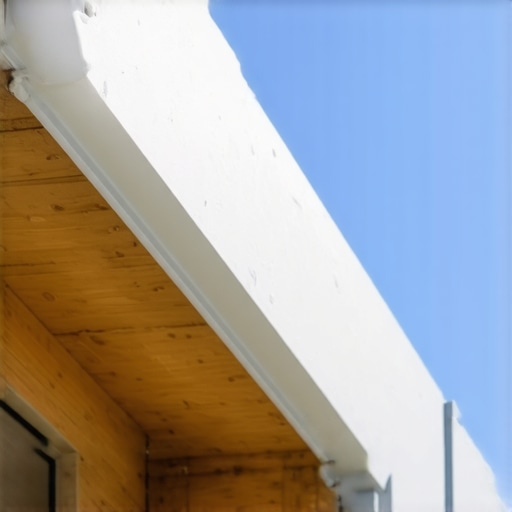
Walk into any supply house today and you will see a dizzying array of flashing options. You have got your old-school lead, your standard galvanized steel that rusts if you look at it funny, and a half-dozen different ‘hybrid’ tapes that promise the world but usually end up peeling off like a bad sunburn after three seasons in the Texas heat. My old foreman used to say, ‘Water is patient. It will wait for you to make a mistake.’ He was right. Most roofing companies are still stuck in the 2010s, relying on tubes of polyurethane caulk to bridge the gaps where their metalwork fails. But as a forensic roofer who has spent twenty-five years tearing off the failures of ‘local roofers’ who disappeared the moment the first hurricane hit, I have seen the literal rot beneath the surface. [IMAGE_PLACEHOLDER]
The Anatomy of Failure: Why Traditional Flashing Dies
If you have ever stood in a 140°F attic in July, you know the sound of a house breathing. That creaking isn’t ghosts; it is thermal expansion. Wood, metal, and asphalt all move at different rates. When you use metal flashing—aluminum or galvanized—it is rigid. It wants to stay still. But your roof deck is expanding and contracting like a set of lungs. This creates a mechanical fight. Eventually, the nails back out—we call those ‘shiners’ when they miss the rafter and leave a silver tip exposed to catch every drop of moisture. Or worse, the seal breaks. Once that seal is gone, capillary action takes over. Water doesn’t just fall; it gets sucked upward into tight spaces. It climbs behind the metal, finds the edge of the plywood, and begins the slow process of turning your structural deck into something that looks like soggy cereal. This is why roofing companies are shifting their focus in 2026. They are tired of the call-backs. They are tired of the lawsuits. They are moving to PVC.
‘A roof is only as good as its flashing.’ – Old Roofer’s Adage
The Physics of PVC: More Than Just Plastic
When I talk about PVC flashing in 2026, I am not talking about the white plumbing pipe from the hardware store. I am talking about reinforced polyvinyl chloride membranes engineered with specific K-value resins and non-migratory plasticizers. In the high-UV environments of the Southwest and the humid, salt-heavy air of the Southeast, this material is a beast. Unlike TPO, which can sometimes become brittle and chalky after a decade of sun exposure, 2026-grade PVC remains flexible. It handles thermal shock—those 40-degree temperature swings between a scorching afternoon and a desert night—without cracking. But the real magic isn’t in the material itself; it is in the monolithic bond. When local roofers use a hot-air welder to join PVC sections, they aren’t ‘gluing’ them. They are molecularly fusing them. At 1100 degrees Fahrenheit, the two sheets become one. There is no lap-seam to fail. There is no caulk to dry out. It is a single, continuous skin that defies the very laws of physics that destroy traditional roofs.
The Forensic Reality of the ‘Trunk Slammer’
I recently inspected a 40-square project in a coastal neighborhood where the homeowner thought they got a ‘deal.’ The ‘local roofers’ had used standard aluminum step-flashing around the dormers. Within two years, the salt air had pitted the metal, and the wind-driven rain had pushed moisture under the shingles. When I pulled the first row of tiles, the smell of rotting OSB hit me like a physical wall. It was a forensic nightmare. If those contractors had used PVC flashing with a proper reglet cut into the masonry, that roof would have lasted thirty years. Instead, it was a total loss. This is the ‘Trap’ of the industry. Many roofing companies sell you on the ‘Lifetime Warranty’ of the shingle, but they won’t tell you that the warranty is void if the flashing fails and causes internal damage. It is marketing nonsense designed to get them onto the next job site. PVC doesn’t need a marketing gimmick because its performance is visible to anyone with a moisture meter and a ladder.
‘The building envelope must be continuous and integrated to prevent the ingress of bulk water.’ – NRCA Standard Manual
Mechanism Zooming: The Kick-Out Cricket
Let’s zoom in on one specific area where roofs fail: the wall-to-eave transition. This is where most roofing companies fail the most. They shove a piece of metal in there and hope for the best. Without a cricket—a small diverter—to push water away from the wall and into the gutter, you are essentially funnelling a river into your siding. PVC allows for custom-fabricated, heat-welded crickets that are 100% waterproof. You can’t do that with metal without soldering, which is a dying art that most modern ‘pro’ roofers wouldn’t know if it hit them. In 2026, we are seeing the rise of prefabricated PVC accessories. These are factory-made corners, pipe boots, and scuppers that remove the human error from the equation. When you have a crew out there in the 95% humidity of a Houston summer, they are going to make mistakes. Using PVC accessories means the ‘human factor’ is minimized. The weld is either perfect or it isn’t. There is no middle ground, and there is no ‘fixing it with more goop.’
Why Your Local Roofers are Making the Switch
If you are looking for roofing companies in 2026, you need to ask about their flashing protocol. If they mention tubes of ‘roof cement’ or ‘caulk,’ thank them for their time and show them the door. The companies that are surviving this economy are the ones investing in hot-air tools and PVC training. Why? Because a PVC-flashed roof is a ‘set it and forget it’ system. It handles the uplift ratings required for coastal zones and the thermal expansion required for the desert. It is the only material that can truly integrate with both a flat roof and a pitched roof without creating a weak point at the transition. I have seen enough oatmeal-soft plywood to last a lifetime. I am done with it. PVC is the forensic choice because it solves the problems that asphalt and metal simply can’t handle long-term.