
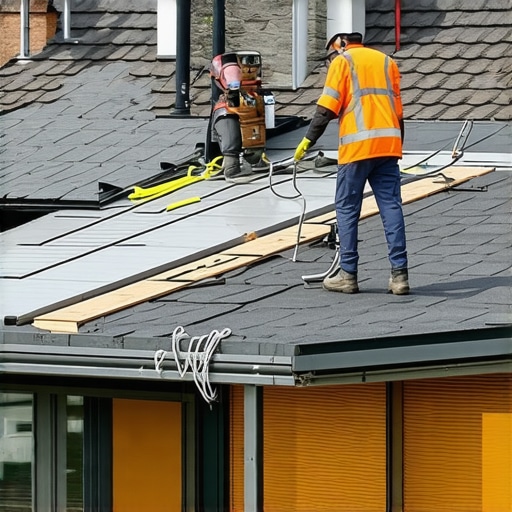
The Shifting Foundation of Local Roofers
Walk onto any job site in late November when the wind is whipping off the Great Lakes, and you will hear a distinct sound. It is the sound of standard asphalt shingles snapping like dry crackers because they have reached their glass transition point. My old foreman used to say, ‘Water is patient. It will wait for you to make a mistake, and then it will wait for the temperature to drop so it can expand and rip your hard work apart.’ He spent forty years watching roofs fail, and he knew that the biggest enemy of longevity isn’t just the rain—it is the rigidity of the material itself. By 2026, the industry is finally waking up to what forensic inspectors have known for decades: the future belongs to rubberized asphalt.
The Molecular Reality of SBS Modified Bitumen
Most homeowners think a shingle is just a piece of paper soaked in tar and covered in rocks. If you are hiring local roofers who think that way, you are already in trouble. Standard shingles use ‘oxidized’ asphalt, which is basically asphalt that has had air blown through it to make it hard. The problem? Hard means brittle. In regions where the thermometer swings from a 100°F attic to a -10°F midnight, that shingle is under constant thermal stress. It expands, it contracts, and eventually, the internal mat fractures. This is where rubberized asphalt—technically known as SBS (Styrene-Butadiene-Styrene) modified bitumen—changes the math. Instead of just hard tar, manufacturers blend in synthetic rubber polymers. Imagine a spiderweb of elastic bands woven throughout the asphalt. When the temperature drops, these polymer chains hold the asphalt together, allowing the shingle to stretch and recover its shape rather than cracking. This isn’t marketing fluff; it is basic material science that prevents the dreaded ‘fish-mouth’ curling at the edges of a square of shingles.
“Modified bitumen membranes combine the traditional waterproofing reliability of asphalt with the added benefits of high-performance polymers.” – National Roofing Contractors Association (NRCA)
When we look at the physics of a roof through a forensic lens, we talk about ‘mechanism zooming.’ Don’t just look at the leak; look at the capillary action. When a standard shingle gets hit by a stray hailstone, the rigid asphalt structure shatters internally, even if you can’t see the hole. Water then uses surface tension to ‘wick’ its way under the shingle, traveling sideways until it finds a shiner—a missed nail—that provides a direct highway into your plywood deck. Rubberized asphalt acts like a self-healing membrane. The rubber polymers give the material a ‘memory,’ meaning it can absorb the impact of hail or a heavy footfall without the internal structure fracturing. Roofing companies are gravitating toward this because it drastically reduces the number of ‘call-backs’ for minor leaks that occur after a shoulder-season storm.
The Cold-Weather Installation Secret
Any veteran roofer will tell you that installing a roof in 40-degree weather is a gamble. Standard shingles are stiff; they don’t lay flat, and the adhesive strips take forever to activate. You end up with shingles flapping in the wind, waiting for a warm day that might not come for months. Local roofers love SBS because it stays flexible even when the mercury dips. You can bend an SBS shingle double in freezing weather and it won’t snap. This means the shingles ‘relax’ onto the deck faster, creating a tighter seal and preventing wind uplift. If you are replacing a roof in a northern climate, the ‘R-value’ of your insulation matters, but the flexibility of your waterproofing layer is what keeps the ice dams from backing up into your soffits. When water sits on a roof due to an ice dam, it exerts hydrostatic pressure. A rigid shingle will eventually let that water seep through the fastener holes. A rubberized shingle, however, ‘hugs’ the nail shank, creating a gasket-like seal that is far superior to old-school organic mats.
“Architecture begins where engineering ends, but it dies where the roof leaks.” – Anonymous Architect’s Axiom
The Warranty Trap and the 2026 Standard
Be wary of any roofing companies promising a ‘Lifetime Warranty’ without explaining the exclusions. Most of those warranties are prorated and don’t cover ‘thermal shock’ or ‘hail impact’ unless you are using a Class 4 rated material. By 2026, many insurance providers are expected to mandate Class 4 impact resistance for any new roof in hail-prone zones. Rubberized asphalt is the most cost-effective way to hit that rating. It isn’t just about the shingles, though. A forensic investigation of a failed roof usually reveals that the contractor skipped the cricket behind the chimney or used cheap galvanized nails that rusted out in ten years. When you use a high-end material like SBS, you have to pair it with high-end techniques. That means stainless steel fasteners in salt-air environments and a high-temp ice and water shield in the valleys. If your roofer isn’t talking about the ‘thermal bridging’ in your attic or how the rubberized mat handles the expansion of the roof deck, they are just selling you a commodity, not a solution. The smell of a new roof should be the smell of security, not the scent of rotting plywood six years down the line because the shingles were too brittle to handle a standard winter cycle.