
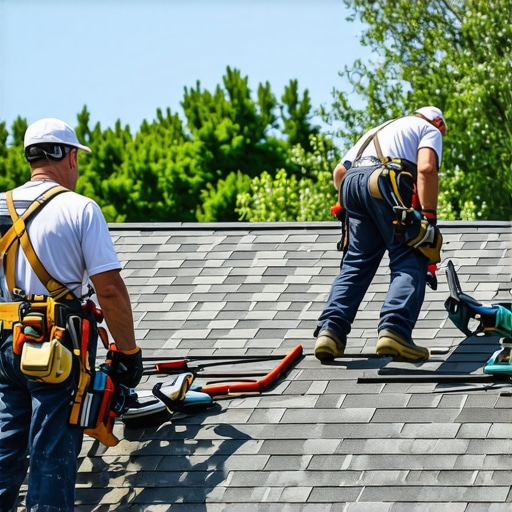
The Forensic Scene: Walking on a Sponge
Walking on that roof felt like walking on a sponge. I knew exactly what I would find underneath before the first pry bar even touched a shingle. It was a humid Tuesday in a coastal neighborhood where the salt air treats aluminum like a snack. I could feel the deck give way under my boots, a sickening, rhythmic ‘thump-squish’ that tells a veteran roofer the plywood has lost its structural soul. When we finally peeled back the two layers of old organic felt, the scent hit us—the heavy, sweet stench of black mold and fermented pine. The owner thought he just needed a quick swap. He was wrong. What he had was a forensic case of systematic moisture entrapment, and by 2026, these ‘hidden’ surprises are becoming the most expensive line items in any estimate provided by legitimate roofing companies.
The Illusion of the Simple Tear-Off
Most homeowners view roofing as a product purchase—like a car or a fridge. You pick a color, you pay the man, and it appears. But in the trade, we know that shingle removal is actually a surgical procedure. If you are hiring local roofers, you aren’t paying them to put the new stuff on; you are paying them to mitigate the disaster the last guy left behind. By 2026, the industry has shifted. Material costs have stabilized, but the labor of remediation has skyrocketed. If your contractor isn’t talking about the substrate, they aren’t a roofer—they are a salesman in a truck.
“Where the roof covering is to be recovered rather than replaced, the existing roof covering and flashing shall be inspected to determine the condition of the substrate.” – International Residential Code (IRC) R908.3
1. The Substrate Lottery: When Plywood Becomes Mulch
The first hidden cost is the deck itself. We are seeing a massive wave of ‘moisture-locked’ roof systems. In the old days, roofs breathed. Now, with modern insulation and poorly planned air sealing, your attic is a pressure cooker. When we pull those shingles, we often find that the 7/16-inch OSB has undergone delamination. This isn’t just a soft spot; it is a total failure of the resins holding the wood together. The physics are simple: vapor drive pushes warm, moist air from your bathroom or kitchen up into the attic. If the roofer didn’t install a proper cricket behind your chimney or if the valley flashing was nailed too tight, that water migrates. Through capillary action, it crawls upward, defying gravity, and sits under the shingles. By the time we arrive for a 2026 replacement, we aren’t just removing shingles; we are replacing the entire ‘skin’ of the house. That adds thousands to the ‘square’ price that wasn’t in the initial ‘ballpark’ quote.
2. The Fastener Graveyard and the ‘Shiner’ Epidemic
The second hidden cost is labor-intensive: the cleanup of the ‘shiner.’ In trade terms, a shiner is a nail that missed the rafter and is sticking through the underside of the deck, or worse, a nail from a previous ‘layover’ roof that wasn’t pulled. When local roofers encounter a roof that has been shingled over twice, the removal process is a nightmare. Each ‘square’ (a 100-square-foot area) might contain over 320 nails. If there are two layers, that is 640 rusted, jagged pieces of galvanized steel that must be individually pulled or driven flush. You cannot simply blow them off with a shovel. If a new architectural shingle is laid over a ‘shiner,’ that nail will eventually push through the new material from the bottom up—a process we call ‘nail-pop.’ In 2026, with higher labor standards and stricter insurance requirements, the time spent prepping the deck to be ‘broom clean’ is a massive cost driver that ‘trunk-slammers’ always skip.
3. The 2026 Disposal and Compliance Surcharge
The third cost is one nobody likes to talk about: the landfill. In 2026, environmental regulations regarding the disposal of petroleum-based shingles have tightened. You can’t just dump four tons of asphalt in a hole for fifty bucks anymore. Roofing companies now have to account for weight limits and sorting fees. If your roof has ‘cedar shakes’ buried under two layers of asphalt—a common find in older neighborhoods—the disposal cost triples. Cedar cannot be mixed with asphalt at the recycling center. This requires two separate dumpsters and double the hauling fees. Furthermore, the 2026 mandates for ‘secondary water resistance’ (SWR) mean that after the tear-off, we must apply a self-adhering polymer modified bitumen across the entire deck. This isn’t the cheap felt paper your grandpa used; it’s a high-tech membrane that bonds to the wood. If your roofer isn’t pricing for this, they aren’t building to 2026 code.
“A roof is only as good as its flashing.” – Old Roofer’s Adage
The Anatomy of a Proper Replacement
To avoid these costs, you have to understand the physics of your valley and eave. Most leaks start at the transition points. When we remove shingles, we often find that the starter course was installed upside down or, worse, skipped entirely. This allows wind-driven rain to get under the first layer of shingles, rotting the fascia board from the inside out. A real forensic roofing investigation looks for these patterns. We check the drip edge for galvanic corrosion—where two dissimilar metals (like aluminum and copper) touch and eat each other alive. If you ignore these details during the removal phase, your ‘new’ roof will be a 15-year roof instead of a 30-year roof.
How to Vet Local Roofers in the Current Market
Don’t ask for a price per square. Ask for their ‘decking contingency’ price. A pro will tell you, ‘It’s $X per square, but if we find rotten wood, it’s $Y per sheet of CDX plywood.’ If they say ‘don’t worry about it,’ run. They are planning to cover up the rot and leave before the first rain. Look for a team that uses a ‘Catch-All’ system to protect your landscaping from those thousands of nails. Most importantly, make sure they are pulling a permit. The permit ensures a third-party inspector sees the deck after the shingles are off but before the new ones go on. That is the only way to guarantee you aren’t paying for a ‘Band-Aid’ over a gunshot wound. The 2026 market is full of ‘storm chasers’ who use drones to give quick estimates; nothing beats a veteran roofer with a ladder and a cynical eye for detail. We’ve seen what happens when you cut corners—the wood doesn’t lie, and eventually, neither does the ceiling in your living room.